
24/7 Customer Support

Free returns

Same-day & Next-day Delivery

Quality Guaranteed

Unlock Your Welcome Offers: FREE Delivery | Up to 80% OFF | Free 30-day JoyPlus trial
Download the APP
A good pair of wireless noise-cancelling headphones can make a crowded train, open-plan office or long flight more manageable. However, impressive-looking specifications do not always translate into a comfortable, reliable purchase.
The most useful approach is to compare the features that affect daily use rather than focusing only on sound-related marketing terms. This guide explains the main buying pitfalls, the specifications worth checking and which products may suit different lifestyles.
Battery figures usually depend on the listening mode and volume. A product may quote its longest runtime with active noise cancellation (ANC) switched off, while ANC use, calls and high volume reduce playback time.
For example, the soundcore Q21i lists up to 60 hours in normal mode and up to 40 hours with ANC enabled. The JBL Tune 780NC states up to 76 hours with ANC off and up to 50 hours with ANC on. Compare like for like, especially if you intend to use noise cancellation throughout a commute.
ANC headphones are designed to reduce external sound through microphones and opposing audio signals. They are generally more effective against consistent low-frequency noise, such as engines, rail travel and aircraft cabins, than sudden voices or nearby conversations.
A transparency or ambient mode is also valuable. It allows you to hear announcements and conversations without removing your headphones. Even so, do not rely on ANC or transparency modes when driving, cycling or crossing roads; follow the manufacturer’s safety guidance and remain alert to your surroundings.
Large earcups, a tight headband or limited adjustment can make over-ear noise-cancelling headphones uncomfortable during extended listening. A secure seal also affects perceived bass and noise reduction, so comfort is not merely a preference.
For UK commuters and travellers, check whether the headphones fold, whether a carry case is included and whether the earcups fully surround your ears. A compact design can be more useful than an additional audio feature that you rarely use.
Look for separate figures for ANC on and ANC off, plus the quick-charge result. Soundcore Space One Pro offers up to 40 hours with ANC on and 60 hours with ANC off, while a five-minute charge is listed as providing up to eight hours of playback. Skullcandy Hesh 540 ANC lists up to 65 hours with ANC off and four hours from a ten-minute charge.
USB-C charging is now convenient for households that already use the same cable for phones, tablets and other devices. Check whether a mains adaptor is included; many headphones include a cable only.
Bluetooth headphones should pair reliably with your usual phone, tablet or laptop. Multipoint connectivity can be useful for remote workers who need to switch between a computer and mobile phone. Some models also include a 3.5mm cable, which helps when using in-flight entertainment systems or when the battery is depleted.
High-fidelity wireless headphones may support codecs such as LDAC or LHDC, but the source device and streaming service must also support them. A high-resolution label alone does not guarantee that every recording will sound noticeably different.
Check the listed weight, earcup padding and headband construction. Memory foam or plush cushions may suit long sessions, but materials can feel warm after several hours. Physical buttons may be easier to operate on a train, while touch controls can offer quick access to playback and listening modes.
For families, volume controls and age suitability deserve particular attention. The JBL Junior 470NC includes a stated maximum volume of 85dB, app-based parental controls and adjustable listening time. Children should still take breaks and use headphones at a moderate level.
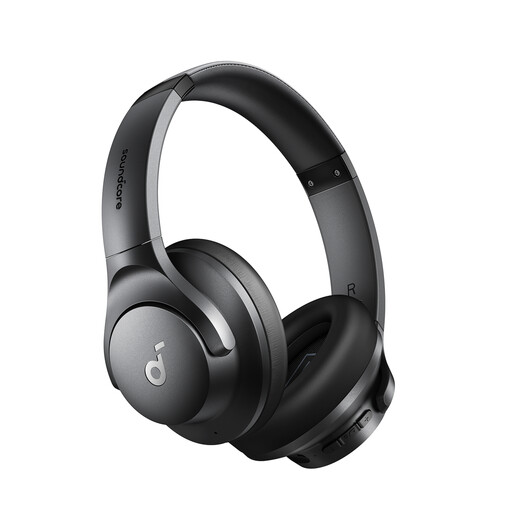
Why This Fits Their Persona: A practical option for commuters, students and first-time buyers who want over-ear ANC headphones with app controls and dual-device connectivity.
Its battery figures distinguish ANC and normal modes, helping buyers avoid comparing only the longest advertised runtime.
Up to 40 hours with ANC, up to 60 hours without it, transparency mode and a customisable EQ.
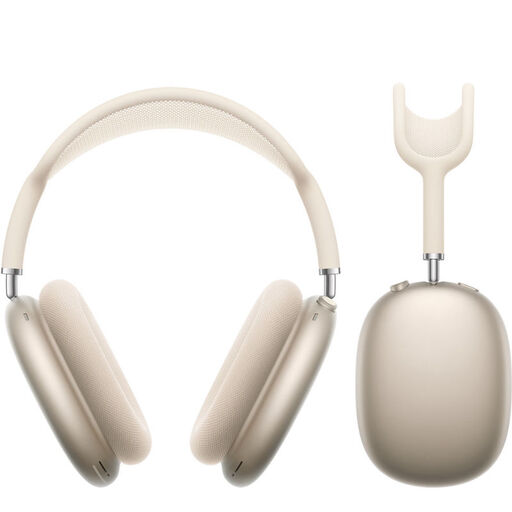
Why This Fits Their Persona: A considered choice for Apple users who value ecosystem integration, spatial audio features and over-ear comfort.
The USB-C model lists up to 20 hours of battery life and includes transparency mode, making key limitations clearer than vague all-day wording.
High-fidelity audio, personalised spatial audio, automatic pausing and switching across compatible Apple devices.
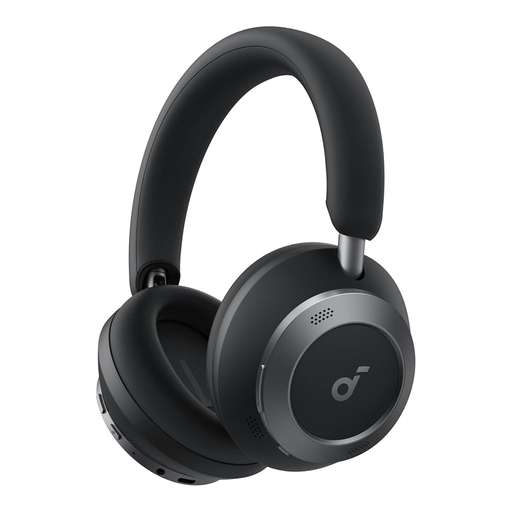
Why This Fits Their Persona: Its compact folding structure and long stated battery life suit rail journeys, flights and frequent packing.
Its product information separates 40 hours with ANC from 60 hours without ANC and gives a specific five-minute charging figure.
FlexiCurve design reduces its folded size, while LDAC support and a pressure-relieving headband address portability and comfort.
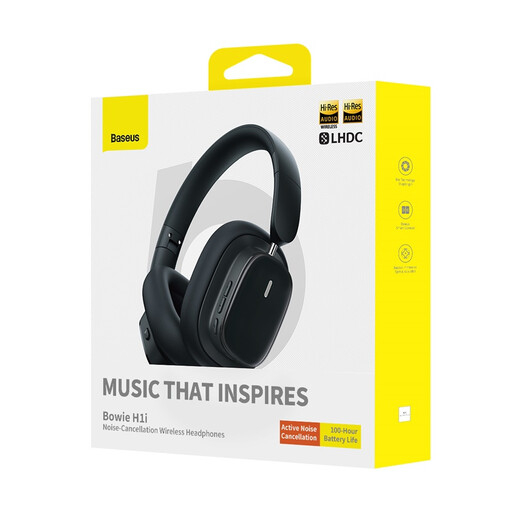
Why This Fits Their Persona: Suitable for users who prioritise infrequent charging and extended listening across work, travel and home use.
The listing gives separate playback figures, stating up to 70 hours with noise reduction on and 100 hours with it off.
Bluetooth 5.3, USB-C charging, LHDC support and a 600mAh integrated battery are clearly specified.
We have compiled a complete, real-time list of products that fully satisfy these strict selection criteria and UK safety regulations.
Yes, over-ear ANC headphones can reduce steady aircraft and cabin noise, making spoken audio easier to follow at a moderate volume. Check battery life with ANC enabled and consider a wired audio option for in-flight entertainment systems.
Lifespan depends on battery condition, charging habits, physical care and replacement-part availability. Keep headphones dry, avoid extreme heat and store them in a case when travelling. Rechargeable batteries gradually lose capacity, so a model with fast charging or wired fallback can remain practical for longer.
Usually, yes. ANC microphones and processing require additional power, which is why manufacturers commonly publish separate ANC-on and ANC-off figures. Use the stated ANC-on number when estimating daily runtime, and avoid leaving ANC active when you do not need it.