
24/7 Customer Support

Free returns

Same-day & Next-day Delivery

Quality Guaranteed

Unlock Your Welcome Offers: FREE Delivery | Up to 80% OFF | Free 30-day JoyPlus trial
Download the APP
Finding the right wireless speaker can feel like navigating a minefield of marketing jargon and confusing specifications. With so many options available, it is easy to end up with a device that disappoints, whether it is a portable speaker that dies in the first drizzle or a home system that fails to deliver the promised audio quality. As the Joybuy Product Recommendation Officer, my role is to help you sidestep these common issues and find a speaker that genuinely fits your needs.
Before you spend your hard-earned money, let’s look at the three most common pitfalls that catch out UK shoppers.
To avoid these traps, focus on a few core parameters that determine a speaker's true capability. Understanding these will empower you to see past the marketing hype.
This is the most reliable indicator of a speaker's durability against dust and water. An IP rating consists of two numbers.
The way your audio gets from your phone to your speaker is crucial for sound quality.
A speaker's sound is produced by its drivers. Wattage alone does not tell the whole story.
Instead of a generic list, we have matched some promising options to specific UK lifestyles.
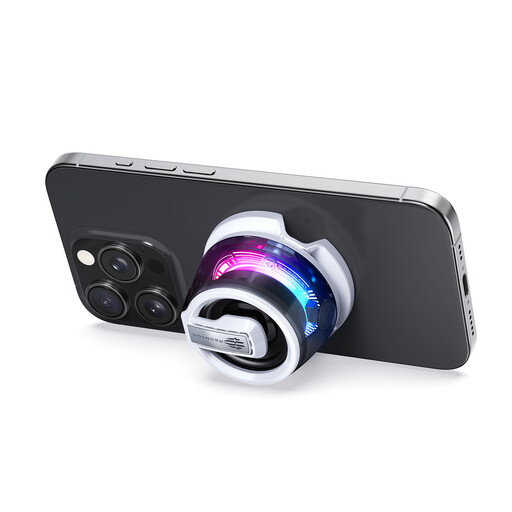
Why This Fits Their Persona: Perfect for the student, commuter or tech enthusiast who values portability and a bit of flair. Its tiny, lightweight design and magnetic base make it incredibly versatile—stick it on a fridge, a lamp post or the back of your phone for music anywhere.
It avoids the "one-size-fits-all" trap by being unapologetically small and portable. It is not trying to be a home cinema system; it is designed for personal, on-the-go listening and its features (magnetic mount, RGB lights) are perfectly aligned with that purpose.
Its strong magnetic base and included metal ring offer unique mounting options. The dual Game/Music modes provide optimised sound for different uses, a rare feature in this size.
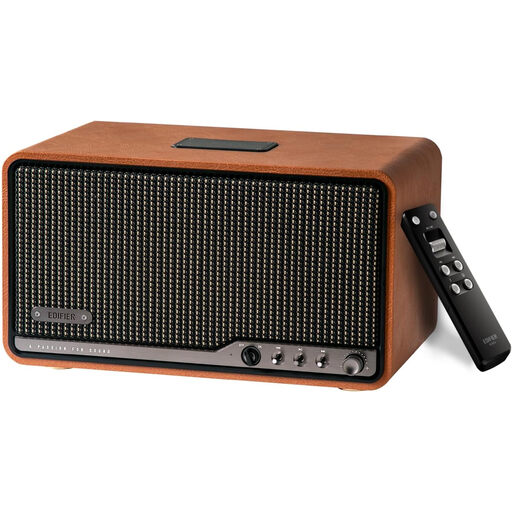
Why This Fits Their Persona: For those who prioritise sound quality and aesthetics in their living space. This speaker's retro MDF wood cabinet looks great on a bookshelf, while its hardware is built for serious listening, making it a centrepiece for both music and style.
It directly solves the high-resolution audio bottleneck. With support for Hi-Res Audio, the LDAC codec for Android and AirPlay 2 for Apple devices, it ensures you are getting the uncompressed, detailed sound quality you paid for, whether streaming wirelessly or creating a multi-room system.
Its combination of high-fidelity hardware (mid-bass driver, dome tweeters) and advanced wireless protocols (LDAC, AirPlay 2) delivers exceptional audio clarity. The ability to form a stereo pair or multi-room system offers great flexibility.
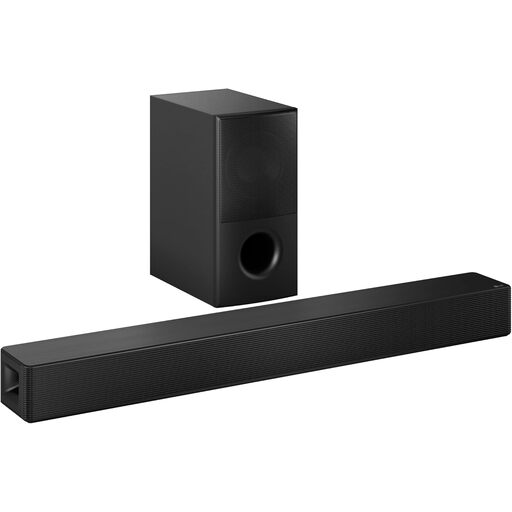
Why This Fits Their Persona: For anyone tired of the flat, lifeless sound from their TV's built-in speakers. This is a straightforward, powerful upgrade for a more cinematic experience at home, delivering the clear dialogue and impactful bass that movies and TV shows deserve.
This system is a purpose-built solution, not a jack-of-all-trades. It sidesteps the trap of using a small portable speaker for TV audio by providing a dedicated home cinema soundbar and a separate wireless subwoofer, ensuring a proper 2.1 channel setup for immersive sound.
The Adaptive Sound Control (ASC) is a standout feature, automatically boosting vocal clarity during dialogue-heavy scenes and increasing bass for action sequences. The wireless subwoofer allows for flexible placement without cable clutter.
We have compiled a complete, real-time list of products that fully satisfy these strict selection criteria and UK safety regulations.
The lifespan of a wireless speaker depends on its build quality, battery and usage. A well-made portable speaker with a quality lithium-ion battery should provide reliable performance for 3-5 years. Home speakers without batteries can last much longer, often over a decade, as their components are not subject to the same wear and tear. To maximise lifespan, avoid constantly leaving it on charge and protect it from extreme temperatures.
Not necessarily. Most wireless speakers use Bluetooth to connect directly to your phone, tablet or laptop and do not require a Wi-Fi network. However, speakers with multi-room audio capabilities, such as those using AirPlay 2 or other proprietary systems, do require a stable home Wi-Fi network to synchronise playback between different rooms.
In almost all cases, yes. Modern flat-screen TVs have very little space for speakers, resulting in thin, weak audio. Even an entry-level soundbar provides a significant upgrade by offering larger drivers, better amplification and a wider soundstage. Models with a built-in or wireless subwoofer will also produce the deep bass that TV speakers simply cannot replicate, making movies and music far more immersive.