
24/7 Customer Support

Free returns

Same-day & Next-day Delivery

Quality Guaranteed

Unlock Your Welcome Offers: FREE Delivery | Up to 80% OFF | Free 30-day JoyPlus trial
Download the APP
Choosing between wireless speakers and headphones is rarely as simple as comparing prices. Product pages often highlight large wattage figures, “Hi-Res Audio”, long battery claims or advanced noise cancellation without explaining what those features mean in everyday UK use.
A speaker that sounds impressive in a large showroom may overwhelm a small flat. A headset with impressive battery figures may achieve them only with certain settings disabled. Before buying, focus on compatibility, connection type, dimensions and realistic usage rather than marketing language alone.
A higher wattage figure does not automatically mean clearer or more detailed audio. Power output should be considered alongside driver size, cabinet design, room dimensions and whether the stated figure is RMS power.
For example, compact desktop speakers can be more suitable for a home office than a much larger system designed for filling a living room. Check the physical dimensions and intended placement before assuming that more power is better for your setup.
Bluetooth is convenient, but codecs, operating systems and device compatibility affect the result. Features such as LDAC may require a compatible Android device, while low-latency 2.4GHz USB connections are often more suitable for gaming than standard Bluetooth.
For televisions, check whether the soundbar supports HDMI ARC or eARC, and confirm that your TV has the required port. A wireless subwoofer also needs mains power, so “wireless” does not mean completely cable-free.
Battery claims are usually expressed as “up to” figures. Noise-cancelling headphones may offer different playback times with ANC switched on, while portable Bluetooth speakers may achieve their stated duration at moderate volume.
Look for the battery figure with the features you expect to use. Also check charging time, fast-charge performance and whether the product supports wired listening as a backup.
For Bluetooth speakers, confirm the Bluetooth version, supported codecs and whether multipoint pairing is available. Desktop speakers with USB-C and AUX inputs can offer more flexibility for laptops, monitors and phones than Bluetooth-only models.
For home cinema, HDMI eARC is useful for compatible televisions and higher-bandwidth formats. Dolby Atmos soundbars may also use upward-firing drivers, room calibration or wireless networking, but the result depends on room shape, ceiling height and speaker positioning.
Console users should check platform support carefully. Some PlayStation headsets connect through a dedicated USB transmitter, while true wireless earbuds may need a supplied dongle for low-latency audio.
A product labelled Hi-Res Audio speakers may support high-resolution files, but your streaming service, source device and connection must also support the relevant format. LDAC, for example, is listed for compatible Android devices on selected products.
Driver configuration is also important. A two-way desktop speaker with separate tweeter and mid-bass driver may provide clearer separation than a single small driver, while a soundbar with a dedicated subwoofer handles low frequencies differently from an all-in-one unit.
Measure your desk, TV unit or shelf before ordering. The Edifier M60, for example, measures approximately 100mm wide by 168mm high and 147mm deep per speaker, making its footprint relevant where desk space is limited.
For headphones, assess weight, earcup size, headband adjustment and whether replacement parts are available. For commuters, foldable designs and a carry case can matter as much as sound features. For gaming, microphone placement, mute controls and platform compatibility deserve equal attention.
The following selection matches different buying priorities rather than presenting one product as suitable for everyone.

Why This Fits Their Persona: A compact option for a UK desk, study or small home office where space is limited but wired and wireless connections are both useful.
It provides USB-C and AUX inputs as alternatives to Bluetooth, while the listed 66W RMS output gives a clearer comparison point than an unspecified peak-power figure.
Bluetooth 5.3 with LDAC support, Hi-Res Audio certification and included angled aluminium stands.
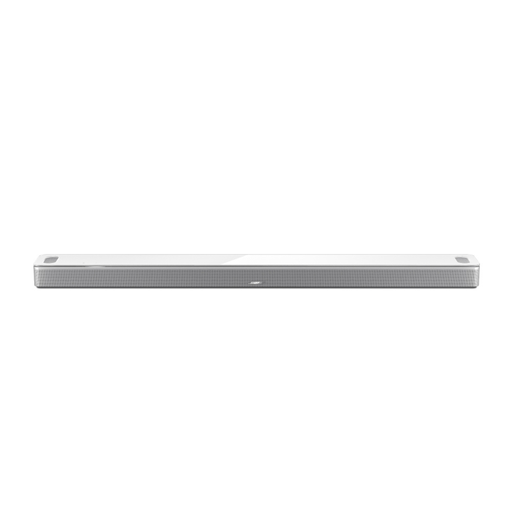
Why This Fits Their Persona: Suits home cinema users who want spatial audio, streaming features and room calibration from a single soundbar.
Its supplied ADAPTiQ headset is designed for room calibration, helping address the fact that placement and room acoustics affect Atmos performance.
Nine internal transducers, Dolby Atmos processing, HDMI eARC, Wi-Fi, Bluetooth, AirPlay 2 and Chromecast built-in.
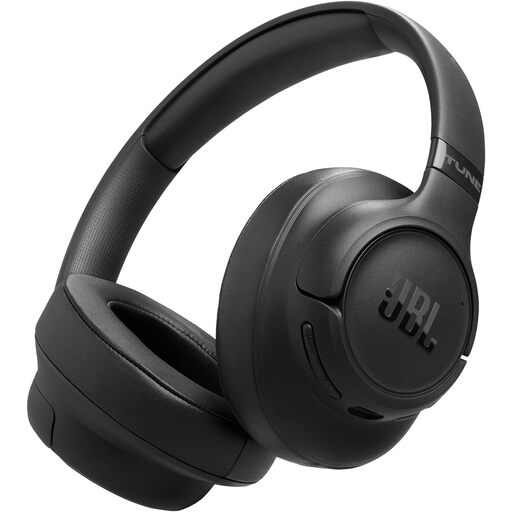
Why This Fits Their Persona: A practical over-ear option for trains, flights, hybrid working and extended listening away from a mains socket.
The listed battery figures separate ANC-off and ANC-on use, making the comparison more useful than one headline number.
Up to 76 hours with ANC off, up to 50 hours with ANC on, multipoint Bluetooth and a five-minute charge for up to five hours of playback.
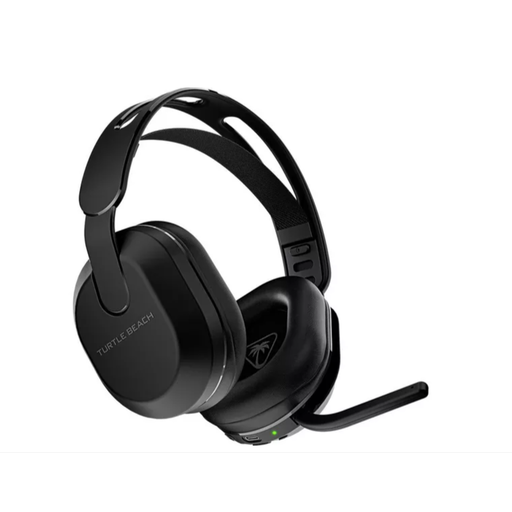
Why This Fits Their Persona: Designed for players moving between PS5, PS4, PC, Nintendo Switch and mobile Bluetooth devices.
It uses both a low-latency 2.4GHz USB transmitter and Bluetooth 5.2, rather than relying on Bluetooth alone for every platform.
Up to 40 hours of battery life, QuickSwitch source selection, flip-to-mute microphone and app-based 10-band EQ.
Yes, provided their dimensions and input options suit your desk. Compact desktop speakers with USB-C, AUX and Bluetooth can connect to a laptop, monitor or phone. Leave space around the cabinets and position the tweeters roughly towards ear level for more consistent listening.
Usually, active noise cancellation requires additional processing, so the stated battery life may be lower with ANC enabled. Compare the manufacturer’s ANC-on and ANC-off figures, and check whether a wired cable can be used when the battery is empty.
A dedicated 2.4GHz USB connection is generally worth considering when timing and microphone communication matter. Bluetooth can be useful for phones and compatible handheld devices, but platform support varies. Before purchasing wireless gaming headsets, confirm compatibility with your exact console, PC and any required USB adapter.