
24/7 Customer Support

Free returns

Same-day & Next-day Delivery

Quality Guaranteed

Unlock Your Welcome Offers: FREE Delivery | Up to 80% OFF | Free 30-day JoyPlus trial
Download the APP
Wireless speakers can make music, films, gaming and podcasts easier to enjoy, but the wrong model may leave you with weak bass, unreliable connections or a device that does not suit your room. UK shoppers also need to distinguish between a genuinely useful feature and a marketing phrase that adds cost without improving everyday listening.
This guide explains the key specifications to check, common buying traps and which wireless speakers may suit different listening habits.
A large wattage figure does not automatically mean better sound. RMS power is more useful than a peak or maximum figure because it indicates the output a speaker is designed to deliver continuously. However, driver size, cabinet construction, amplifier design and room placement also affect the result.
A compact portable Bluetooth speaker may be convenient for a kitchen or garden, while a larger tabletop model can provide greater separation between bass, mid-range and treble. Match the design to your space rather than choosing based on wattage alone.
Bluetooth speakers are convenient for phones and tablets, but wireless connectivity can vary by model. If you plan to connect a laptop, television, games console or turntable, check whether the speaker includes AUX, USB, optical, HDMI or Wi-Fi inputs.
For example, a tabletop wireless speaker with Wi-Fi and AirPlay 2 may be more suitable for a fixed home setup than a speaker relying exclusively on Bluetooth. A soundbar with subwoofer usually needs HDMI ARC or eARC for straightforward television integration.
An IP rating describes resistance to dust or water under specific test conditions. IPX7 generally indicates that a device can withstand temporary immersion in controlled conditions, but it does not mean the speaker is suitable for every outdoor situation. Salt water, grit, drops, charging-port exposure and extreme temperatures can still cause damage.
Check whether the charging port has to be closed, keep the speaker away from pools and inspect the manufacturer’s instructions before taking it outdoors.
For music, look at the driver configuration rather than relying only on phrases such as “deep bass”. A mid-bass driver handles lower and mid-range frequencies, while a tweeter is designed for higher frequencies. Two-way wireless stereo speakers can create more separation than a single-driver portable unit.
If you prefer detailed music playback, look for Hi-Res Audio support, codec compatibility and wired digital inputs. Hi-Res labels describe supported audio formats; the final result also depends on the source file, streaming service and connected device.
Portable models list an estimated playtime, usually measured at a particular volume. Actual battery life can be shorter at high volume, with lighting enabled or when using certain wireless connections. Check the stated test conditions where available.
A speaker with USB-C charging is convenient for UK households that already use compatible phone, tablet or power-bank chargers. For a permanent desk or living-room system, mains-powered desktop speakers may be more practical than regularly charging a battery.
Measure the available space before ordering. Desktop speakers should leave room for cables, controls and ventilation. Larger Hi-Fi speakers may require stands or careful positioning away from walls, particularly when they use rear bass reflex ports.
For a home cinema soundbar, check the width of your television stand and the clearance above or below the screen. A system with up-firing drivers may also need a suitable ceiling and open space for its intended effect.
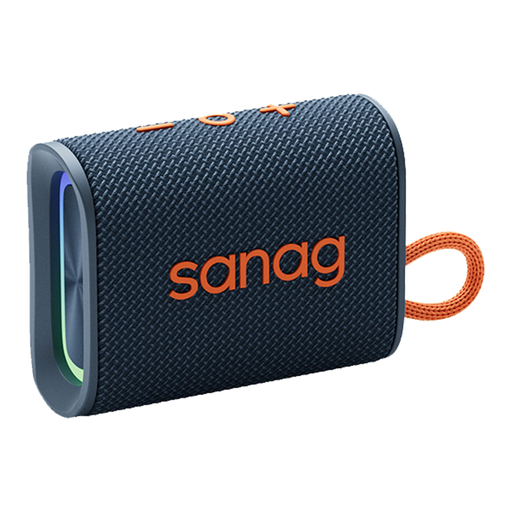
Why This Fits Their Persona: A straightforward option for listeners wanting a portable speaker for rooms, picnics or garden use without moving to a larger tabletop system.
Its listed IPX7 rating gives a clearer water-resistance specification than an unqualified “outdoor” label. Still follow the care instructions and keep the charging area dry.
Portable format, fabric exterior, RGB lighting and a stated IPX7 water-resistance rating.
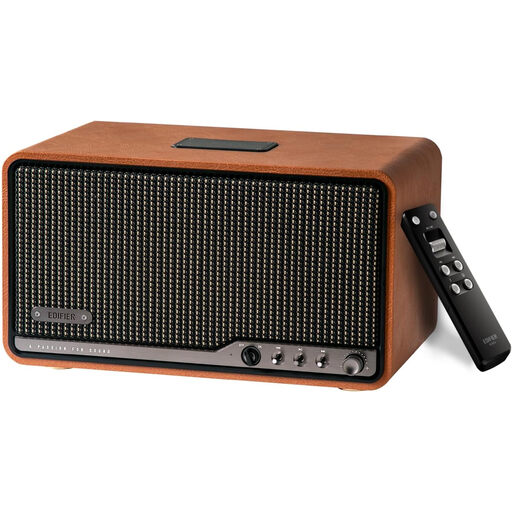
Why This Fits Their Persona: Designed for living rooms, bookshelves and desktops where detailed playback, styling and multi-room flexibility matter more than maximum portability.
It lists Bluetooth, AirPlay 2, USB-C and AUX, so you are not limited to one wireless source or forced to replace the speaker when your setup changes.
80W RMS output, Bluetooth 5.4 with LDAC, support for up to 24-bit/96kHz audio and AirPlay 2 multi-room playback.

Why This Fits Their Persona: The compact dimensions suit a home-office desk, while wired and wireless inputs support laptops, monitors and mobile devices.
Its specification includes USB-C and AUX alongside Bluetooth, reducing compatibility issues when low-latency wired audio is preferable.
66W RMS total output, Hi-Res Audio support, LDAC compatibility and bundled angled aluminium stands.
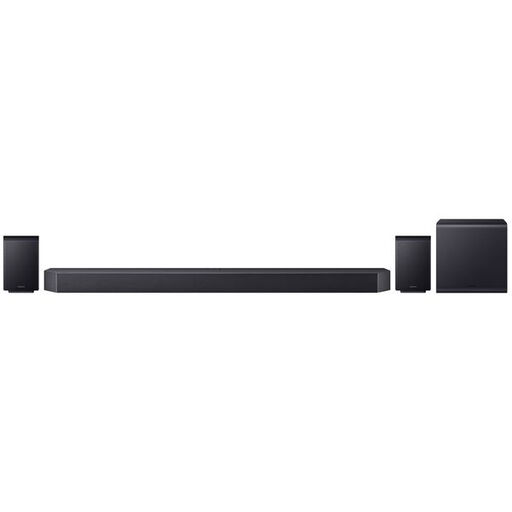
Why This Fits Their Persona: A dedicated home cinema system for viewers who want a broad surround arrangement and a separate wireless subwoofer rather than a small all-in-one speaker.
The specification identifies 11.1.4 channels, HDMI eARC, Wi-Fi, Bluetooth and a wireless subwoofer, making the system requirements easier to assess before purchase.
756W RMS rated power, DTS:X support, 300W RMS wireless subwoofer and three HDMI ports.
We have compiled a complete, real-time list of products that fully satisfy these strict selection criteria and UK safety regulations.
Yes, but check the connection options and audio delay. Bluetooth may introduce a small delay between picture and sound, while HDMI ARC or eARC is generally more suitable for a home cinema soundbar. Optical input can also be useful on compatible TVs.
Advertised playtime varies considerably. Portable models in this guide list figures from around 12 to 19 hours, but volume, lighting, codec choice and battery age affect real-world use. Avoid leaving a lithium battery speaker in extreme heat or charging it with damaged cables.