
24/7 Customer Support

Free returns

Same-day & Next-day Delivery

Quality Guaranteed

Unlock Your Welcome Offers: FREE Delivery | Up to 80% OFF | Free 30-day JoyPlus trial
Download the APP
A wireless headset can make gaming more comfortable, but the wrong model may create frustrating delays, connection problems or uncomfortable pressure after only a short session. Marketing terms such as “surround sound”, “low latency” and “all-day battery” can also mean different things between products.
Before buying wireless gaming headsets in the UK, focus on the connection method, platform support, microphone design, comfort and realistic battery performance. The right choice depends less on flashy features and more on how and where you plan to use the headset.
Bluetooth is convenient for phones, tablets and everyday listening, but it may introduce more delay than a dedicated 2.4GHz wireless headset. That delay can be noticeable in competitive games where sound needs to match on-screen action.
A headset with both Bluetooth and 2.4GHz gives you more flexibility. Use the 2.4GHz USB transmitter for gaming and Bluetooth for music, commuting or calls. Check whether the supplied transmitter uses USB-A or USB-C, particularly if you play on a laptop, Nintendo Switch or newer console.
Battery estimates can vary according to connection type, volume, microphone use and RGB lighting. A stated maximum usually applies under specific conditions. For example, the ASUS ROG Pelta lists up to 70 hours in 2.4GHz mode with RGB lighting switched off, while the Turtle Beach Stealth 500 lists up to 40 hours.
Look for USB-C charging, quick-charge support and a wired fallback. A headset that works as wired and wireless headphones is less likely to become unusable during a long gaming session.
A large driver, RGB lighting or a branded sound mode does not guarantee comfort or clear communication. Check the headset’s weight, ear-cup construction, headband adjustment and microphone position.
Memory foam cushions can help reduce pressure, while a detachable or flip-to-mute boom microphone is useful for switching between multiplayer gaming and casual listening. Over-ear headphones should surround the ear without pressing heavily against glasses or causing heat build-up.
For serious gaming, prioritise a low-latency wireless headset with a 2.4GHz receiver. Bluetooth 5.2, Bluetooth 5.3 or Bluetooth 5.4 is useful for mobile devices, but the Bluetooth version alone does not confirm gaming latency.
A tri-mode gaming headset normally combines 2.4GHz wireless, Bluetooth and USB-C or 3.5mm wired audio. This arrangement suits users who move between PC, console and mobile devices. If you want a PS5 gaming headset, confirm that the USB transmitter is supported by PS5. For an Xbox gaming headset, check the exact Xbox connection method: USB wireless compatibility is not universal across consoles.
Review the compatibility list rather than relying on the product category. A PC gaming headset may support Windows but require separate configuration software. A Nintendo Switch headset may work wirelessly in docked mode but use Bluetooth or a cable in handheld mode.
If you regularly change platforms, look for models listing support for PC, PlayStation, Nintendo Switch and mobile devices. Wired 3.5mm connectivity remains useful for controllers, laptops and devices that do not support the headset’s wireless receiver.
For extended sessions, compare weight, cushion material and headband design. The ASUS ROG Pelta weighs 309g, while the Nacon RIG 300 PRO HN is a wired alternative weighing 233g. A lighter frame may be preferable for long sessions, although fit and padding are equally important.
For voice chat, check whether the microphone is detachable, flexible, flip-to-mute or supported by monitoring controls. If you also need headphones for calls, commuting or music, consider active noise cancellation headphones with multipoint Bluetooth. ANC can reduce steady background noise, but it is not a replacement for a gaming-focused low-latency connection.
In the UK, use headphones responsibly: keep volume at a comfortable level, take breaks and avoid wearing noise-cancelling headphones in situations where you need to hear traffic or other hazards. For children, look for a clearly stated volume limit and follow the manufacturer’s age guidance.
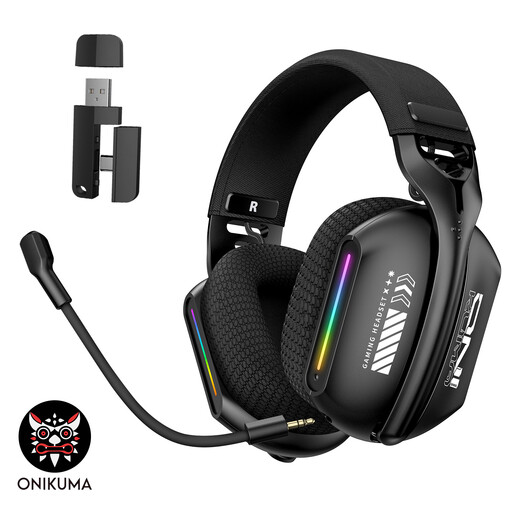
Why This Fits Their Persona: Its Bluetooth 5.3, 2.4GHz and wired modes give new PC or laptop gamers several connection options without requiring separate headsets.
The three connection modes reduce dependence on Bluetooth alone, while the adjustable microphone and Type-C charging add everyday practicality.
2.4GHz wireless, Bluetooth 5.3, wired mode, RGB lighting and memory foam ear cushions.
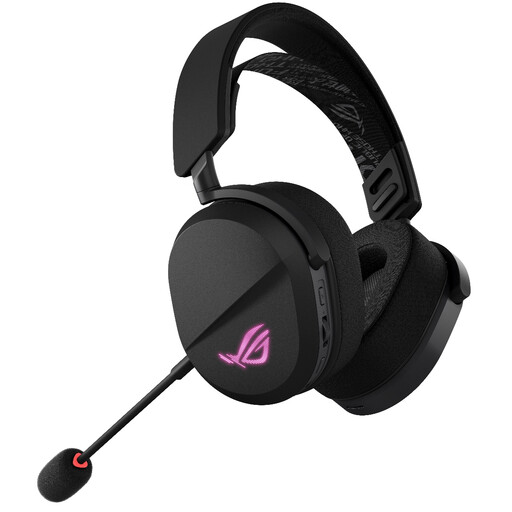
Why This Fits Their Persona: Suitable for players wanting one headset for PC, PS5, Nintendo Switch and mobile use, with software customisation for different games.
Its tri-mode design avoids relying on a single wireless standard, and the detachable microphone can be removed for general listening.
50mm titanium-plated drivers, USB-C wired mode, 2.4GHz and Bluetooth connectivity, up to 70 hours in specified conditions.
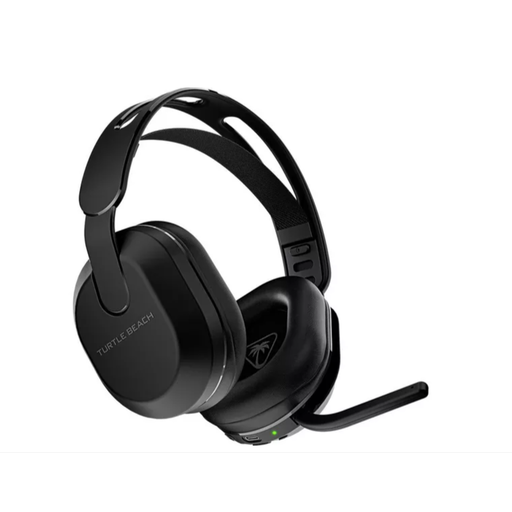
Why This Fits Their Persona: A practical match for PS5, PS4 and PC players who use voice chat frequently and switch between gaming and mobile audio.
The flip-to-mute microphone, mic monitoring and QuickSwitch button address common communication and connection frustrations.
Bluetooth 5.2 and 2.4GHz wireless, 40mm drivers, up to 40 hours of battery life and app-based EQ adjustment.
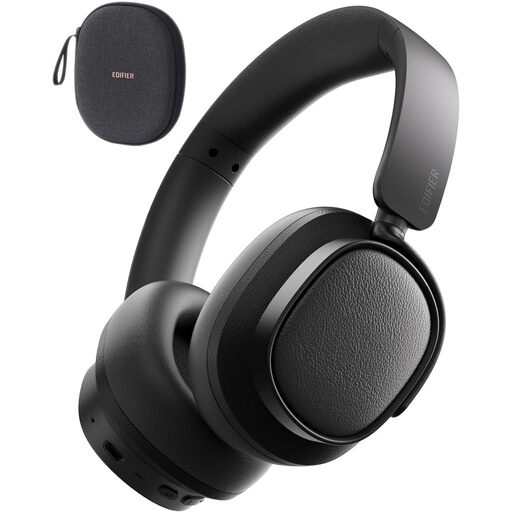
Why This Fits Their Persona: Designed for commuters, remote workers and listeners who prioritise noise control, calls and long playback over competitive gaming latency.
It clearly separates everyday Bluetooth use from wired operation and offers multipoint pairing for a phone and laptop.
Hybrid ANC, wired and wireless operation, multipoint Bluetooth 5.4, up to 92 hours in normal mode and 53 hours with ANC enabled.
We have compiled a complete, real-time list of products that fully satisfy these strict selection criteria and UK safety regulations.
Many models support PS5 and Nintendo Switch, but the connection method varies. Check whether the headset includes a compatible USB transmitter, supports Bluetooth or has a 3.5mm cable. A product listing that names the exact platform is more useful than a general “multi-platform” description.
Battery capacity and usage determine the practical runtime. RGB lighting, microphone use and ANC can reduce the stated maximum. Choose USB-C charging and, where possible, a wired mode so you can continue listening while the headset charges or after the battery is depleted.
Choose a model specifically designed for children rather than simply giving an adult gaming headset to a young user. The Lexibook kids’ wireless headphones listed above feature an 85 dB sound limit, Bluetooth 5.0, a 3.5mm cable and an adjustable, foldable design. Follow the manufacturer’s age guidance, use parental supervision and avoid prolonged high-volume listening.