
24/7 全天候客户支持

免费退货

当日/次日达

品质保障

开启新人专享福利: 全场免邮 | 低至 2 折 | 免费试用 30 天 JoyPlus 会员
下载 Joybuy
A women’s puffer vest can be a useful addition to a UK wardrobe, providing extra coverage without restricting your arms. However, attractive product photos and phrases such as “winter warm” do not always tell you whether a gilet will work for commuting, daily errands or outdoor use.
Before buying, look beyond the colour and headline description. The right choice depends on insulation, length, fit, fastening and care requirements. This guide explains the main pitfalls and compares suitable options for different lifestyles.
Padding can improve insulation, but warmth depends on several factors, including filling type, fabric weight, quilting and coverage. A cropped puffer vest may feel comfortable over a T-shirt or lightweight top, yet offer less protection around the hips than a longline puffer vest.
For colder days, consider a sleeveless padded coat with a higher collar, hood and longer hem. Also check whether the product is intended for mild winter weather, transitional seasons or more demanding outdoor conditions.
A fitted women’s layering jacket may look neat over a thin top but become restrictive over a jumper or hoodie. Measure your chest and compare it with the garment measurements rather than relying on your usual high-street size.
Cropped styles can work well with high-waisted trousers and casual knitwear. Longer styles are generally more practical over bulky jumpers, but the hem should not interfere with sitting, cycling or climbing stairs.
A zip-up puffer vest is convenient for commuting and everyday use, but inspect the product description for the type of closure and pocket design. Side zips, drawstring hems and secure pockets can make a noticeable difference in daily wear.
Care instructions also affect long-term value. Some polyester gilets require gentle washing, while others recommend dry cleaning and prohibit machine washing. Ignoring these instructions can affect the padding, shape or outer fabric.
Look for clear information about the shell fabric, filling and fabric weight. Polyester is commonly used in affordable quilted women’s outerwear because it is lightweight and easy to style. A listed weight such as 280 GSM gives you more useful information than a vague phrase such as “extra warm”, although it does not by itself guarantee a particular temperature rating.
Quilting helps distribute filling across the body. Check whether the panels are evenly spaced and whether the seams leave large areas with little padding. For a lightweight warm gilet, prioritise a balance between insulation and packability.
If you are buying an autumn and winter gilet for regular outdoor use, compare the stated garment length with your own height. A hem that sits at mid-thigh on one person may sit closer to the knee on another.
A sleeveless design should allow comfortable arm movement without pulling across the chest. Check for:
For cycling or active walking, avoid excessive bulk around the shoulders. For desk-based commuting, prioritise a cut that sits comfortably over a blazer, jumper or sweatshirt.
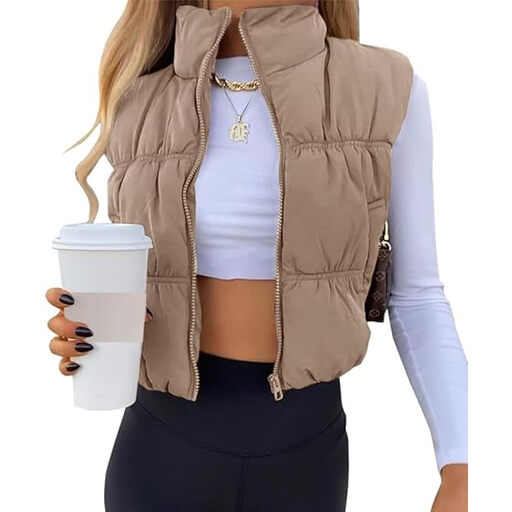
Why This Fits Their Persona: A practical starting point for shoppers wanting a lightweight gilet for everyday autumn layering, casual outfits and mild winter days in the UK.
The product description specifies a zip-up front, adjustable drawstring hem and lightweight polyester construction, rather than relying only on an unspecified warmth claim.
Cropped silhouette, stand collar, adjustable hem and cold-water hand or gentle machine-wash guidance.
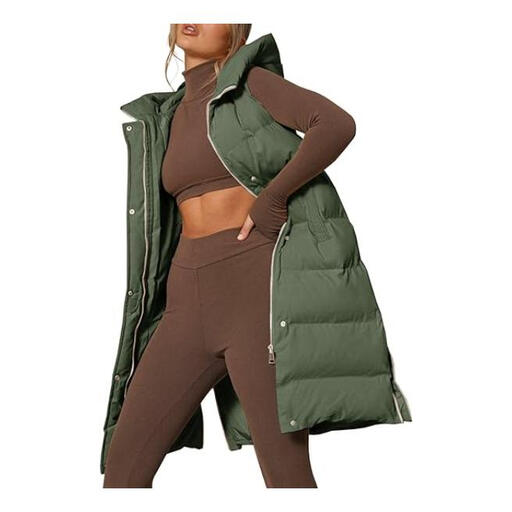
Why This Fits Their Persona: Suits shoppers who value extra coverage and a more structured winter layer for commuting, casual outings and light outdoor activities.
Its listed features include a long sleeveless cut, hood, stand collar, front zip and pockets, helping buyers assess coverage and function before ordering.
Longline coverage, hooded design, stand collar and pockets, with a polyester fabric described as lightweight and breathable.
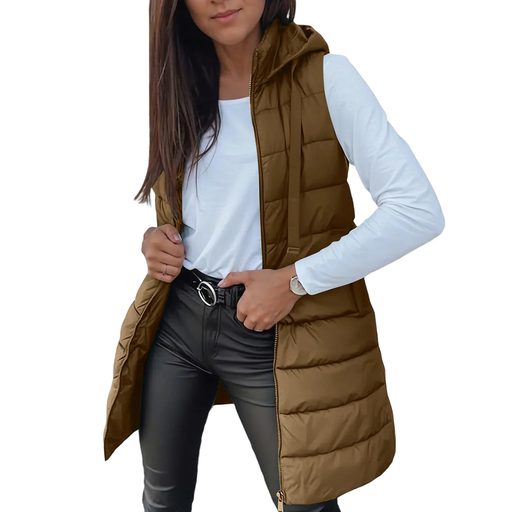
Why This Fits Their Persona: A practical match for regular winter commuters and shoppers who prefer generous coverage over jumpers, hoodies and long-sleeve tops.
The listing gives a 100% polyester shell, polyester filling and 280 GSM fabric weight, plus clear instructions against machine washing and spin drying.
Longline hooded cut, quilted construction, side zip closure and stated 280 GSM fabric weight.
For a neat everyday outfit, layer a fitted gilet over a roll-neck jumper, straight-leg jeans and ankle boots. A longline puffer vest works with leggings and a tunic-length knit, while a cropped puffer vest pairs naturally with high-waisted trousers or a hoodie.
In wet or windy conditions, a puffer vest should not automatically be treated as a waterproof coat. Check the product listing for a specific water-resistance rating. If none is provided, use it beneath a waterproof shell rather than relying on it as rain protection.
Follow the product label before washing. Keep zips closed, avoid bleach where prohibited and use the recommended drying method. Do not compress a padded garment while it is damp, as this may affect its shape and comfort.
Inspect the zip, seams and hem periodically, particularly if the vest is worn for commuting or outdoor activities. Rotating it with another outer layer can reduce frequent washing and help preserve the fabric.
We have compiled a complete, real-time list of products that fully satisfy these strict selection criteria and UK safety regulations.
It can be suitable for layering during winter, but warmth varies by filling, fabric weight, length and weather conditions. A hooded or longline style generally provides more coverage than a cropped puffer vest. For freezing temperatures or heavy rain, combine the vest with a suitable jumper and waterproof outer shell.
Size up only when the garment measurements indicate that your normal size will be tight over knitwear or a hoodie. Compare the stated bust, shoulder and length measurements with a similar garment you already own. An oversized fit can improve layering, but excessive room may allow cold air to enter.
Always follow the specific care label. Some styles allow cold hand washing or gentle machine washing, while others recommend dry cleaning and flat drying. Avoid bleach and high heat unless the manufacturer explicitly permits them.