
24/7 Customer Support

Free returns

Same-day & Next-day Delivery

Quality Guaranteed

Unlock Your Welcome Offers: FREE Delivery | Up to 80% OFF | Free 30-day JoyPlus trial
Download the APP
Choosing a women’s antiperspirant deodorant spray is not simply a matter of picking the nicest fragrance. UK shoppers also need to compare sweat control, skin comfort, clothing marks, can size and aerosol safety. Marketing language can make similar products appear very different, while important details are often hidden in the ingredients or small print.
As the Joybuy Product Recommendation Officer, I focus on practical differences rather than promotional wording. Here is how to compare a deodorant spray for women and avoid paying for features that may not suit your routine.
A 72-hour antiperspirant claim refers to the protection period stated for the product, but everyday results can vary with exercise, weather, stress, clothing and application. It does not mean you should leave the product on for three days without washing.
For many UK routines, 48-hour protection may already be sufficient. If you commute, work in a warm environment or exercise regularly, a 72-hour product may offer a longer stated protection window, but correct application remains important.
An invisible dry deodorant is designed to reduce visible white residue, but spraying too close, applying too much or dressing before it dries can still cause transfer. Anti-stain technology is useful, but it is not a replacement for following the instructions on the can.
If your wardrobe includes black jumpers, white shirts or colourful workwear, look for specific wording about white marks and yellow stains rather than relying only on “clear” or “dry” on the front label.
A deodorant mainly helps control or mask odour. An antiperspirant generally contains an aluminium-based active ingredient intended to reduce perspiration. If your priority is sweat and odour protection, check the ingredient list for an antiperspirant active such as aluminium chlorohydrate or aluminium sesquichlorohydrate.
A product described as a natural or aluminium-free deodorant may be suitable for odour control, but it should not automatically be expected to manage underarm wetness in the same way.
Compare the stated protection period—commonly 24, 48 or 72 hours—with your actual needs. Products in this range include:
A longer number is not automatically a better fit. Fragrance preference, skin tolerance and the application instructions may matter more for daily use.
An alcohol-free deodorant may feel more comfortable for some people, particularly if underarms are prone to dryness or stinging. However, “alcohol-free” does not mean irritation-free: fragrance ingredients can also be unsuitable for some users.
Do not apply aerosol deodorant to broken, irritated or freshly shaved skin unless the label specifically allows it. If you develop redness, itching or discomfort, stop using the product. Check the current packaging because formulas and warnings can change.
Common formats include:
Compare price per 100ml rather than the shelf price alone. All aerosol cans should be kept away from heat, flames and direct sunlight, and must not be pierced or burned. Use sprays in a well-ventilated area and avoid inhaling the mist.
The following options match different shopping priorities. Product descriptions and ingredient details should always be checked against the packaging supplied.
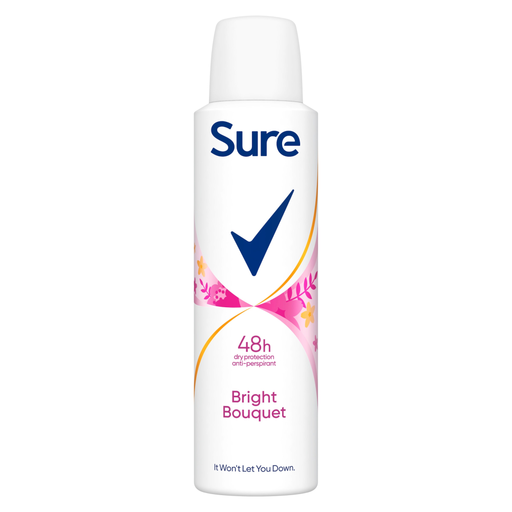
Why This Fits Their Persona: A compact 150ml choice for shoppers starting a daily routine, commuting or keeping a can in a gym bag.
Its stated 48-hour protection is more realistic for ordinary daily use than choosing a longer claim purely for its headline.
Alcohol-free formula, fruity strawberry-apricot-vanilla fragrance and an aluminium aerosol can described as infinitely recyclable.
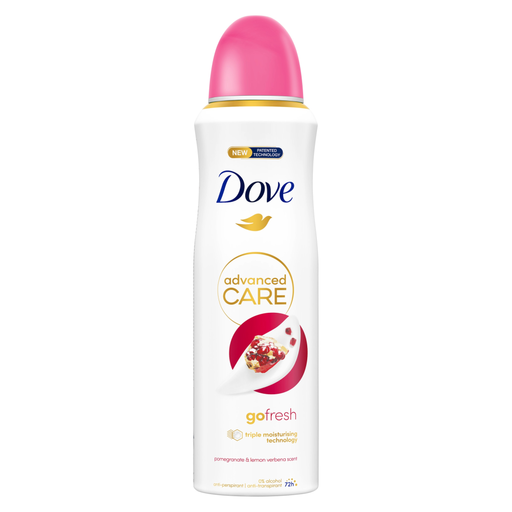
Why This Fits Their Persona: Suits shoppers seeking a 200ml everyday spray with a fresh fragrance and added underarm moisturising care.
The listing identifies an invisible dry finish and advises allowing the spray to dry before dressing, helping address clothing-transfer concerns.
Stated 72-hour antiperspirant protection, pomegranate and lemon verbena fragrance, and a vegan formula described as PETA-approved.
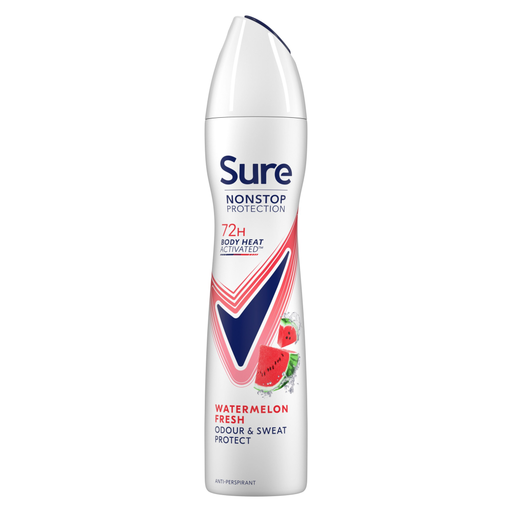
Why This Fits Their Persona: The larger 250ml can is practical for frequent users, active lifestyles and households where deodorant is used daily.
The product instructions specify short bursts at around 15cm in a ventilated area, reducing the risk of excessive application.
Stated 72-hour protection, alcohol-free formula, fresh watermelon scent and a recyclable aluminium can.
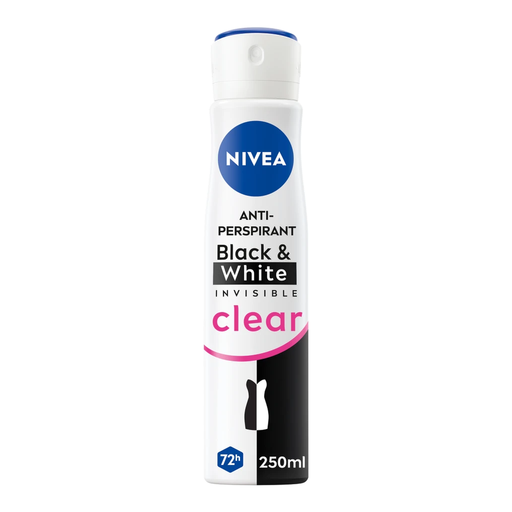
Why This Fits Their Persona: A suitable comparison point for people who regularly wear black, white or work clothing and want a larger can.
Its listing specifically addresses white marks on dark clothing and yellow stains on white garments, rather than using only a general “fresh” claim.
Stated 72-hour antiperspirant protection, no ethyl alcohol in the listed formula and a delicate floral fragrance.
We have compiled a complete, real-time list of products that fully satisfy these strict selection criteria and UK safety regulations.
An alcohol-free deodorant may be more comfortable for some users, but sensitivity can also relate to fragrance and other ingredients. Check the full label, avoid damaged skin and stop use if irritation develops. A “dermatologically tested” description should not be treated as a guarantee for every individual.
A 150ml, 200ml or 250ml can’s lifespan depends on how often it is used and how long each spray lasts. Short, even bursts generally use less product than prolonged spraying. Comparing price per 100ml can help assess running cost.
Only use a whole-body product where its label permits. Even then, apply to external skin only, never internal intimate areas, and avoid broken or freshly irritated skin. Regular underarm deodorant should not automatically be used elsewhere on the body.