
24/7 Customer Support

Free returns

Same-day & Next-day Delivery

Quality Guaranteed

Unlock Your Welcome Offers: FREE Delivery | Up to 80% OFF | Free 30-day JoyPlus trial
Download the APP
Choosing women's health supplements can feel surprisingly difficult. Shelves and online listings are filled with products promising hormonal balance, more energy, intimate comfort or easier menopause symptoms. Yet the most expensive option is not automatically the most suitable, and a long ingredient list does not guarantee better value.
A practical approach is to start with your specific goal, check the full label and assess whether the product fits your diet, medicines and life stage.
Ingredients such as red clover, dong quai, maca, sage and evening primrose oil are often used in menopause support supplements, PMS supplements and hormonal balance supplements. However, traditional use is not the same as a guaranteed medical effect. Food supplements should support a balanced diet and lifestyle, not replace medical advice or prescribed treatment.
Be cautious of wording that promises to “cure”, “reverse” or “eliminate” symptoms. Menopause symptoms, menstrual changes and intimate discomfort can have different causes, so persistent or severe symptoms should be discussed with a GP or pharmacist.
A women's multivitamin may already contain vitamin B6, zinc, magnesium, selenium, vitamin D or iodine. Adding a separate menopause formula, PMS product and energy supplement could result in unnecessary duplication.
Before buying, compare the per-day serving, not simply the amount per capsule or the number of ingredients. Check the product label against other supplements you take.
Botanical ingredients can interact with medicines and may not be appropriate during pregnancy, breastfeeding or for people with certain medical conditions. Phytoestrogen-containing ingredients, including red clover and soy isoflavones, deserve particular care if you have a hormone-sensitive condition or use HRT or hormonal contraception.
“Vegan”, “gluten-free” or “natural” describes a product feature, not a personal safety guarantee.
Start with the outcome you want to support:
A product providing one capsule daily may be easier to use consistently than a three-capsule serving. Gummies can be convenient, but also check sugar and carbohydrate content. Softgels may contain gelatine, so they are not automatically suitable for vegan or vegetarian shoppers.
Pay attention to NRV percentages for vitamins and minerals. A high percentage is not necessarily an advantage if you already consume the nutrient elsewhere. For botanicals, identify the exact amount per daily serving and whether the label specifies an extract ratio or standardised active compound.
Look for clear information about:
Always read the supplied label because formulations and instructions can change.
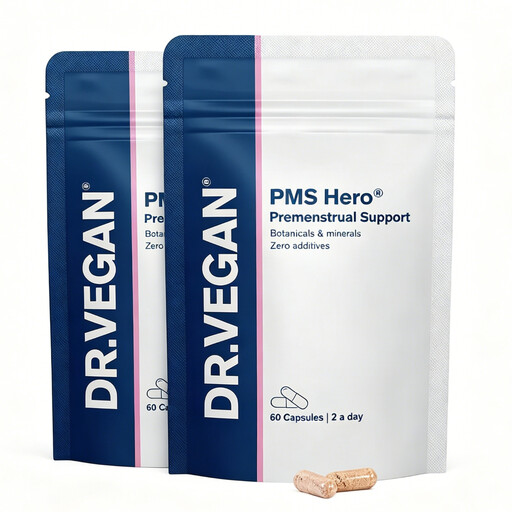
Why This Fits Their Persona: A two-pack gives cycle-focused shoppers a practical starting format. It provides chaste berry, magnesium, vitamin B6, zinc and saffron in a vegan capsule.
The label sets out a defined two-capsule serving and identifies the principal ingredients rather than relying only on broad “hormone” wording.
Vegan formula; 150 mg magnesium and 10 mg zinc per two-capsule serving.
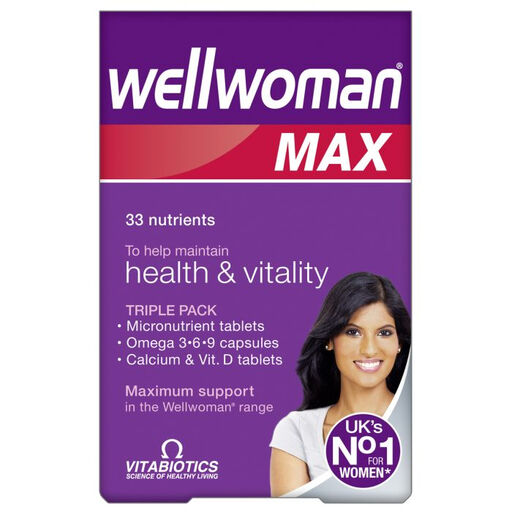
Why This Fits Their Persona: Suitable for shoppers wanting broad nutritional coverage rather than one botanical. The pack contains 84 tablets and uses a three-tablet daily serving according to the product information.
Its nutrition panel makes the daily nutrient quantities visible, helping buyers compare it with existing supplements before purchase.
Includes iron, folic acid, magnesium, vitamin D, zinc and iodine; contains soy, fish, milk and gluten.
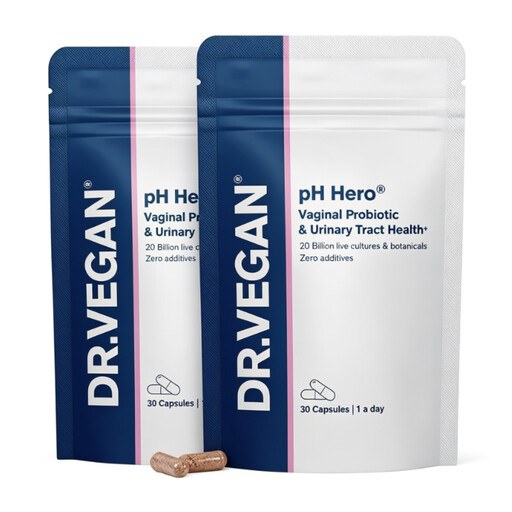
Why This Fits Their Persona: Designed for shoppers prioritising vaginal, urinary and digestive support in one vegan product, with two capsules listed as the daily dose.
It identifies five Lactobacillus strains, inulin, cranberry and sea buckthorn, allowing a more precise comparison than a vague “intimate wellness” claim.
20 billion CFU across five listed strains; vegan and free from major listed allergens.
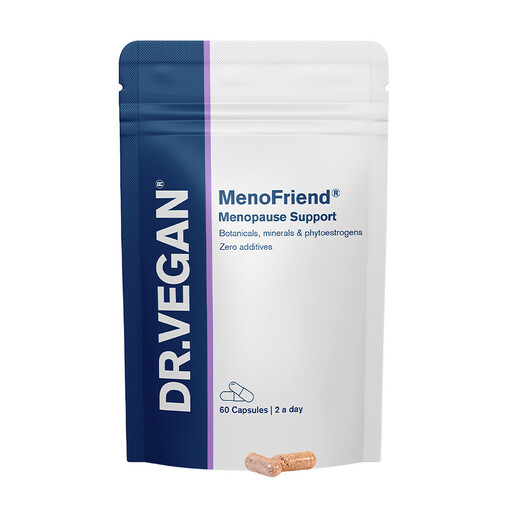
Why This Fits Their Persona: A vegan, allergen-conscious option for adults seeking a combined botanical and nutrient formula across perimenopause, menopause or post-menopause.
The label provides quantities for the two-capsule serving and lists its botanical, vitamin and mineral components.
Contains maca, sage, red clover, magnesium, selenium and vitamin D3; vegan, gluten-free, lactose-free, dairy-free and soy-free.
We have compiled a complete, real-time list of products that fully satisfy these strict selection criteria and UK safety regulations.
If capsules are difficult to swallow, consider gummies or softgels, while remembering to check sugar, gelatine and daily serving size. Evening primrose oil products commonly use softgels and may list linoleic acid and GLA amounts. Red clover capsules may offer a simpler single-botanical formula than a multi-ingredient menopause blend.
For vegan women's supplements, confirm that both the active ingredients and capsule shell meet your requirements. A product described as vegetarian may still contain dairy-derived ingredients, and probiotics can contain milk or soya used during production.
Follow the product label rather than assuming that more time means better value. Some formulas recommend daily use over several weeks or menstrual cycles, while others are intended as general nutritional support. Stop if you experience an adverse reaction and seek advice if symptoms persist.
Sometimes, but check for duplicated nutrients such as vitamin B6, vitamin D, magnesium, iron and iodine. Ask a pharmacist or GP before combining products if you take HRT, hormonal contraception, blood thinners or other regular medicines.
No. Probiotics, cranberry and urinary tract support products are not a replacement for diagnosis or treatment. Seek prompt medical advice for burning urination, blood in urine, fever, back pain or symptoms that do not improve.