
24/7 全天候客户支持

免费退货

当日/次日达

品质保障

开启新人专享福利: 全场免邮 | 低至 2 折 | 免费试用 30 天 JoyPlus 会员
下载 Joybuy
Buying women's health supplements can seem straightforward until you compare serving sizes, nutrient levels and life-stage formulas. A brightly coloured bottle may promise energy, hormonal balance or everyday vitality, but the label often tells a more useful story.
The main risks are not usually a lack of choice, but choosing a product that does not match your needs.
A product containing dozens of vitamins, minerals and botanicals is not automatically appropriate for every woman. High-potency women's multivitamins may provide more than you need, while some targeted products contain little of the nutrient you are specifically looking for.
Check the amount per daily serving rather than counting the number of ingredients. Pay particular attention to iron, vitamin D, folate, iodine and vitamin B12.
A bottle labelled “90 tablets” may contain only 30 servings if the recommended intake is three tablets daily. Compare the number of daily servings, not just the tablet count.
This is also important for convenience. A one-tablet product may suit a busy routine, while a two- or three-tablet formula may be less convenient but provide a broader nutrient profile.
Botanical ingredients can still interact with medicines or be unsuitable during pregnancy, breastfeeding or for people with hormone-sensitive conditions. Fish oil, gelatine, soya and other allergens may also be present in capsules or tablet coatings.
Always read the current packaging, especially if you take anticoagulants, hormone replacement therapy, prescribed medicines or other supplements.
Look for the amount of each nutrient per daily serving and compare it with the Nutrient Reference Value (NRV) where shown. A higher percentage is not necessarily more useful. For example, stacking several products containing vitamin D, iron or folic acid can lead to unnecessary intake.
For daily vitamins for women, a balanced formula may be more practical than an extremely high-strength product unless a healthcare professional has advised otherwise.
The correct formula depends on your circumstances:
Check whether the product contains fish, soya, milk, gluten, gelatine or other ingredients relevant to you. Gummies can be easier to take, but they may contain sugar and usually provide a smaller range of minerals than a comprehensive tablet. Capsules and tablets are often more concentrated, while liquid or chewable formats may suit people who dislike swallowing pills.
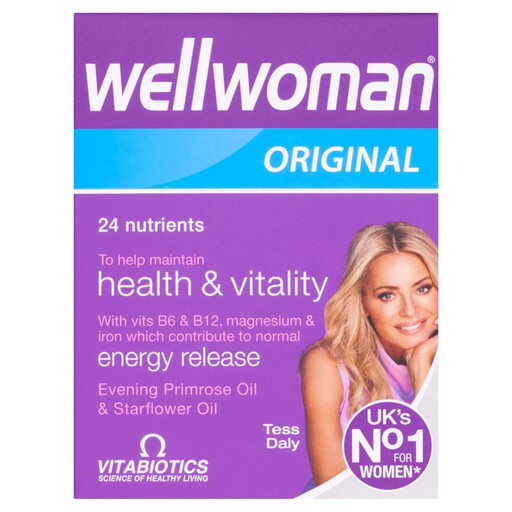
Why This Fits Their Persona: A straightforward one-capsule daily option for adult women beginning a regular supplement routine, with a 30-capsule pack that is simple to budget for and store.
The label states one capsule per day, making the 30-capsule supply easy to interpret. It also lists allergens, including soya, for a clearer suitability check.
Includes vitamin D, iron, folic acid, zinc and B vitamins, plus evening primrose and starflower oils.
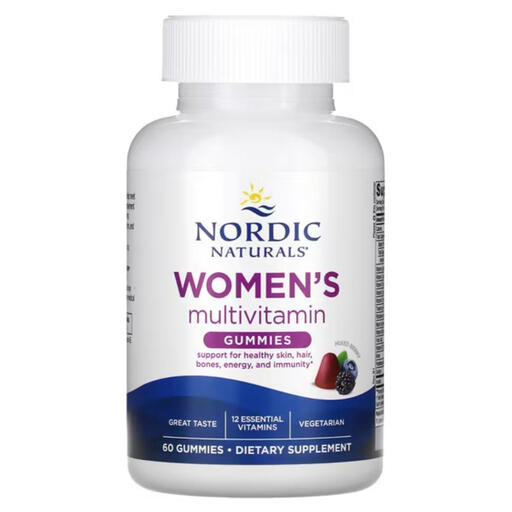
Why This Fits Their Persona: Suitable for shoppers who prioritise a chewable format and a clearly specified ingredient profile over swallowing tablets.
The serving is clearly stated as two gummies daily, and the listing identifies 3g of sugar per serving, helping buyers account for the format.
Uses pectin rather than gelatine and provides vitamins A, C, D3, E, K2, B vitamins, biotin and folate.
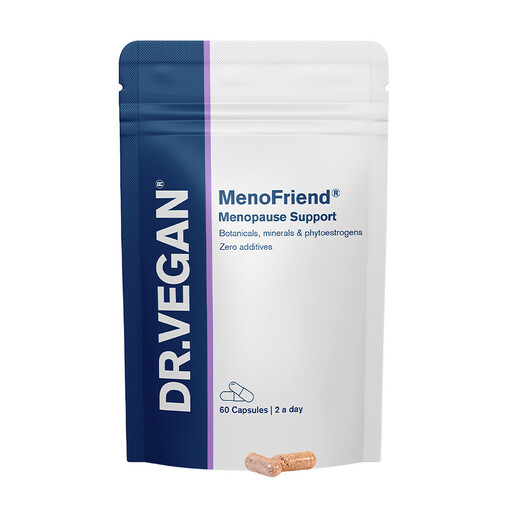
Why This Fits Their Persona: Designed for women seeking a vegan botanical and mineral formula during perimenopause, menopause or post-menopause.
It identifies its botanical ingredients and cautions against use with HRT, hormone-sensitive conditions and certain medicines, so suitability is not assumed.
Vegan, gluten-free, dairy-free and soya-free; provides sage, red clover, maca, magnesium, calcium, selenium and vitamin D3.
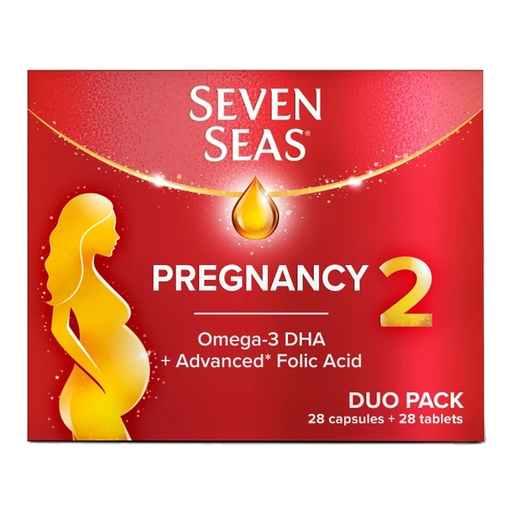
Why This Fits Their Persona: A dual-dose prenatal option for pregnant women who want a multivitamin tablet and omega-3 capsule in one daily pack.
The product separates its tablet and omega-3 capsule and states the daily quantities, including 400 micrograms of total folate and 200mg DHA.
Includes iron, vitamin D, magnesium and B vitamins; the listing identifies fish and bovine ingredients.
We have compiled a complete, real-time list of products that fully satisfy these strict selection criteria and UK safety regulations.
Shelf life varies by product, but many bottles provide 30 to 90 daily servings. Check the best-before date, storage instructions and the number of servings rather than relying on tablet count. Keep supplements dry, below the stated temperature and away from children.
Sometimes, but overlapping nutrients can increase total intake unnecessarily. Check for repeated iron, vitamin D, folic acid, iodine, vitamin A and omega-3. Ask a pharmacist or GP before combining supplements if you take prescribed medicines or are pregnant.
They are not a substitute for a varied diet. A supplement may be useful when dietary intake is limited or when a life stage creates specific nutritional considerations. Choose according to your actual needs, follow the label and review the choice if your circumstances change.