
24/7 Customer Support

Free returns

Same-day & Next-day Delivery

Quality Guaranteed

Unlock Your Welcome Offers: FREE Delivery | Up to 80% OFF | Free 30-day JoyPlus trial
Download the APP
Finding comfortable women’s knit jumpers should be straightforward, yet product photos and vague fabric descriptions can make comparison difficult. A jumper may look substantial online but feel thin in person, while an oversized shape can become impractical under a coat. Sleeve length, neckline, fibre content and care requirements all affect how often you will wear it.
This guide highlights common buying pitfalls, explains the specifications worth checking and matches several knitwear options to different wardrobes and lifestyles.
“Soft” is a useful description of hand feel, but it does not tell you whether a garment is breathable, stretchy, warm or easy to care for. Check the fibre composition instead. Cotton can feel breathable and familiar against the skin, acrylic can add lightness and shape retention, while polyester may contribute durability and structure.
A lightweight knit jumper may be more practical for spring, autumn or indoor layering than a thick winter pullover. For colder weather, look for fabric weight, a close-fitting neckline or a generous cut that accommodates an underlayer.
A slim-fit women’s roll-neck jumper and an oversized women’s tunic jumper serve completely different purposes. Product photography may not clearly show the amount of ease around the bust, shoulders and upper arms.
Before ordering, compare the garment measurements with a jumper you already own. Pay attention to:
If you prefer a relaxed silhouette, do not simply size up without checking the sleeve and shoulder proportions. A deliberately loose design is usually more balanced than a close-fitting garment bought several sizes larger.
Some knits can tolerate a delicate machine cycle, while others require hand washing and flat drying. Repeated tumble drying, high heat and hanging heavy knitwear can contribute to stretching or distortion.
Care instructions are not a minor detail. A cable-knit pullover or ribbed jumper that needs careful handling may be worthwhile if you are prepared to follow the label, but it may not suit someone who wants quick, low-maintenance laundry.
Look for a clear material percentage rather than a description such as “premium fabric”. For example, a 60% cotton and 40% acrylic blend gives a more useful basis for comparison than an unspecified soft knit. Fabric weight, measured in GSM (grams per square metre), can also indicate how substantial a garment is, although construction and fibre type still affect warmth.
A 210 GSM knit is positioned as a lighter layer for spring and summer, whereas a 280 GSM ribbed knit is more substantial for autumn and cooler indoor spaces. Neither figure alone guarantees warmth, so consider the neckline, fit and whether you will layer it.
A close roll-neck can help retain warmth and works neatly beneath blazers, jackets and coats. A crew neck is easier to accessorise and generally works across casual and relaxed office outfits. A V-neck sweater vest can add a layer without covering the arms.
For transitional dressing, consider:
Ribbed hems, side slits, stretch and neckline structure affect comfort and movement. A side-slit tunic may sit more easily over leggings, while a ribbed hem can help a shorter knit top maintain its shape. Look for care guidance that matches the fibre blend and inspect the size chart rather than relying only on S, M, L or XL labels.
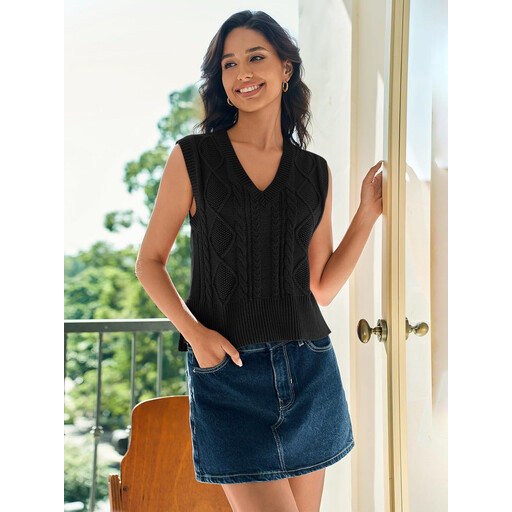
Why This Fits Their Persona: This sleeveless layer can extend an existing wardrobe across spring, autumn and winter. Wear it over a shirt, long-sleeve top or on its own with jeans, skirts or shorts.
The 60% cotton and 40% acrylic composition is stated clearly, avoiding an unspecified “soft knit” description. Its loose fit also avoids relying on an inaccurate size-up for layering.
V-neck styling, cable-knit detailing and a lightweight sleeveless construction make it easy to layer in multiple seasons.
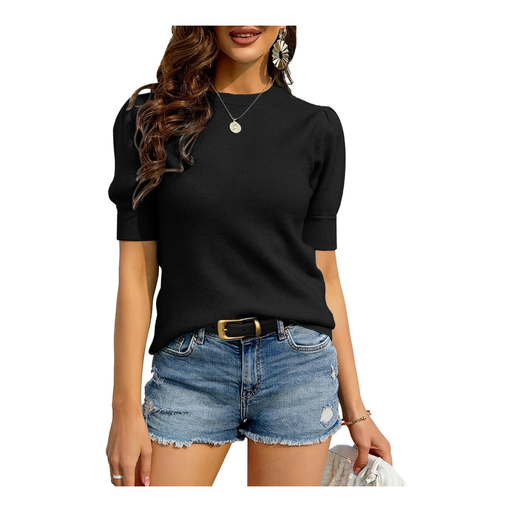
Why This Fits Their Persona: A shopper prioritising fabric transparency and a defined silhouette may prefer this 210 GSM knit, which is positioned for spring, summer and transitional outfits.
The listing identifies a 65% cotton and 35% polyester blend and gives a fabric-weight figure, making seasonal comparison more practical.
Puff sleeves add shape, while the crew neck and stretch knit work with jeans, skirts and light jackets.
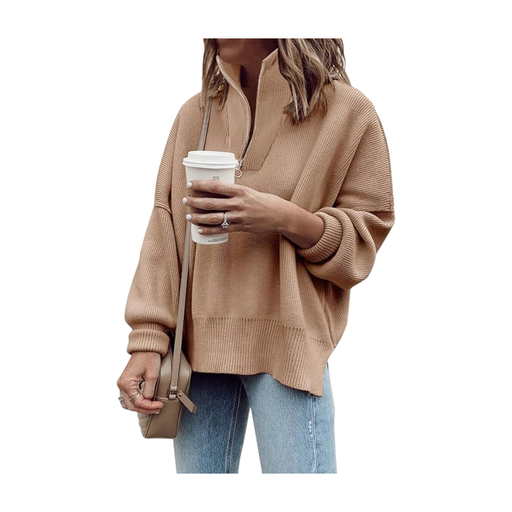
Why This Fits Their Persona: The longer, oversized shape suits cooler commutes, relaxed weekends and layered autumn and winter knitwear outfits.
The listing states a 70% cotton and 30% acrylic blend, 280 GSM fabric weight and side slit, so the substantial feel and longer shape are clearly described.
Quarter-zip neckline, ribbed texture and side slit support adjustable layering and movement over leggings or jeans.
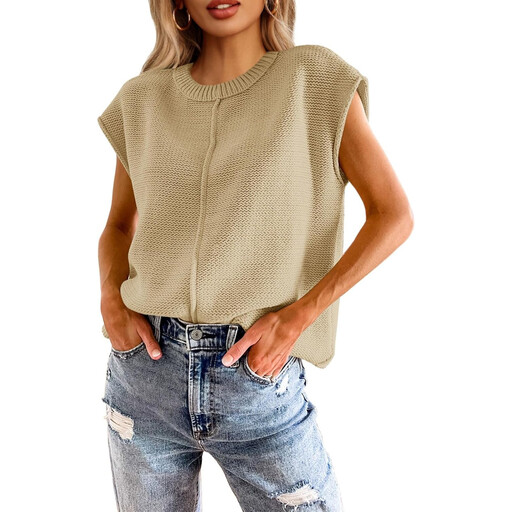
Why This Fits Their Persona: This is suited to shoppers wanting a loose summer knit top for mild days, relaxed offices, holidays or cool evenings.
The listing provides fibre content, garment measurements and cap-sleeve details, helping you assess airflow, coverage and fit before ordering.
The 55% acrylic and 45% cotton blend, crew neck and relaxed fit create a simple option for light layering.
We have compiled a complete, real-time list of products that fully satisfy these strict selection criteria and UK safety regulations.
A lightweight knit jumper with a crew neck, cap sleeves or short sleeves is useful for spring and summer layering. For autumn, choose a ribbed long-sleeve jumper, roll-neck or tunic with enough room for a base layer. Check fabric weight and fibre content rather than relying on the season stated in the product title.
Follow the individual care label. Use a laundry bag and delicate or cold cycle where permitted, avoid bleach and keep heat low. Many shaped or heavier knits are better dried flat, as hanging wet fabric can pull the shoulders and hem out of shape.
Measure a similar garment laid flat and compare its bust, length and shoulder measurements with the listing. Also check whether the design is slim, relaxed or oversized. This is particularly important for women’s casual jumpers, sweater vests and tunic styles, where the intended amount of ease varies considerably.