
24/7 全天候客户支持

免费退货

当日/次日达

品质保障

开启新人专享福利: 全场免邮 | 低至 2 折 | 免费试用 30 天 JoyPlus 会员
下载 Joybuy
Navigating the world of women's multivitamins can feel overwhelming. Shelves are packed with bottles promising more energy, better immunity and glowing skin. But with so much marketing clutter, it's easy to make a purchase that doesn't quite match your body's actual needs. As a Joybuy Product Recommendation Officer, my role is to help you see past the hype and make an informed choice. Before you add any bottle to your basket, let's look at a few common pitfalls that UK shoppers often encounter.
daily vitamins for women formula might fail to provide targeted support, lacking crucial nutrients for your specific life stage, such as adequate iron for younger women or bone-supporting nutrients for those over 50.To avoid these traps, focus on a few core parameters. Analysing these details will help you find a women's multivitamin that genuinely aligns with your health goals.
The ingredient list is more important than the front-of-pack claims. Look for body-ready and absorbable forms of key nutrients.
wholefood vitamins for women. These often come with the natural co-factors and enzymes found in the food source, which can aid recognition and absorption by the body.Your multivitamin should reflect your personal health profile.
vitamins for women's energy. A multivitamin with iron is also important for many women of childbearing age to help reduce tiredness and fatigue.multivitamin for women over 50 will reflect this.prenatal vitamins. These contain the recommended 400mcg of Folate (folic acid) to support foetal development and will use a pregnancy-safe form of Vitamin A, such as Beta-Carotene, instead of Retinol.The right multivitamin is one you will take consistently.
women's multivitamin gummies or powders can be excellent alternatives. Just be sure to check for added sugars.vegan multivitamin women or halal.Based on these practical criteria, here are a few options from our catalogue that are well-matched to different needs and lifestyles.
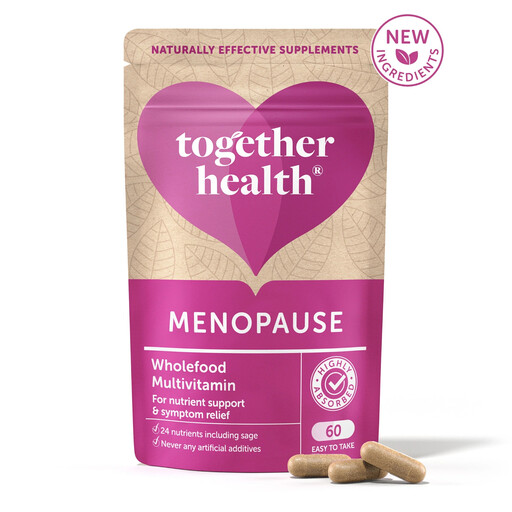
Why This Fits Their Persona: This formula is designed for women seeking targeted support during perimenopause and menopause. It combines essential vitamins with botanicals like sage extract, used to help with hot flushes, and KSM-66 ashwagandha to support stress and hormone balance.
It directly counters the "one-size-fits-all" pitfall by focusing on the unique needs of menopause. It also addresses bioavailability by using wholefood-sourced nutrients that are gentle on the stomach.
Includes targeted botanicals (Sage & Ashwagandha) alongside 22 wholefood vitamins and minerals. Certified vegan and free from synthetic fillers.
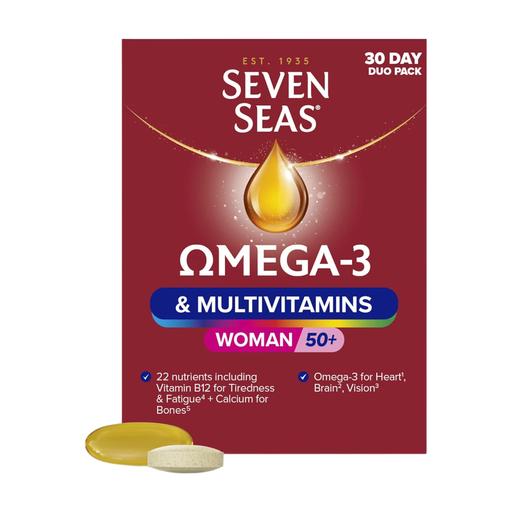
Why This Fits Their Persona: This 2-in-1 pack is specifically for women over 50. It combines a multivitamin tablet containing Calcium and a high level of Vitamin D for bone maintenance with a separate Omega-3 capsule to support heart, brain and vision health.
This duo-pack avoids the "one-size-fits-all" approach by providing a formula specifically for the 50+ demographic. The separate Omega-3 capsule delivers a targeted nutrient that isn't found in most standard multivitamins.
Convenient 2-in-1 pack with 22 vitamins and minerals plus Omega-3. High levels of Vitamin B12 (1400% NRV) and Vitamin D (500% NRV) to support energy and bone health.
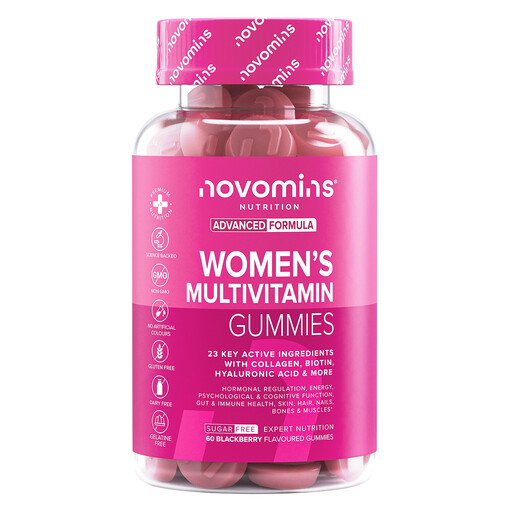
Why This Fits Their Persona: For those who dislike swallowing pills, these blackberry-flavoured gummies offer a pleasant alternative. The formula is comprehensive, with 23 active ingredients, and caters to various dietary needs as it is sugar-free, vegan, halal and gluten-free.
This product proves that an alternative format doesn't mean a compromise on quality. It avoids being a simplistic, sugary gummy by offering a complex formula with added ingredients like CoQ10 and gut-friendly bacteria.
Convenient and pleasant gummy format. Comprehensive formula including Collagen, Sodium Hyaluronate and friendly bacteria. Caters to multiple dietary requirements (vegan, halal, gluten-free).
We have compiled a complete, real-time list of products that fully satisfy these strict selection criteria and UK safety regulations.
For most multivitamins, it is advisable to take them with a meal. This can help prevent potential nausea and, more importantly, aids the absorption of fat-soluble vitamins (A, D, E and K), which need fat from your food to be absorbed properly. Taking it at the same time each day, such as with your breakfast, can help make it a consistent habit.
While some gentle, wholefood-based formulas may be tolerated on an empty stomach, it is generally not recommended. Many people experience mild digestive discomfort or nausea when taking vitamin and mineral supplements without food. Always check the product's specific instructions, but taking it with a meal is the safest approach for both comfort and absorption.
A multivitamin is not a quick fix but a long-term strategy for filling nutritional gaps in your diet. While some individuals report feeling an increase in energy within a few weeks, the primary benefits are cumulative. Consistent use helps maintain your body's nutrient levels over time, supporting overall health, immunity and vitality in a way that may not be immediately obvious but is foundational to your well-being.