
24/7 全天候客户支持

免费退货

当日/次日达

品质保障

开启新人专享福利: 全场免邮 | 低至 2 折 | 免费试用 30 天 JoyPlus 会员
下载 Joybuy
Choosing wood and metal paint is not simply a matter of picking a colour. The correct formulation depends on the surface, location, finish, drying time and level of wear expected. A paint suitable for skirting boards may not be appropriate for garden furniture, radiators or plastic window frames.
This guide from the Joybuy Product Recommendation Officer highlights common buying traps, explains the specifications that matter and matches several options to practical UK decorating needs.
Product descriptions may list several materials, but compatibility still needs checking. Bare timber, previously painted wood, galvanised metal, aluminium and PVCu can all require different preparation. A product labelled for wood and metal is not automatically suitable for every plastic surface.
Look for clear suitability statements covering the exact material, such as PVCu, uPVC, aluminium or plastic. For unfamiliar surfaces, test a small, inconspicuous area first.
A one-coat paint can reduce labour, but the result depends on colour contrast, surface condition, application thickness and preparation. Dark or stained surfaces may still require additional coats. Flaking paint, grease, rust and loose material can also affect coverage and adhesion.
One-coat claims should therefore be viewed as a product feature rather than a promise that every project will be completed in a single application.
A high-shine gloss paint can highlight dents and brush marks, while a low-sheen eggshell paint may be more forgiving on older woodwork. Satin paint sits between the two, offering visible sheen without the stronger reflection of gloss.
For busy hallways, doors and trim, a wipeable paint can make routine cleaning easier. For outdoor applications, check that the product is specifically labelled for exterior use and follow the preparation instructions.
Confirm whether the paint is intended for:
Clean, dry and sound surfaces are essential. Remove loose paint, lightly abrade glossy areas and deal with rust or contamination before applying a new coating. Bare or difficult surfaces may need a suitable primer, even where the product is marketed as a one-coat paint.
Choose the finish according to how the item will be used:
A non-yellowing paint may help maintain its stated colour appearance over time, although lighting, heat and substrate conditions can still influence how it looks.
Water-based and solvent-based paints differ in odour, clean-up and drying behaviour. Water-based options can usually be cleaned from tools with water, while solvent-based products may require a specific cleaner. Always check the label and Safety Data Sheet before use.
“Quick-dry paint” generally refers to reduced drying or recoating time under stated conditions. Cold, damp or poorly ventilated UK rooms can extend drying times. Observe the manufacturer’s instructions rather than applying another coat simply because the surface feels touch-dry.
Also check VOC information, ventilation requirements and disposal instructions. A spray paint requires additional care because airborne particles can travel beyond the immediate work area. Use appropriate protective equipment and follow the can’s safety instructions.
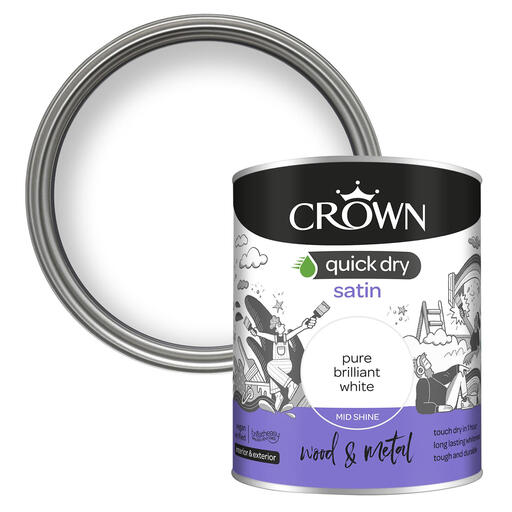
Why This Fits Their Persona: A practical option for smaller interior or exterior jobs involving wood, metal or PVCu, including doors, trim and window frames.
Its stated water-based, quick-dry and wipeable properties are clearer buying points than relying on a vague coverage promise.
Mid-shine satin finish; designed for interior and exterior wood, metal and PVCu; wipeable and non-yellowing according to the product description.
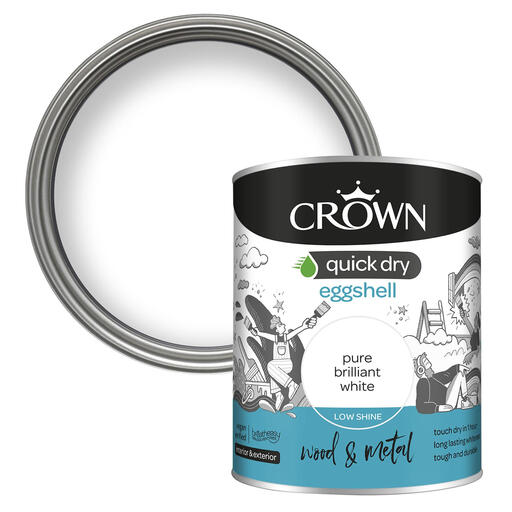
Why This Fits Their Persona: Suits decorators who want a quieter, low-sheen appearance on furniture, skirting boards, doors or window frames.
The eggshell specification makes the intended appearance clear, avoiding the disappointment of buying a glossy finish for a low-reflective project.
Water-based quick-drying formula; wipeable low-sheen finish; suitable for interior and exterior wood, metal and PVCu.
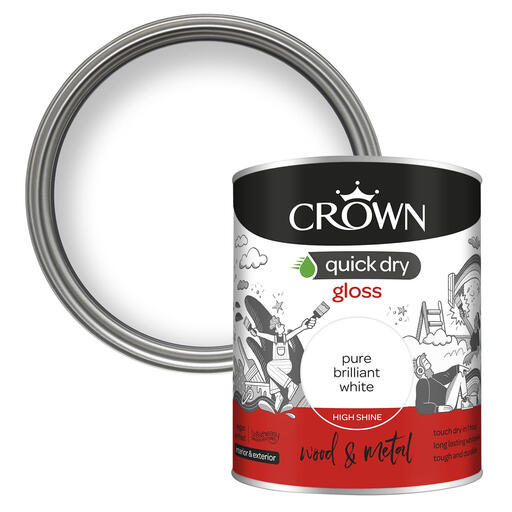
Why This Fits Their Persona: Designed for frequently handled or exposed items such as doors, skirting boards, radiators, window frames and exterior trim.
The product specifies its surfaces, finish, wipeability and water-based clean-up method, helping buyers compare practical maintenance needs.
High-shine brilliant white finish; suitable for interior and exterior wood, metal and PVCu; wipeable once dry.
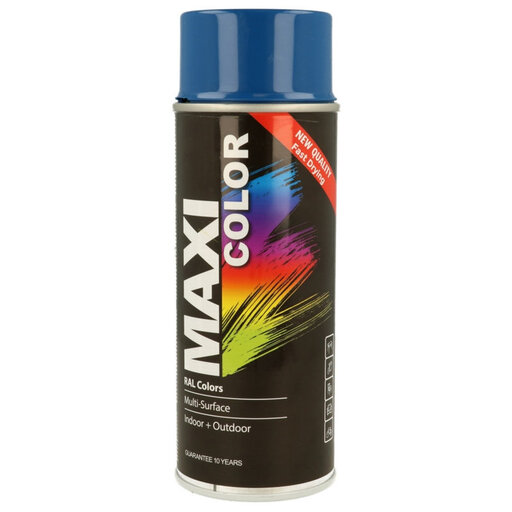
Why This Fits Their Persona: A useful choice for smaller decorative projects where a blue gloss finish and fast, even spray application are preferred.
Its stated spray distance of 20–30 cm provides a practical application reference, reducing the risk of holding the can too close and causing runs.
400ml can; intended for treated and untreated wood, metal, aluminium, glass, stone and plastic; available in RAL colours.
For a larger tin and a stated coverage figure, the Crown One Coat Gloss Brilliant White 2.5L is another option for wood, metal and uPVC. Its listed coverage is 10 m² per litre, with a stated drying time of 4–6 hours. It is solvent-based and carries high VOC information, so ventilation and label instructions are particularly important.
We have compiled a complete, real-time list of products that fully satisfy these strict selection criteria and UK safety regulations.
Only use it when the product description or label specifically lists PVCu, uPVC or plastic. Clean and lightly prepare the surface as directed, and test adhesion in a discreet area before painting the full item.
Finish alone does not determine durability. Formulation, surface preparation, exposure and correct application all matter. Gloss provides a higher-shine appearance, while eggshell offers a lower-sheen look. Compare the stated suitability, wipeability and interior or exterior use instructions.
There is no universal lifespan. Interior wear, outdoor weather, substrate movement, cleaning and preparation can all affect the coating. A sound, clean surface and adherence to the manufacturer’s drying and application instructions can help prevent early peeling, cracking or uneven coverage.