
24/7 Customer Support

Free returns

Same-day & Next-day Delivery

Quality Guaranteed

Unlock Your Welcome Offers: FREE Delivery | Up to 80% OFF | Free 30-day JoyPlus trial
Download the APP
Choosing between wood cutting saws and jigsaws depends on the material, cut shape and working environment. A pruning saw may be suitable for fresh branches, while a tenon saw is designed for controlled joinery cuts. For curved lines, bevels or thicker boards, a jigsaw can offer greater flexibility.
However, product descriptions often focus on tooth sharpness or motor power without explaining what those features mean in everyday use. Before buying, check the points below to avoid choosing a tool that is uncomfortable, unsuitable for the material or difficult to store safely.
A longer blade does not automatically produce a more useful cut. A compact folding hand saw can be easier to control in a crowded garden or when carrying tools outdoors. Conversely, a tenon saw with a rigid spine may be more suitable for straight, accurate cuts in timber.
Check the tooth pattern, blade stiffness and intended material rather than relying only on the headline blade length.
Coarse teeth can remove wood quickly, which is useful for branches, rough timber and landscaping work. They may also leave a less refined edge. Fine-tooth carpentry saws are generally more appropriate for mouldings, joints and detailed woodworking where splintering needs to be controlled.
A garden saw and a woodworking hand saw serve different purposes, even when both are described as multifunctional.
A sharp blade that does not lock securely, or a powered tool with awkward controls, can make routine work unnecessarily difficult. For folding saws, inspect the locking mechanism, grip and folded size. For a jigsaw, look for a stable base, accessible speed control and a blade-change system that does not require extra tools.
For UK households with limited shed or workshop space, safe storage is also a practical consideration.
Teeth per inch (TPI) provides a useful guide to cutting behaviour:
For pruning, a pruning saw with a curved or coarse blade can engage fresh wood effectively. For dovetails, trim and joints, a tenon saw or precision wood cutting tool with around 12 TPI may provide more control.
Folding garden saws commonly use hardened steel or bi-metal blades. A bi-metal construction can combine hard cutting teeth with a more flexible backing. This is useful for portable outdoor tools, but it does not remove the need to clean sap and moisture from the blade after use.
Check that a folding saw locks in both open and closed positions. A finger guard and non-slip handle are also valuable features when cutting branches at awkward angles.
When comparing a professional jigsaw or DIY saw, consider more than wattage. Important specifications include:
Always secure the workpiece with clamps, use suitable blades and follow the manufacturer’s instructions. Wear eye and hearing protection when operating powered carpentry saws, and disconnect the tool before changing blades.
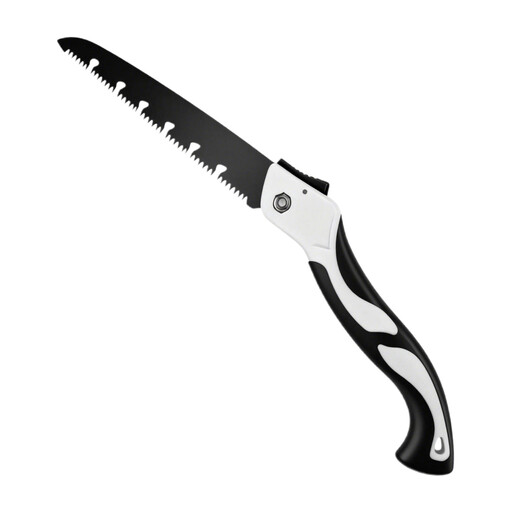
Why This Fits Their Persona: A compact option for occasional pruning, camping, garden maintenance and straightforward DIY wood cutting around a UK home.
The blade folds into the handle, helping protect the teeth and reducing storage risks. The 190mm coarse-tooth blade is clearly suited to wood and branches rather than fine joinery.
Foldable design, soft rubber handle and hardened steel blade with chip-clearance groove.
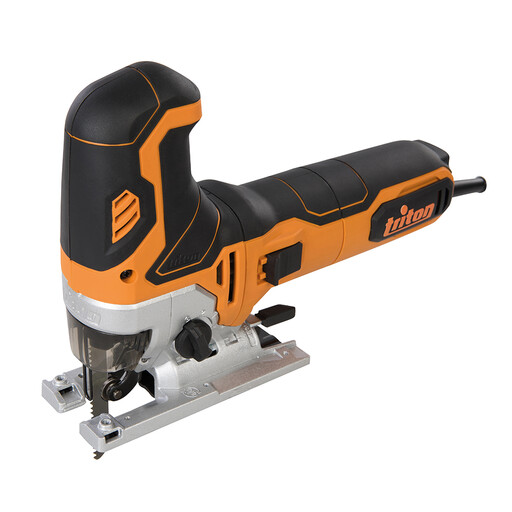
Why This Fits Their Persona: Suitable for workshop users who need one powered tool for shaped cuts, straight cuts and bevel work across several listed materials.
Its stated capacities and controls are specific: up to 110mm in wood, 10mm in steel and 25mm in aluminium, with 800–3000 strokes per minute and four pendulum positions.
Tool-free T-shank blade fitting, 0–45° bevel adjustment and included parallel guide, track adaptor and case.
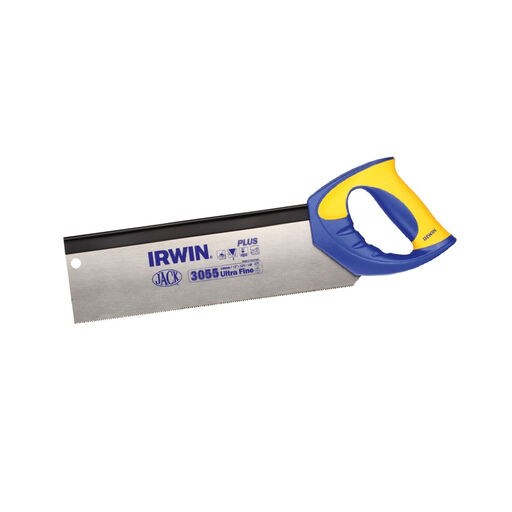
Why This Fits Their Persona: A practical choice for joiners, carpenters and DIY users working on repeatable straight cuts, mitre-box work and detailed timber projects.
The rigid tenon-saw format is intended for controlled woodworking rather than general garden use. Its 300mm blade and 12 TPI specification make the intended application easier to assess.
Hardpoint blade, soft-grip handle, mitre-box compatibility and triple-ground tooth design specified for push-and-pull cutting.
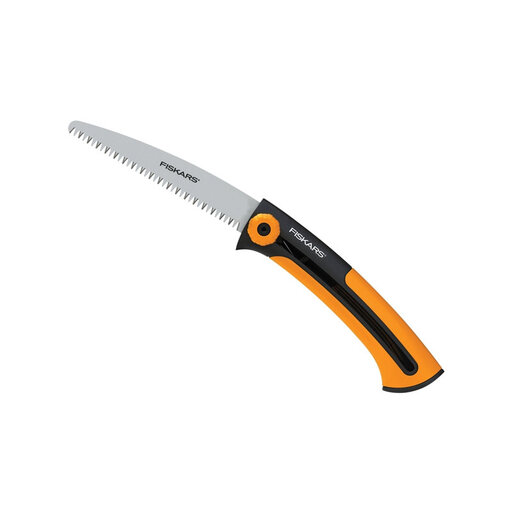
Why This Fits Their Persona: Designed for fresh wood and convenient garden pruning, it suits users who want a lightweight tool for regular outdoor maintenance.
The product information specifically identifies fresh wood as its intended use, helping avoid using a compact pruning saw for heavy structural timber.
Retractable belt clip, SoftGrip handle and finger guard for carrying and handling convenience.
Clean sap, resin and sawdust from blades after use. Dry outdoor saws before folding or storing them, and apply a light protective oil where appropriate. Inspect handles, blade locks, power cables and guards regularly.
For a jigsaw, use the correct blade for the material and avoid forcing the tool through dense timber. Keep the base plate flat against the workpiece, connect dust extraction when suitable and replace worn blades rather than compensating with excessive pressure.
We have compiled a complete, real-time list of products that fully satisfy these strict selection criteria and UK safety regulations.
A pruning saw is shaped and toothed for cutting branches and fresh wood. A woodworking hand saw is intended for prepared timber, boards or project components. Tooth size, blade stiffness and handle design differ, so using the right type usually makes the work more controlled.
It can be, provided the pendulum setting, blade and speed are matched to the task. Lower pendulum settings generally give more controlled cutting, while higher settings can remove wood more quickly. Clamp the workpiece and use a fine-tooth blade when the edge finish matters.
Blade life depends on material, frequency of use, pressure and maintenance. Cutting dirty or treated timber can accelerate wear. Replace a hand-saw blade when it no longer cuts efficiently or begins to bind; for a jigsaw, a dull blade may produce wandering cuts, burning or excessive splintering.