
24/7 Customer Support

Free returns

Same-day & Next-day Delivery

Quality Guaranteed

Unlock Your Welcome Offers: FREE Delivery | Up to 80% OFF | Free 30-day JoyPlus trial
Download the APP
Watching your little one pull themselves up for the first time is a milestone filled with excitement and a touch of apprehension. As they prepare to take their first tentative steps, many parents and grandparents begin the search for a supportive and engaging toy. A wooden activity walker is often a top consideration, offering a sturdy companion for new walkers that doubles as a hub of developmental fun.
Unlike many plastic alternatives, wooden toys offer a timeless appeal, durability and a connection to natural materials. However, the market is vast, and choosing the right one can feel overwhelming. This guide is designed to help you identify key features to look for and to highlight some thoughtful options that prioritise both safety and engaging play, making your decision a little easier.
When selecting a walker, it's about more than just four wheels and a handle. A well-designed model can be a valuable educational toy for a 1 year old, supporting them as they transition from sitting to standing and walking. Here are a few key points to consider.
The most critical factor is safety. A reliable toddler push walker should have a wide, stable base to minimise the risk of tipping as your child leans on it for support. Look for wheels fitted with non-slip rubber rings; these provide crucial grip, prevent the walker from moving too quickly on smooth floors and protect your flooring from scratches. Always check that the product conforms to UK safety standards, such as EN71 certification, which ensures the materials, design and construction are deemed safe for children.
The best walkers are also a baby activity centre on wheels. Many designs incorporate principles from Montessori baby toys, focusing on hands-on, child-led discovery. Features like bead mazes, shape sorters, spinning gears and sliding blocks encourage the development of fine motor skills, hand-eye coordination and problem-solving abilities. These integrated activities provide long-lasting value, keeping your child engaged long after they have mastered walking.
The appeal of a wooden walker lies in its construction. Look for models made from solid, durable wood like basswood or rubberwood, paired with high-quality MDF for decorated panels. A quality finish is also important—ensure all edges are smooth and rounded and that any paints or varnishes used are non-toxic and child-safe. This not only ensures safety but also means the toy can withstand years of enthusiastic play.
Based on these criteria, we've selected a few standout products that offer a blend of function, safety and engaging design.
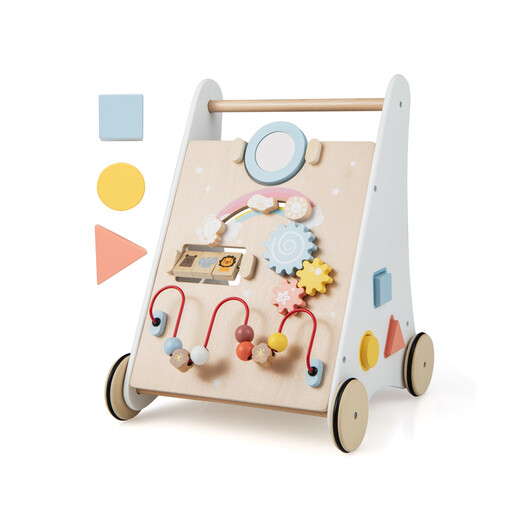
Why It Stands Out: This model is a quintessential sit to stand learning walker, thoughtfully designed to support your child's development at every stage. Its stable triangular structure and rubber-ringed wheels provide the confidence new walkers need. The 7-in-1 activity setup, including a shape sorter, bead maze and flipping blocks, offers a huge amount of play value in one item.
Pros:
Who is it for? Parents and gift-givers looking for the complete package. It’s an ideal first birthday gift that serves as both a reliable walking aid and a comprehensive activity station that will entertain a child for months to come.
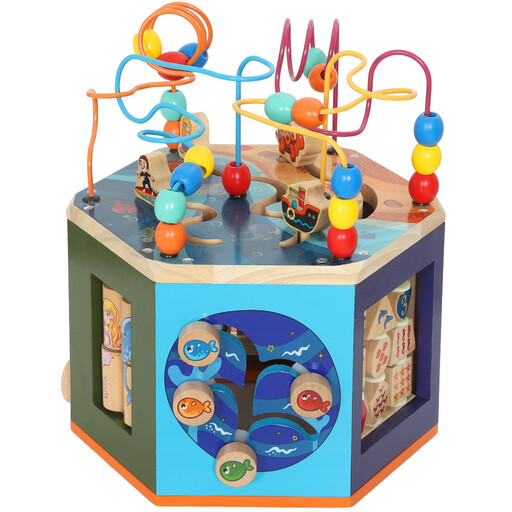
Why It Stands Out: While not a walker, this activity cube is a fantastic stationary baby activity centre that embodies the spirit of Montessori baby toys. It packs a variety of sensory games into a compact design, making it perfect for developing fine motor skills and cognitive abilities during seated play or for little ones pulling up to stand.
Pros:
Who is it for? Families who want to provide a rich, hands-on learning experience without the mobility aspect. It’s an excellent choice for encouraging seated play and is suitable for toddlers from 18 months.
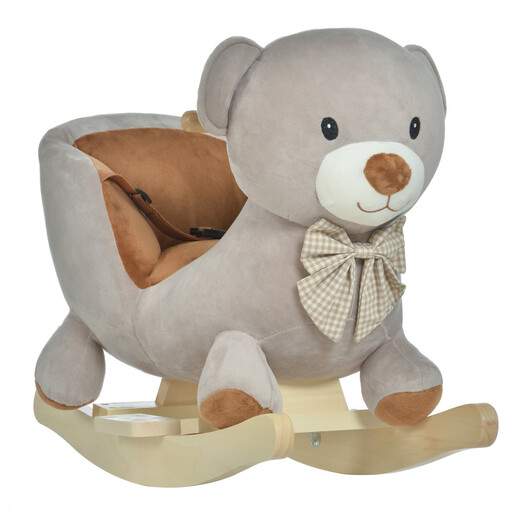
Why It Stands Out: For developing gross motor skills in a different way, this plush rocking bear offers a classic and comforting experience. The gentle rocking motion helps children develop balance and core strength. Its soft, cushioned seat and high back provide a secure and comfortable ride.
Pros:
Who is it for? Those looking for a traditional toy that aids physical development through balance and coordination. It’s a wonderful gift for toddlers aged 18-36 months who enjoy movement and sensory feedback.
A wooden activity walker is a fantastic starting point, but the world of developmental wooden toys is rich and varied. If you're searching for other options or complementary gifts, from stacking rings to puzzles, there is a wide selection to discover.
Explore our full collection of wooden toys for babies to find the perfect match for your little one's playroom.
1. At what age can a baby use a wooden push walker? Wooden push walkers are generally intended for babies who are already able to pull themselves up to a standing position and can stand with support. This typically happens between 9 and 12 months of age. It's important to introduce the walker when they are developmentally ready to use it for support, not before. Always refer to the manufacturer's recommended age for a specific product.
2. Are wooden walkers a good choice for development? Yes, they can be very beneficial. A sit to stand learning walker supports the development of gross motor skills by encouraging balance, strength and coordination. When they also feature an activity panel, they simultaneously help to refine fine motor skills, cognitive function and problem-solving, making them a multi-purpose educational toy for a 1 year old.
3. What safety features are most important in a toddler push walker? The most crucial safety features include a wide, sturdy base to prevent tipping and wheels with a form of resistance or grip, like non-slip rubber rings, to control speed and prevent accidents. Additionally, ensure the walker is made from non-toxic materials and has smooth, rounded edges. Checking for EN71 certification provides an extra layer of assurance that it meets recognised safety standards.