
24/7 Customer Support

Free returns

Same-day & Next-day Delivery

Quality Guaranteed

Unlock Your Welcome Offers: FREE Delivery | Up to 80% OFF | Free 30-day JoyPlus trial
Download the APP
Watching your little one take their first wobbly steps is a milestone moment. As they gain confidence, a baby walker can be a wonderful tool to support their journey from crawling to walking. Many parents and gift-givers in the UK are drawn to the classic appeal and durability of a wooden baby walker. They offer stability and are often designed with engaging, screen-free activities.
However, the market is filled with options, from simple push-along frames to intricate activity centres. This guide is designed to help you navigate the choices, understand key safety features and find a walker that suits your child's developmental stage. We will look at what makes a great first steps walker and present some popular options for 2026.
Before you decide, it's helpful to know what features to look for. Focusing on safety, developmental value and materials will help you make a confident choice.
Safety is the number one priority. In the UK, look for toys that are UKCA marked and meet the EN71 safety standard. This indicates the product has been tested for safety, including the materials and structural integrity. A good baby push walker should have a wide, sturdy base to prevent it from tipping over as your child leans on it for support. Wheels with rubber rings are also a valuable feature, as they provide grip, prevent the walker from moving too quickly on smooth floors and protect your flooring from scratches.
Many modern walkers are more than just walking aids; they are a toddler activity centre on wheels. A wooden activity walker often incorporates features like bead mazes, shape sorters, spinning gears and flip-over blocks. These activities are designed to help develop fine motor skills, problem-solving abilities and hand-eye coordination. Consider whether you prefer a simple push along walker focused solely on mobility or a multi-functional baby learning walker for 1 year old that offers more ways to play.
The choice between wood and plastic often comes down to personal preference. Wooden walkers are celebrated for their sturdiness, eco-friendly credentials and timeless aesthetic. They are typically very durable and can often be passed down through a family. On the other hand, plastic models can offer different kinds of versatility, such as adjustable height and speed settings, electronic sounds or the ability to convert into a ride-on toy.
Here are a few recommendations that cater to different needs, from traditional wooden designs to versatile, multi-functional alternatives.
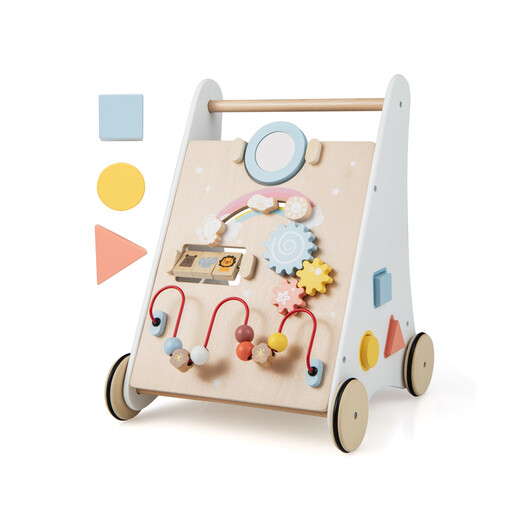
Why It Stands Out: This walker combines the classic charm of a wooden toy with a 7-in-1 activity hub. It’s designed to be both a walking aid and a stationary play centre, offering excellent long-term value.
Pros:
Who is it for: Parents and gift-givers seeking a traditional wooden baby walker that is packed with engaging, developmental activities to keep a child entertained.
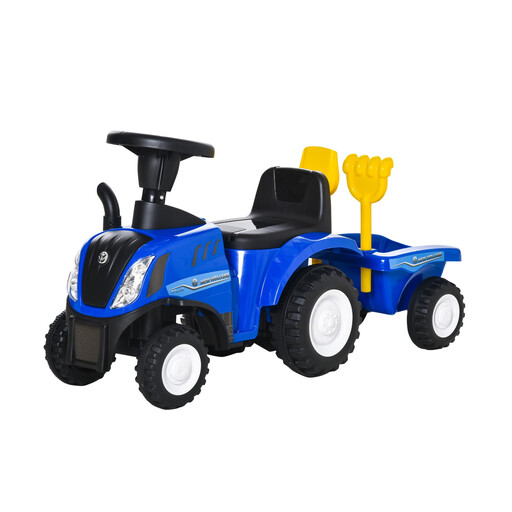
Why It Stands Out: This model offers a fun, 2-in-1 design that transitions from a supportive walker to a foot-to-floor ride-on toy, extending its use well beyond the first-steps phase.
Pros:
Who is it for: Families looking for a versatile toy that grows with their child, transforming from a sit to stand walker into a fun ride-on for toddlers up to 36 months.
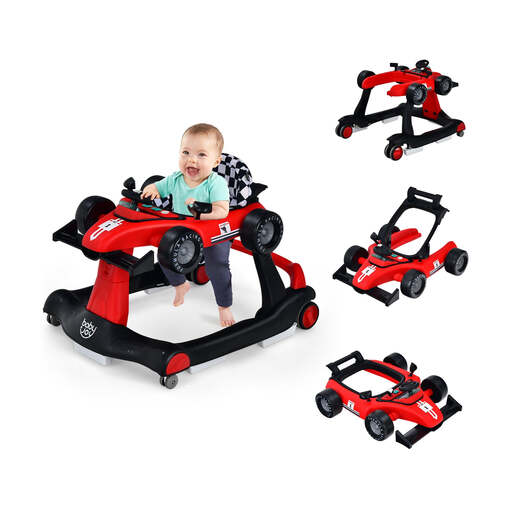
Why It Stands Out: Its impressive adaptability. This walker can be configured in four different modes and features adjustable height and speed, making it one of the most customisable options available.
Pros:
Who is it for: Parents who prioritise adaptability and want a single product that can serve multiple functions as their baby moves through different developmental stages.
Our selection highlights a few popular choices, but every child's needs are unique. If you're looking for different styles or features, you can explore our full collection.
Browse our complete range of baby walkers with wheels to find the perfect fit for your little one.
When can my baby start using a wooden baby walker? Most babies are ready for a push walker when they can confidently pull themselves up to a standing position and stand while holding onto furniture, which is typically between 9 and 12 months. However, always check the manufacturer's specific age and developmental recommendations for any product you consider.
Are wooden baby walkers a better choice than plastic ones? This depends on your priorities. Wooden walkers are often favoured for their weight and stability, durability and use of sustainable materials. They have a classic look and tend to focus on manual, hands-on activities. Plastic walkers often provide different benefits, such as being lightweight, foldable for storage, and featuring adjustable heights, electronic sounds or multi-functional designs.
What safety features should I look for in a first steps walker? Always look for products that are UKCA marked and certified to the EN71 toy safety standard. A wide, stable base is essential to prevent tipping. The wheels should have some form of resistance or rubber grips to control speed and protect floors. Finally, ensure all paints and finishes are non-toxic and that there are no small, detachable parts that could pose a choking hazard.