
24/7 Customer Support

Free returns

Same-day & Next-day Delivery

Quality Guaranteed

Unlock Your Welcome Offers: FREE Delivery | Up to 80% OFF | Free 30-day JoyPlus trial
Download the APP
Watching your little one take their first wobbly steps is a milestone moment. A wooden baby walker can be a wonderful companion on this journey, offering support as they build confidence and strength. However, the market is filled with options, and it's easy to choose a model that looks good but falls short in practice. Many parents find themselves with a walker that is either unsafe, unengaging or quickly outgrown.
As the Joybuy Product Recommendation Officer, my role is to help you navigate these choices. We'll look past the marketing hype and focus on the practical features that matter. Before you buy, be aware of these common pitfalls:
To ensure you're getting a safe, durable and genuinely useful product, focus on these three non-negotiable areas.
A walker's primary job is to provide stable support. Look for a triangular structure with a wide wheelbase, as this design is inherently more resistant to tipping. The handle should be at a height that allows your child to stand upright comfortably, promoting good posture rather than leaning forward.
Most importantly, check for safety certifications. In the UK, all toys must meet strict standards. Look for EN-71 and UKCA compliance on the product description. This confirms the walker has been assessed for mechanical and physical safety, flammability and the migration of certain chemical elements.
The quality of the wheels determines the walker's performance. The ideal toddler walker with wheels will have several key features:
A great wooden activity walker doubles as a baby activity centre, extending its use long before and after your child is walking confidently. Instead of flashing lights and electronic sounds, look for engaging, hands-on activities that encourage cognitive and motor skills. Features like a shape sorter, rotating gears, a bead maze or sliding blocks help develop problem-solving abilities and hand-eye coordination, making it an effective sit to stand learning walker.
We've filtered through the options to find products that align with these practical principles, matching them to different stages of your child's early development.
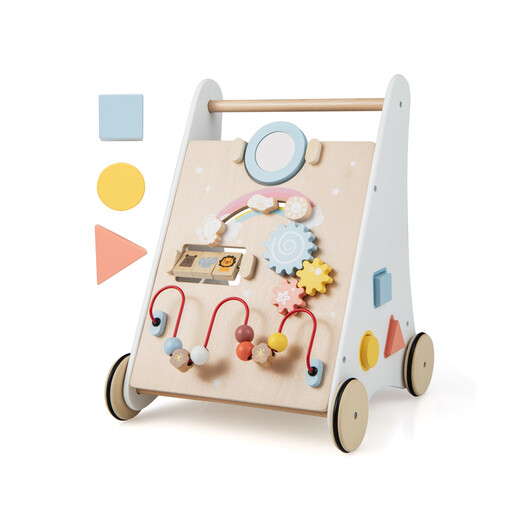
Why This Fits Their Persona: This is an ideal choice for parents seeking a classic, multi-purpose toy for a child around 12 months old who is beginning to pull up and cruise. It directly supports the transition from sitting to confident walking.
Its stable triangular structure and wide base prevent tipping. The wheels are fitted with rubber rings for controlled speed and floor protection and the 7-in-1 activities offer tangible developmental value over simple electronic toys.
Combines a baby push walker with a comprehensive activity centre, providing excellent long-term play value. It is also EN-71 and UKCA certified for safety.

Why This Fits Their Persona: Perfect for new parents with infants (0-6 months) who value modern design and natural materials. It provides a soothing, safe space for the baby before they are ready for a walker, fitting seamlessly into a contemporary UK home.
This rocker is powered by the baby's own natural movements, not batteries or motors, avoiding electronic over-stimulation. Its purpose is soothing, not forcing movement, making it a gentle precursor to walking aids.
Features a stylish wood-effect frame and organic cotton seat. It folds completely flat, making it exceptionally easy to store in smaller homes or take on trips.
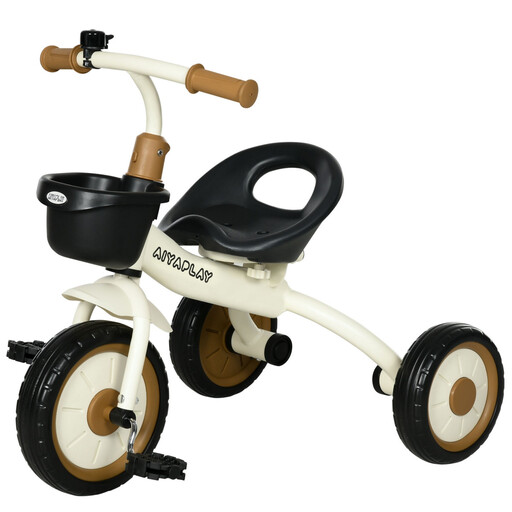
Why This Fits Their Persona: Designed for toddlers (2-5 years) who have mastered walking and are ready for the next adventure. It's the perfect follow-on from a walker, helping to build pedalling skills and confidence for a future two-wheeler.
By being aimed at an older age group, it avoids the issues of using a walker-type toy too early. Its purpose is clear: to teach pedalling and steering, not just pushing. The solid metal frame ensures it is robust enough for active toddlers.
The seat height is adjustable, allowing the trike to grow with your child for longer-term use. It includes a basket and bell for added fun and practicality during outdoor play.
We have compiled a complete, real-time list of products that fully satisfy these strict selection criteria and UK safety regulations.
This depends more on your child's developmental stage than their exact age. A baby push walker is generally suitable when a baby can confidently pull themselves up to a standing position and support their own weight, often around 10 to 12 months. They should show an interest in "cruising" (moving around while holding onto furniture). A baby walker for 1 year old is a common and appropriate choice, but always supervise your child closely.
Yes, provided they are well-designed. A walker with rubber-trimmed wheels is ideal for UK homes, which often have a mix of flooring. The rubber provides grip and control on smooth surfaces like hardwood or laminate, preventing the walker from sliding away too fast. On low-pile carpets, it provides the necessary traction to move without excessive effort.
Cleaning is straightforward. Use a soft cloth dampened with water and a small amount of mild, non-toxic soap. Wipe down all the wooden surfaces and activities, then dry with a clean cloth. Avoid using harsh chemical cleaners or soaking the wood, as this can damage the material and finish. Always ensure the walker is completely dry before your child uses it again.