
24/7 Customer Support

Free returns

Same-day & Next-day Delivery

Quality Guaranteed

Unlock Your Welcome Offers: FREE Delivery | Up to 80% OFF | Free 30-day JoyPlus trial
Download the APP
A quality wooden chopping board is more than just a kitchen utility; it's a centrepiece for preparation and presentation. Whether you're dicing vegetables for a weeknight meal or arranging a stunning charcuterie spread for guests, the right board makes all the difference. However, the market is filled with options that look good online but fail to perform in a real British kitchen.
As the Joybuy Product Recommendation Officer, my role is to help you navigate past the marketing jargon. Before you invest, be aware of these common pitfalls that lead to disappointment and wasted money.
To avoid these issues, focus on a few core parameters that define a board's quality and longevity. Understanding these will help you select a product that serves you well for years.
The type of wood is the most critical factor. Different woods offer varying levels of hardness, porosity and durability.
A modern board should be versatile. Consider how you plan to use it most.
To help you make a confident choice, we've matched some standout products to different user needs. These selections are based on their material quality, functional design and ability to avoid the common pitfalls mentioned earlier.
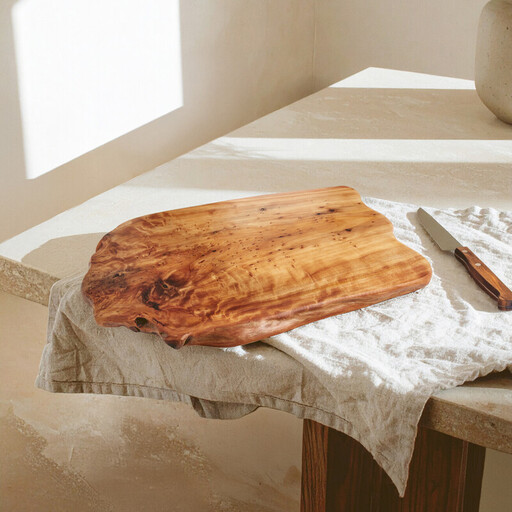
Why This Fits Their Persona: This user values aesthetics as much as function. They need a board that acts as a stunning centrepiece for serving cheese and charcuterie, and this board's unique, rustic edges and natural cedarwood grain deliver exactly that.
Crafted from solid cedarwood, it is less prone to the warping and splitting seen in cheaper, laminated boards. Its value lies in its natural, handcrafted form, not a thin veneer that can peel away.
The distinctive, irregular live edge makes each board unique. Its large, dual-purpose surface is ideal for both preparation and elegant presentation.
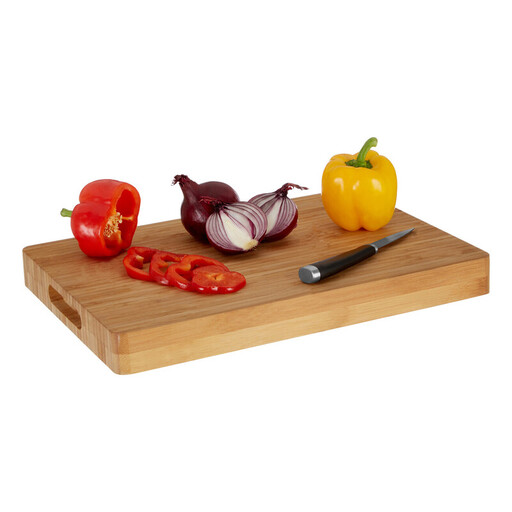
Why This Fits Their Persona: This user is a serious cook who needs a reliable, no-nonsense workhorse. This thick, sturdy bamboo butchers block provides a stable and expansive surface for heavy-duty chopping and daily meal preparation.
Its substantial thickness (4cm) and robust bamboo construction provide excellent resistance to warping. The surface is hard-wearing but still gentle enough on knives compared to overly hard materials.
Integrated cut-out handles offer a secure grip for lifting and enhanced stability during use. The sustainable bamboo is naturally resistant to moisture and stains.

Why This Fits Their Persona: This user needs a versatile and cost-effective solution for a busy family kitchen. This chopping board set provides three different sizes to handle everything from slicing a lemon to prepping a full Sunday roast, all in one package.
The carbonisation treatment makes the bamboo more durable and significantly less porous, directly addressing the common issue of warping and moisture absorption that plagues lower-quality boards.
This set offers excellent value with three functional sizes. Each board includes practical features like juice grooves and easy-grip handles, making them highly functional for everyday use.
We have compiled a complete, real-time list of products that fully satisfy these strict selection criteria and UK safety regulations.
Proper care is simple but crucial for longevity. After each use, wash the board by hand with mild soap and warm water. Never soak it or put it in the dishwasher, as this will cause it to warp and crack. Dry it immediately with a towel and let it air dry completely in an upright position. To keep the wood conditioned and protected, periodically apply a food-safe mineral oil.
Both have their merits. Bamboo is a fast-growing, sustainable resource that is very hard and less porous than many woods, making it resistant to moisture and scarring. However, some find it can be slightly harder on knife edges. Traditional hardwoods like acacia or maple offer a classic feel and are also very gentle on knives. The choice often comes down to personal preference regarding aesthetics, sustainability and cutting feel. The quality of construction is more important than the material alone.
It's time for a replacement when the board develops deep, hard-to-clean grooves or knife scars. These can harbour bacteria and become unhygienic. You should also replace your board if it has a persistent odour that won't wash out, or if it has warped or cracked to the point where it is no longer stable on your worktop.