
24/7 Customer Support

Free returns

Same-day & Next-day Delivery

Quality Guaranteed

Unlock Your Welcome Offers: FREE Delivery | Up to 80% OFF | Free 30-day JoyPlus trial
Download the APP
As a Joybuy Product Recommendation Officer, my role is to help you find products that are practical, well-made and genuinely valuable. Many parents and gift-givers are searching for engaging, screen-free activities that spark a child's imagination. A wooden coffee maker for kids has become a popular choice, transforming playtime into a bustling café adventure.
This guide will walk you through what to look for in a kids coffee playset and present our top recommendation for 2026, helping you choose an educational gift for toddlers that they will cherish.
When selecting a wooden barista set, it's easy to get lost in the options. Here are three key factors to consider to ensure you are choosing a safe, durable and engaging toy.
The safety of any toy is paramount. For wooden toys, look for products made from durable materials like MDF, plywood or solid woods such as rubber wood or Schima wood. Ensure all surfaces have a smooth, splinter-free finish. Crucially, check that the product complies with UK safety standards, specifically EN71-1-2-3, which confirms it has been tested for physical properties, flammability and migration of certain chemical elements. This certification provides peace of mind that the toy is safe for your child.
The best pretend play coffee shop experiences come from sets that include a variety of accessories. A simple machine is fun, but a set that includes cups, milk cartons, sugar pots and different coffee pods allows for more complex and imaginative scenarios. Look for interactive elements like pressable buttons or clicking knobs. These features provide satisfying sensory feedback and help children understand cause and effect, making the play more immersive and educational.
A great toy should be more than just fun; it should support a child's development. A Montessori kitchen toy like a coffee maker encourages children to practise real-life skills in a playful context. The act of placing a pod in the machine, turning a dial and pouring a "drink" helps develop fine motor skills and hand-eye coordination. When playing with others, it also fosters communication, sharing and social skills, making it an excellent imaginative play set for 3 year olds.
After analysing the market for quality, safety and play value, here is our standout recommendation for a wooden coffee maker for kids this year.
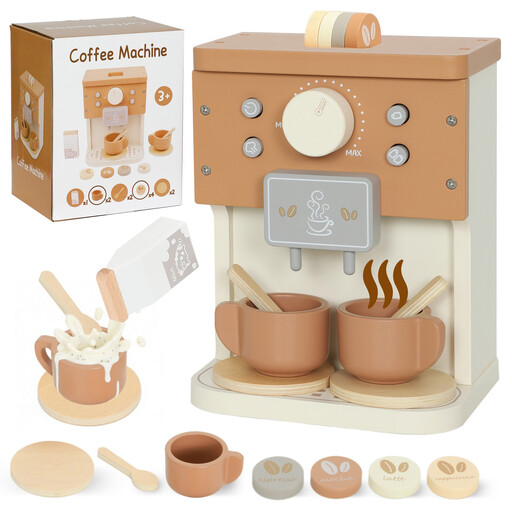
Why It Stands Out
This toy coffee machine from AIYAPLAY is a comprehensive 11-piece set that provides everything a budding barista needs straight out of the box. The design is thoughtful, combining durable wooden construction with interactive features that promote learning. Its charming, neutral colours fit well in any playroom, and the clever design allows all accessories to be stored inside the machine, making tidying up simple.
The inclusion of four pressable buttons and a clicking rotary knob elevates the role-play experience, providing the tactile feedback that young children find so engaging. This focus on interactive play, combined with its robust safety credentials, makes it a leading choice.
Pros:
Who is it for? This set is ideal for parents, grandparents and friends looking for a high-quality, screen-free toddler toy for children aged three and up. It is particularly suited for those who value imaginative play and want to give an educational gift that is both fun and beneficial for a child's development.
While this wooden barista set is a fantastic choice for encouraging imaginative play, we understand you might be searching for other options or gifts for different occasions. Whether it's for your child, their best friend or another loved one, finding the right present matters.
Explore our curated collection of gifts to discover more unique and thoughtful ideas.
Explore Gifts for Best Friends on Joybuy
Most wooden coffee maker sets are recommended for children aged 3 years and older. This is primarily due to the inclusion of small parts, such as coffee pods or spoons, which could pose a choking hazard for younger toddlers. Always check the manufacturer's specific age recommendation on the packaging.
Both materials have their merits. Wooden toys are often preferred for their durability, aesthetic appeal and the tactile, natural feel they provide. They align well with Montessori principles, which favour natural materials. Plastic toys can be lighter and sometimes offer more electronic features like lights and sounds. The choice often comes down to personal preference regarding style, budget and play philosophy.
A toy coffee machine is a powerful tool for developmental play. It encourages: