
24/7 Customer Support

Free returns

Same-day & Next-day Delivery

Quality Guaranteed

Unlock Your Welcome Offers: FREE Delivery | Up to 80% OFF | Free 30-day JoyPlus trial
Download the APP
A wooden planter with an integrated trellis can transform a patio, balcony, or small garden, offering a beautiful and space-efficient way to grow climbing flowers, vegetables and herbs. However, not all designs are created equal. Many fall short, leaving you with a purchase that looks good for one season but fails to withstand the realities of the British climate.
As a Joybuy Product Recommendation Officer, my role is to help you see past the marketing photos and focus on the practical details that matter. Before you buy, be aware of these common pitfalls that can lead to disappointment and wasted money.
To ensure your wooden planter with trellis is a long-term success, focus on these three core parameters. They are the difference between a thriving vertical garden and a decaying garden ornament.
The material is the foundation of your planter. While "solid wood" sounds reassuring, the type of wood and its treatment are what truly count. For outdoor use in the UK, the wood should either be naturally rot-resistant (like cedar or larch, which are often more expensive) or, more commonly, pressure-treated pine. This process forces preservatives deep into the wood, providing long-term protection against moisture and pests. If a planter is made from untreated pine, be prepared to apply a good quality, plant-safe wood preservative yourself before planting. A well-made wooden trellis planter box should be built to last for many seasons, not just one.
A trellis is not just for decoration; it is a functional support structure. Look closely at how the patio planter with climbing frame is assembled. The trellis should be securely bolted or screwed to the main planter body, not just tacked on. The lattice itself should be substantial enough to hold the weight of mature plants. A well-designed trellis provides a sturdy framework for everything from delicate clematis to productive climbing vegetables, making it a true vertical garden planter.
Climbing plants, especially fruiting varieties, need room for their roots to grow. A shallow planter will stunt their growth and require constant watering. Look for a trough planter for climbing plants with a generous soil depth and volume (a capacity of 40 litres or more is a good starting point for a medium-sized planter). Crucially, check for pre-drilled drainage holes at the base. If a large wooden planter doesn't have them, you will need to drill them yourself to prevent the soil from becoming a swamp. This feature is non-negotiable for creating a healthy growing environment.
Instead of a simple list, we have matched our recommendations to different gardening needs and spaces.
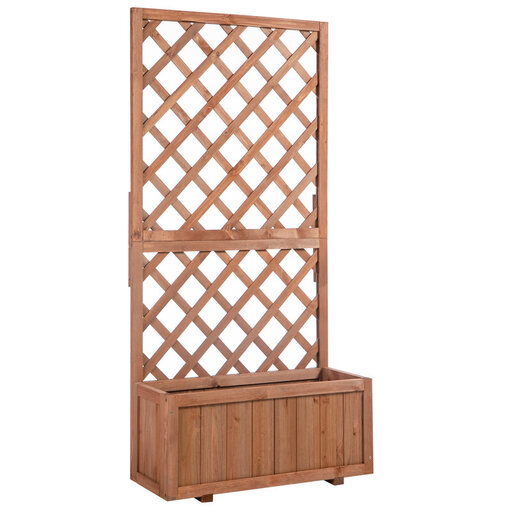
Why This Fits Their Persona: This is for the gardener who wants a single, cohesive unit for a patio or garden border. It's an ideal solution for growing climbing plants like sweet peas, jasmine or runner beans without needing to install separate supports.
It directly addresses the flimsy trellis issue with an integrated grid that is part of the main structure. The 45L trough provides good soil volume, avoiding the problem of shallow, restrictive planters.
Made from solid wood with a generous 45L capacity. The surface is customisable, allowing you to paint or varnish it to match your outdoor decor and add extra weather protection.
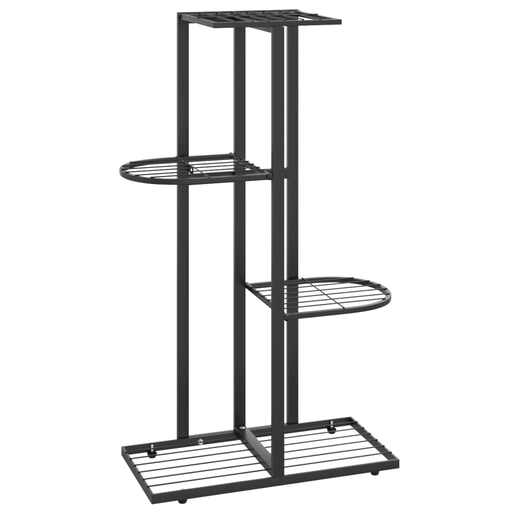
Why This Fits Their Persona: This is an alternative for those with existing pots or who prefer a non-wood, modular setup. It's perfect for creating a vertical herb garden or flower display on a balcony where a single large planter isn't practical.
This avoids the wood rot and flimsy trellis issues entirely by using a powder-coated steel frame. It provides a sturdy, multi-level structure that separates the support from the planters, offering greater stability and flexibility.
Its key advantage is its space-saving vertical design and durable metal construction. It allows you to display multiple plants in a very small footprint, making it ideal for compact urban spaces.
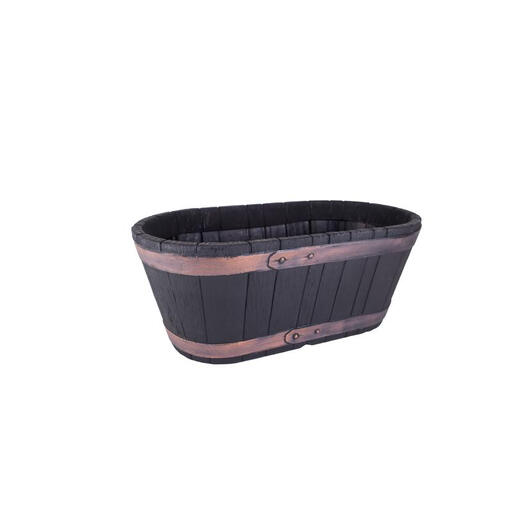
Why This Fits Their Persona: This is for the gardener who loves the look of wood but wants a zero-maintenance solution. It's a large trough perfect for creating a substantial display of flowers or herbs and can be paired with a separate wall-mounted trellis.
It completely sidesteps the wood rot pitfall by using recycled plastic with a convincing oakwood effect. It also avoids the flimsy trellis issue by focusing on being a robust, standalone trough planter.
The main benefits are its durability and low maintenance. It is lightweight, weather-resistant, and will not rot, split or fade like untreated wood, while still providing a classic aesthetic.
We have compiled a complete, real-time list of products that fully satisfy these strict selection criteria and UK safety regulations.
Even if your planter is pressure-treated, applying an additional coat of a plant-safe, waterproof sealant or paint every couple of years is a good practice. This will extend its life significantly. Also, ensure the planter is not sitting directly in a puddle of water; raising it slightly on pot feet can help the base dry out and prevent decay.
These planters are incredibly versatile. For flowers, consider climbers like clematis, sweet peas, or climbing roses. For edibles, they are excellent for runner beans, climbing peas, cucumbers and even certain varieties of squash and tomatoes (which will need to be tied to the trellis for support).
Lining a wooden planter is recommended. A permeable liner, like landscape fabric, will hold the soil in while still allowing excess water to drain away. This prevents soil from washing out of drainage holes and creates an extra barrier between the damp soil and the wood, helping to prolong the planter's lifespan. Avoid using impermeable plastic sheeting unless you cut plenty of drainage holes in it.