
24/7 Customer Support

Free returns

Same-day & Next-day Delivery

Quality Guaranteed

Unlock Your Welcome Offers: FREE Delivery | Up to 80% OFF | Free 30-day JoyPlus trial
Download the APP
A wooden planter with a trellis can transform a patio, balcony or garden corner into a vibrant vertical display. It’s a functional and beautiful way to grow climbing flowers, fragrant herbs or even vegetables. However, the UK's damp climate can be unforgiving, and many seemingly good-value planters fail to last. Before you buy, it’s crucial to understand the common pitfalls that can lead to a disappointing purchase.
As a Joybuy Product Recommendation Officer, my role is to help you navigate the market and identify what truly matters. Here are the key issues to watch for.
To ensure your investment lasts and your plants thrive, focus on these three non-negotiable features.
The type and treatment of the wood are paramount. Look for planters made from pressure-treated timber. This process forces preservatives deep into the wood grain, providing long-term protection against rot and insects. While cedar is naturally resistant, it is often more expensive. For most UK gardens, a well-treated pine or fir offers a good balance of durability and cost. A quality treatment should conform to standards like BS 8417, which governs wood preservation. A wooden planter for climbing plants is an outdoor item that must withstand the elements year-round.
A raised garden bed with trellis is a single structure, and it must be strong. Check the thickness of the wood used for both the planter box and the trellis. The planter box should be deep enough to accommodate the root systems of your chosen plants—a depth of at least 25-30 cm is a good starting point. The trough planter with climbing frame should have its uprights securely bolted or screwed to the main body, not just stapled. This is especially important for a patio planter with trellis, which may be more exposed to wind.
Always confirm that the planter has pre-drilled drainage holes. A slatted base is even better, as it allows water to escape freely across the entire bottom surface. To further protect the wood and prevent soil from washing out, consider using a permeable liner. A simple geotextile fabric liner is inexpensive and highly effective; it holds the soil in place while letting excess water drain away, creating the ideal environment for healthy roots in your vertical garden planter wood.
Based on these practical criteria, here are a few options suited to different types of gardeners and outdoor spaces.
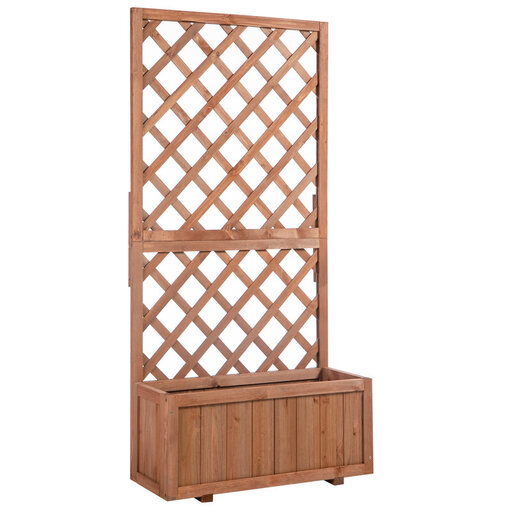
Why This Fits Their Persona: This is ideal for someone with a patio or small garden who wants a complete, functional unit for growing climbing plants like clematis or sweet peas without needing to buy and install a separate trellis.
The integrated design ensures the trellis is part of the core structure, offering better stability than a flimsy add-on. It is constructed from solid wood, providing a sturdy foundation.
A generous 45-litre planting box provides ample room for roots. The natural wood finish can be painted or stained to match your garden decor.
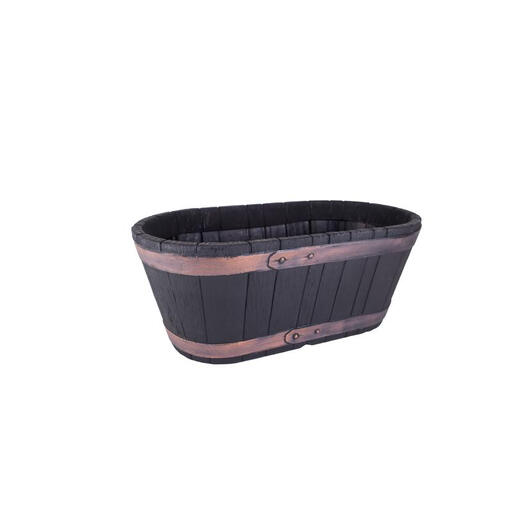
Why This Fits Their Persona: For those who love the rustic look of a wooden barrel but want to avoid the maintenance. It's a practical choice for creating borders or housing plants that don't require a tall, integrated trellis.
This planter is made from recycled plastic with a wood-effect finish, completely eliminating the risk of rot, splitting or insect damage associated with real wood.
Extremely durable and weather-resistant. It is also lightweight, making it easy to move around the garden as seasons change.
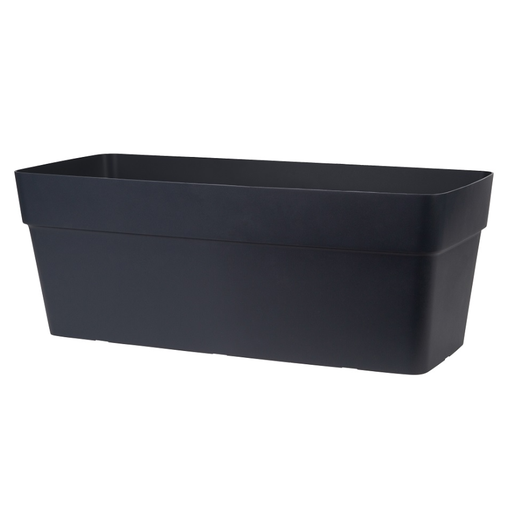
Why This Fits Their Persona: Perfect for a contemporary balcony or patio where clean lines and a neutral colour palette are key. The charcoal finish provides a sophisticated backdrop for vibrant green foliage or colourful flowers.
As a durable plastic planter, it is immune to rot and requires no seasonal maintenance. Its simple, robust trough design has no weak points or flimsy attachments.
The 45L capacity is excellent for a variety of plants, from herbs to flowers. Its recycled plastic construction is lightweight and resistant to UV fading.
We have compiled a complete, real-time list of products that fully satisfy these strict selection criteria and UK safety regulations.
There are four key steps. First, start with a planter made from pressure-treated wood. Second, consider applying an additional coat of a plant-safe, water-repellent wood stain or preservative every year or two. Third, ensure the planter has excellent drainage. Finally, using a fabric liner will create a barrier between the damp soil and the wood, significantly extending its lifespan.
These planters are incredibly versatile. For flowers, they are perfect for annual climbers like sweet peas and nasturtiums, or perennials like a compact clematis or climbing rose. For an edible garden, they are ideal for climbing beans, peas and even vining squash or cucumber varieties, provided the trellis is strong enough.
Most wooden planters with a trellis are delivered flat-packed to save on shipping costs and reduce the risk of damage. You should check the product description for "Assembly Required". Typically, assembly is straightforward and involves screwing the panels together with the included hardware. You will likely need basic tools like a screwdriver or a drill.