
24/7 Customer Support

Free returns

Same-day & Next-day Delivery

Quality Guaranteed

Unlock Your Welcome Offers: FREE Delivery | Up to 80% OFF | Free 30-day JoyPlus trial
Download the APP
As a parent or gift-giver in the UK, finding a toy that is engaging, sustainable and encourages screen-free time can feel like a significant challenge. A wooden play kitchen is often a top contender, offering a timeless appeal and a wonderful foundation for imaginative play. But with so many options, how do you select one that is safe, durable and will genuinely capture a child's interest?
My role as the Joybuy Product Recommendation Officer is to help you navigate these choices. This guide offers practical advice and highlights a few standout options to help you find the right fit for your little one's creative adventures.
Before diving into specific products, consider a few key factors. Thinking about these points will help you match a toy to your child's needs and your home's space.
When selecting a toy, safety is paramount. Look for products that specify compliance with UK and EU safety standards, such as EN71. This indicates the materials and construction have been assessed for toy safety. For eco-conscious families, material choice is also crucial. Many high-quality wooden toys are made from FSC-certified wood, which means the timber is sourced from responsibly managed forests. This ensures your purchase supports sustainable practices.
A wooden toy kitchen can range from a large, freestanding unit to a compact, countertop set. Consider the space you have available and your child's age. A larger kitchen can be a fantastic centrepiece for a playroom, while smaller sets are perfect for tighter spaces or as an introduction to pretend cooking. Also, check what's included. Some kitchens come as a standalone unit, while others arrive with a full pretend play food set and wooden kitchen accessories, offering more immediate play value.
One of the great advantages of a Montessori play kitchen is its ability to support a child's development. These toys are designed to foster independence and learning through hands-on activity. As children "cook," they practise fine motor skills by turning knobs and handling accessories. Role-playing scenarios with friends or family also helps them develop crucial social and communication skills, all while having fun.
Based on features, materials and play potential, here are a few recommendations that stand out.

Why It Stands Out This is a comprehensive and beautifully designed kitchen that provides a complete role-playing hub. It includes a sink with taps, a hob and a selection of accessories, giving children all the tools they need for immersive play. Its construction from FSC-certified wood makes it a solid choice for those prioritising sustainability.
Pros
Who is it for? This set is ideal for families looking for a complete, aesthetically pleasing wooden play kitchen to serve as the centrepiece of a playroom or bedroom.

Why It Stands Out This charming set focuses on a single, delightful activity: making pancakes. It’s a fantastic way to introduce pretend cooking without committing to a large kitchen unit. The set comes with a saucepan, spatula, pancakes and a variety of toppings like fruit and chocolate sauce, all crafted from sustainable wood.
Pros
Who is it for? Perfect for gift-givers or parents who want to add a specific, engaging activity to a play area. It’s also an excellent starter set for younger children.
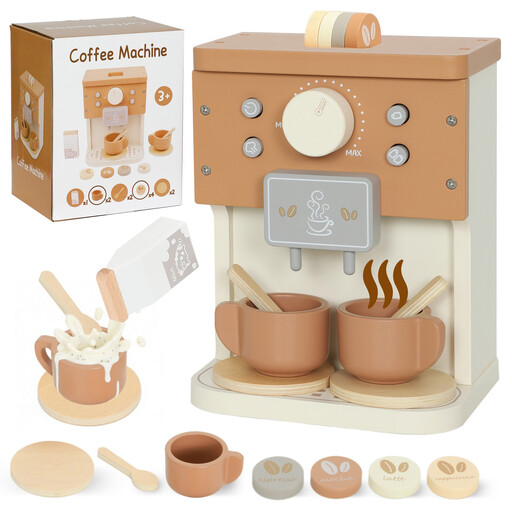
Why It Stands Out This set brings a modern twist to pretend play, allowing little ones to become their own barista. With interactive features like pressable buttons and a clicking rotary knob, it provides a satisfying sensory experience. The 11-piece set includes everything needed to "brew" and serve coffee, from the machine itself to cups and coffee pods.
Pros
Who is it for? This is a great choice for children who love to mimic the daily routines of their parents. It offers a contemporary take on classic wooden kitchen accessories.
A play kitchen is just the beginning. The real fun often comes from stocking the cupboards and fridge with a variety of foods and utensils. From slicing wooden fruit and vegetables to serving up elaborate pretend meals, these additions keep playtime fresh and exciting.
To discover a wider variety of detailed and engaging items, explore our full collection of play food toys.
Most wooden play kitchens are recommended for children aged 3 and up. This is primarily due to the presence of small parts that could be a choking hazard for younger toddlers. Always check the manufacturer's age recommendation on the specific product you are considering.
While both have their merits, wooden kitchens are often favoured for their durability and longevity. They tend to be heavier and more stable, withstanding years of enthusiastic play. Many parents also prefer the timeless, natural aesthetic of wood, which can blend more seamlessly into a home's decor. Furthermore, wood is a renewable resource, and choosing products from sustainable sources like FSC-certified forests is an environmentally conscious choice.
The best way is to join in the fun. Start by role-playing familiar scenarios, like making breakfast or hosting a tea party. You can also introduce new wooden kitchen accessories over time to spark fresh interest. Asking them to "cook" you a meal or describe what they are making encourages storytelling and imaginative thinking.