
24/7 Customer Support

Free returns

Same-day & Next-day Delivery

Quality Guaranteed

Unlock Your Welcome Offers: FREE Delivery | Up to 80% OFF | Free 30-day JoyPlus trial
Download the APP
The charm of a classic wooden play kitchen is undeniable. In an age of screens and gadgets, these timeless toys offer a gateway to a world of imagination, helping children learn about the world around them through creative role-play. A well-chosen play kitchen can become the centre of countless hours of fun, from brewing imaginary tea for teddy bears to hosting elaborate pretend dinner parties.
However, navigating the options can be a challenge. Parents and gift-givers often wonder about the right size, materials and accessories to choose. This guide is designed to help you understand what makes a great pretend play setup and offer some practical recommendations to inspire your child's inner chef, barista, or shopkeeper.
Before diving into specific sets, here are a few key considerations to keep in mind when selecting any role-play toy for a child.
Safety is the top priority. In the UK, look for toys that comply with EN71-1-2-3 safety standards, which ensures they are mechanically safe, flammable-resistant and free from harmful chemicals. For a wooden play kitchen, this means smooth, splinter-free edges and non-toxic paints. While wood offers a durable and traditional feel, modern plastic sets can be lightweight, colourful and easy to clean. The choice often comes down to your family's preference and play style.
The best role play toys for children are those that grow with them. A Montessori kitchen for toddlers, for example, focuses on realistic, child-sized tools that help develop fine motor skills, coordination and independence. Look for interactive elements like clicking knobs, opening doors and accessories that encourage sorting and matching. These features transform playtime into a valuable learning experience, making it an ideal educational gift for a 3 year old.
A play kitchen is just the beginning. The real fun often lies in the kids kitchen accessories. A good starter set should include some basics, but also leave room for expansion. Adding a pretend play food set or specialised items like a coffee machine or toaster can refresh the toy's appeal over time and allow children to explore new scenarios.
While a full-scale kitchen is a wonderful centrepiece, sometimes a more focused or mobile setup can provide just as much imaginative potential. Here are a couple of our recommendations that encourage creative kitchen play.
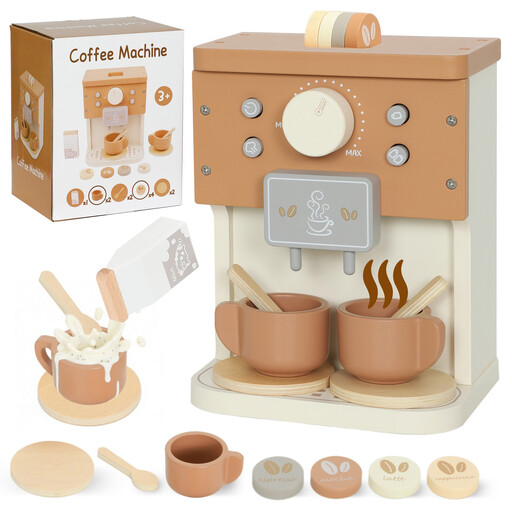
Why It Stands Out This charming barista set is a fantastic way to introduce the world of kitchen role-play without committing to a large furniture piece. Made primarily from wood, it captures the classic aesthetic many parents seek. It’s a complete, self-contained activity that encourages children to mimic the everyday ritual of making coffee, fostering observation and social skills as they serve drinks to family and friends.
Pros
Who is it for? This is an excellent choice for parents looking for a high-quality, compact wooden food toy to complement an existing play area or as a standalone gift. It's perfect for encouraging social interaction and developing fine motor skills in children aged three and up.
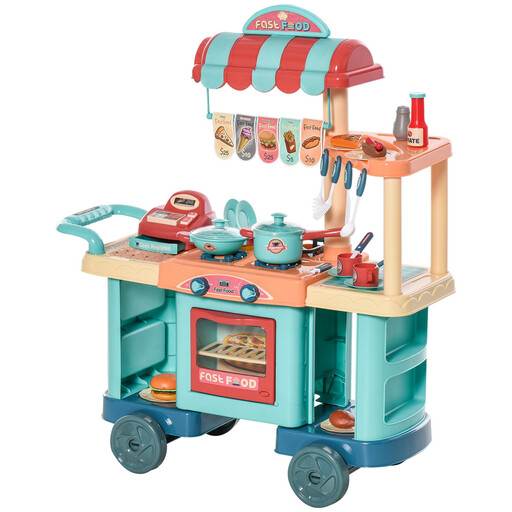
Why It Stands Out For children who love a more dynamic and modern play theme, this fast-food trolley offers a different kind of fun. It moves beyond the traditional kitchen, allowing kids to take on the roles of chef, cashier and customer all in one. The mobile cart design means playtime can easily move from room to room, and the huge assortment of accessories provides immediate fun, straight out of the box.
Pros
Who is it for? This set is ideal for children aged 3-6 who enjoy fast-paced, imaginative scenarios. It’s a great alternative to a static kitchen for families looking for a toy that encourages movement, organisation and collaborative play with a fun, contemporary theme.
If your heart is set on a different style of play kitchen or you simply want to browse a wider range of creative toys, our curated collection offers plenty of inspiration.
Explore our full range of Gift sets for girls to find the perfect match for your child's imagination.
1. What age is a wooden play kitchen for? Most play kitchens are designed for children aged 3 to 6. At this age, children are developing their imagination and social skills, making role-play particularly beneficial. Always check the manufacturer's recommended age for any specific product to ensure it is appropriate and safe for your child.
2. What are the benefits of a pretend play kitchen? Pretend kitchens are powerful learning tools. They help children develop fine motor skills by handling small accessories, learn basic vocabulary related to food and cooking, practise social skills by playing with others and explore their creativity by inventing their own recipes and scenarios.
3. How can I make a play kitchen more engaging? You can easily enhance a play kitchen by adding new kids kitchen accessories over time. A set of wooden food toys representing different food groups, a toy toaster, or even a small apron and chef's hat can spark new interest and open up a world of new play possibilities.