
24/7 Customer Support

Free returns

Same-day & Next-day Delivery

Quality Guaranteed

Unlock Your Welcome Offers: FREE Delivery | Up to 80% OFF | Free 30-day JoyPlus trial
Download the APP
A wooden sand pit can transform a garden into a hub of creativity and fun for children. However, the idyllic image of sunny afternoons spent building sandcastles can quickly fade if you choose the wrong model. Before you invest, it is important to be aware of a few common design flaws that can turn a summer dream into a soggy, splintered regret. Many products on the market look appealing but fail to stand up to the realities of the British climate and regular use.
As a Joybuy Product Recommendation Officer, my role is to help you see past the marketing and focus on the features that deliver genuine value and longevity.
Navigating the options for an outdoor sand pit can be tricky. Here are three frequent issues that can lead to disappointment and a wasted purchase.
Many sandpits come with a thin, loose-fitting fabric sheet described as a "cover." In reality, these often blow away in the first gust of wind or sag under the weight of a single downpour, allowing rainwater, falling leaves and neighbourhood pets to contaminate the sand. A kids sandpit with cover is only useful if the cover is robust, secure and effectively seals the sand from the elements.
A common cost-cutting measure is the use of untreated or poorly treated softwood. While it may look good initially, this type of wood is highly susceptible to rot, warping and splintering after exposure to UK rain and temperature changes. This not only ruins the appearance but also creates a significant safety hazard for little hands and feet.
A sandpit without a proper drainage system is a recipe for a swamp. A solid wooden base with no outlet will trap water, leading to a sludgy, unhygienic mess and promoting mould growth. A well-designed garden sandpit must have a mechanism to allow water to drain away while keeping the sand contained.
To ensure your purchase is a lasting success, focus on these core parameters. They are the difference between a product that lasts for years and one that is destined for the skip after a few months.
The most durable options are typically made from fir wood, which has natural resistance to rot and insects. Look for wood that has been treated with a water-based, non-toxic finish for added weather protection. The surface should be polished and smooth to prevent splinters. For peace of mind, check that the product complies with UK safety standards, such as EN71-1-2-3, which ensures it is structurally sound and free from harmful substances.
A good cover is non-negotiable. Some of the more practical designs feature benches that fold flat to create a solid wooden lid, offering excellent protection. Alternatively, a wooden sandbox with canopy can serve a dual purpose. An adjustable canopy provides essential shade on sunny days, and many are designed to be lowered completely, acting as a roof to keep the sand clean and dry when not in use.
The most effective design for drainage is a bottomless construction paired with a non-woven fabric liner. This setup allows rainwater to drain naturally into the ground below, preventing waterlogging. At the same time, the durable fabric liner keeps the sand securely contained within the frame, stopping it from mixing with the soil and keeping your garden tidy.
Based on these practical criteria, here are a few options that match different family needs and garden setups.
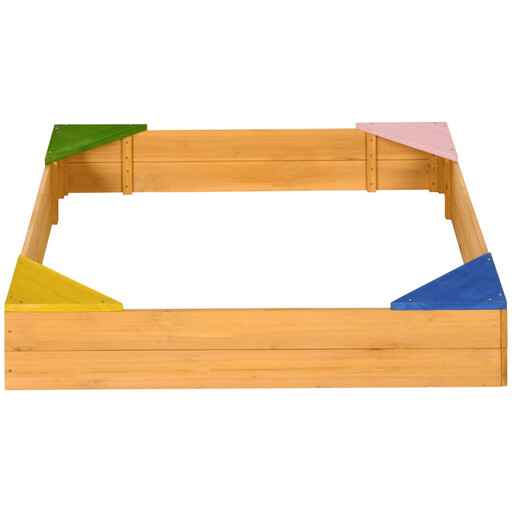
Why This Fits Their Persona: This is an excellent choice for those seeking a straightforward, durable children's sandbox without complex features. Its compact footprint is suitable for smaller gardens, and the four corner seats make it a sociable play space.
The solid fir wood construction with a treated surface directly counters the "one-season wonder" pitfall. Its bottomless design with a fabric liner prevents it from becoming a "soggy bottom."
Features four built-in corner seats, encouraging group play. The simple, robust design focuses on durability and core function.
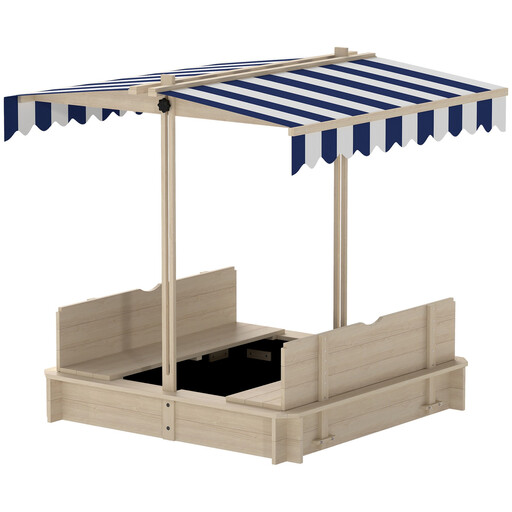
Why This Fits Their Persona: For parents who want to maximise playtime regardless of the weather. This model prioritises keeping the sand clean and providing sun protection, making it a highly practical choice for the UK.
Its clever design directly solves the "useless cover" problem. The two bench backrests fold down to form a solid wooden lid, which is far more effective than a simple fabric sheet.
Features an adjustable canopy for sun protection and benches that convert into a protective cover, keeping sand clean and dry.
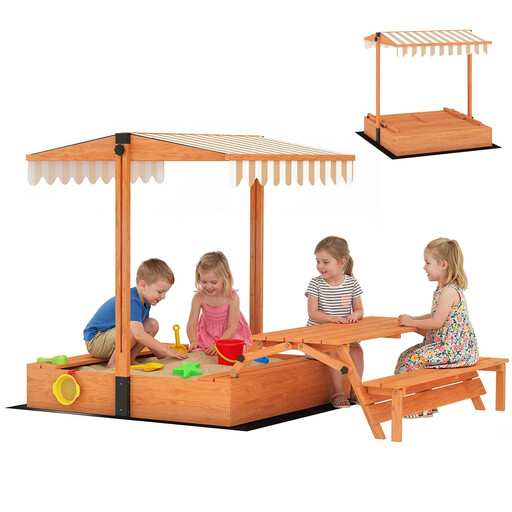
Why This Fits Their Persona: This is more than just a sandpit; it's a complete outdoor activity centre. It's ideal for larger families or those who love hosting playdates, offering space for up to six children and converting into a picnic table for snacks or crafts.
This model addresses all three pitfalls with its robust fir wood build, an adjustable all-weather canopy and a clever design where the picnic table folds down to become a comprehensive cover.
Highly versatile, converting from a large sandpit to a picnic table with benches. The large canopy and spacious design make it perfect for social play.
We have compiled a complete, real-time list of products that fully satisfy these strict selection criteria and UK safety regulations.
This depends entirely on the internal dimensions of the sandpit. Most manufacturers will state the recommended sand capacity in kilograms or litres in the product specifications. As a general rule, aim to fill the sandpit to about two-thirds of its depth. This provides plenty of sand for digging while minimising spillage.
Regular maintenance is key to keeping the sand clean and safe. Always use the cover when the sandpit is not in use to protect it from rain, debris and animals. Periodically rake the sand to aerate it and check for any buried objects. If the sand becomes particularly dirty or has been wet for a prolonged period, it is advisable to replace it.
Yes, provided they are well-made and certified to safety standards like EN71. Look for models with smooth, polished surfaces and rounded corners to minimise the risk of splinters or injuries. A sturdy construction ensures the sandpit will not collapse under a child's weight. Always supervise young children during play.