
24/7 Customer Support

Free returns

Same-day & Next-day Delivery

Quality Guaranteed

Unlock Your Welcome Offers: FREE Delivery | Up to 80% OFF | Free 30-day JoyPlus trial
Download the APP
Bringing the simple joy of a beach to your back garden is a wonderful way to encourage outdoor play. A wooden sandpit can become the heart of imaginative games, from building castles to digging for treasure. However, with so many options available, choosing the right one can feel overwhelming. You want something that is safe, durable and fits your space, while also being easy to keep clean and protected from the British weather.
As the Joybuy Product Recommendation Officer, my role is to help you navigate these choices. This guide cuts through the clutter, focusing on the practical features that matter most when selecting a wooden sandpit with cover for your family. We will look at key considerations and highlight a few recommended models to help you find the perfect addition to your garden.
Before diving into specific products, let's outline a few essential features to consider. Keeping these in mind will help you make a more informed decision for your children's sandpit.
The construction of a sandpit is paramount. Many are made from solid fir wood, a material known for its natural resilience to outdoor conditions. Look for models with smooth, polished surfaces to minimise the risk of splinters. For added peace of mind, check for safety certifications like EN71-1-2-3, which indicates the product has been assessed against UK and EU toy safety standards.
A wooden sandpit with cover is a practical necessity. A good cover protects the sand from rain, falling leaves and neighbourhood pets, keeping it clean and ready for play. Some models feature a built-in sandpit with canopy, which is invaluable for providing shade on sunny days and protecting children from UV rays. An adjustable canopy offers the most flexibility. Many sandpits also feature a bottomless design with a non-woven fabric liner, which allows for proper drainage and ventilation while preventing sand from mixing with the soil underneath.
Consider how much space you have and how many children will be using the sandpit. Some are compact and ideal for smaller patios, while others are large enough for several children to play together. Features like built-in sandpit with seats provide a comfortable place for children to sit, keeping them out of the sand. More elaborate models can function as a complete wooden play station, sometimes including convertible elements like picnic tables for snacks or crafts.
Based on these criteria, here are a few standout options that cater to different needs and garden sizes.
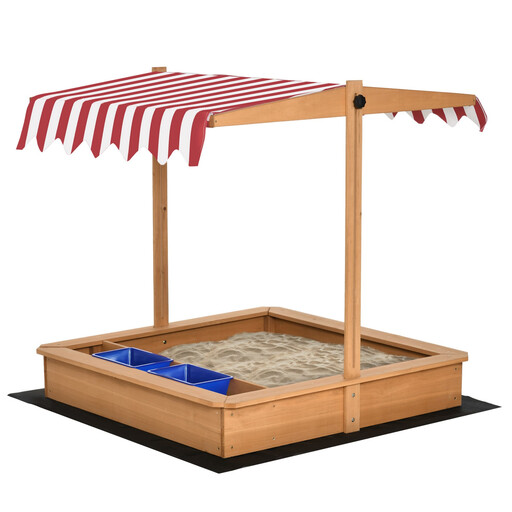
Why It Stands Out: This model’s key feature is its highly versatile canopy. It can be adjusted for both height and angle to provide optimal shade throughout the day. When playtime is over, the canopy lowers completely to act as a protective lid for the sandbox.
Pros:
Who is it for? This is an excellent choice for families with smaller gardens or patios where sun protection is a priority. Its clever canopy design makes it a practical outdoor sandbox with lid for one or two children.
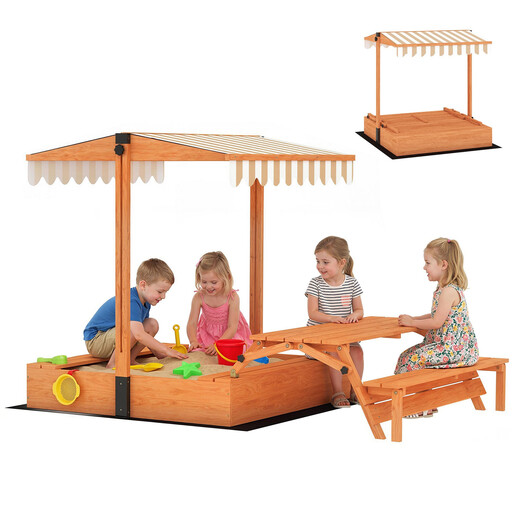
Why It Stands Out: This sandpit transforms into a multi-functional play area. The two bench seats cleverly fold inwards to become a picnic table, creating a space for snacks, drawing or other activities. When folded back, they also serve as a complete cover for the sand.
Pros:
Who is it for? This is a great option for those who love to host or have multiple children. If you're looking for a versatile wooden play station that goes beyond just sand, this model offers exceptional functionality.
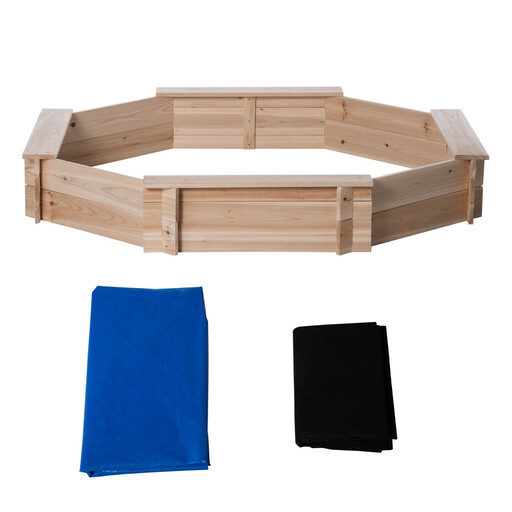
Why It Stands Out: This kids wooden sandbox focuses on providing a large, open play area with plenty of seating. Its hexagonal shape incorporates wide bench seats on each side, allowing several children to sit comfortably while they play.
Pros:
Who is it for? Ideal for families needing a straightforward and spacious garden sandpit. If your main priority is a durable, large-capacity sandbox with integrated seating, this is a strong contender.
While these recommendations cover a range of popular needs, every garden and family is unique. If you're looking for different sizes, shapes or features, there are many other options to consider.
Explore our full collection of sand boxes to find the perfect fit for your family's outdoor adventures.
Maintaining a wooden sandpit is relatively simple. Models made from fir wood are naturally durable. The most important step is to use the cover whenever the sandpit is not in use. This protects both the wood and the sand from rain and debris, preventing mould and rot. Wiping down the wooden surfaces periodically can also help keep it in good condition.
Yes, when chosen carefully. Look for sandpits with EN71-1-2-3 certification, which confirms they meet key safety standards for toys in the UK. A well-made sandpit will have smooth, polished edges to prevent splinters. Always ensure the structure is assembled correctly and remains stable.
The amount of sand required depends entirely on the sandpit's dimensions. Most manufacturers provide a recommended sand capacity in their product specifications, often listed in kilograms (kg) or litres. As a general rule, filling the sandpit to about two-thirds of its depth provides plenty of sand for digging and building without it easily spilling over the sides.