
24/7 Customer Support

Free returns

Same-day & Next-day Delivery

Quality Guaranteed
Download the APP
Categories
A wooden sandpit can transform a garden into a hub of creativity and fun for children. It offers a wonderful opportunity for sensory play, encouraging kids to dig, build and imagine for hours. However, choosing the right one involves considering safety, durability and practical features that make life easier for parents. A good sandpit should be a lasting addition to your outdoor space, not a source of constant maintenance.
This guide is designed to help you navigate the options. We will outline key features to look for in a quality children's garden sandpit and present a few of our top recommendations for 2026, helping you find a model that suits your garden and your family's needs.
When selecting an outdoor sandpit, a few key considerations can ensure you make a choice that provides years of safe and enjoyable play.
The foundation of any good sandpit is its construction. Look for models made from solid wood, such as fir wood, which is known for its natural durability and resistance to the elements. Ensure the wood is smoothly finished with rounded edges to prevent splinters. For peace of mind, check that the product complies with UK and EU safety standards, such as EN71-1-2-3, which confirms it has been assessed for structural safety and material content.
Two of the most practical features are a cover and a canopy. A kids sandbox with cover is essential for keeping the sand clean and dry, protecting it from rain, falling leaves and neighbourhood pets. Many designs cleverly integrate the cover, such as benches that fold flat.
A sandpit with canopy provides crucial protection from the sun's rays on bright summer days, allowing for longer, more comfortable playtime. Look for canopies made from UV-resistant fabric that are adjustable in height and angle to provide optimal shade as the sun moves.
Comfortable seating can significantly enhance the play experience. A sandpit with seats allows children to sit on the edge rather than directly in the sand, keeping them cleaner and more comfortable. Some innovative designs feature benches that convert into a picnic table, adding another layer of functionality for snacks or crafts. Also, consider a bottomless design paired with a non-woven fabric liner. This allows for good drainage, prevents weeds from growing through and lets you control the depth of the sand.
Here are a few standout options that balance thoughtful design with practical features for families in the UK.
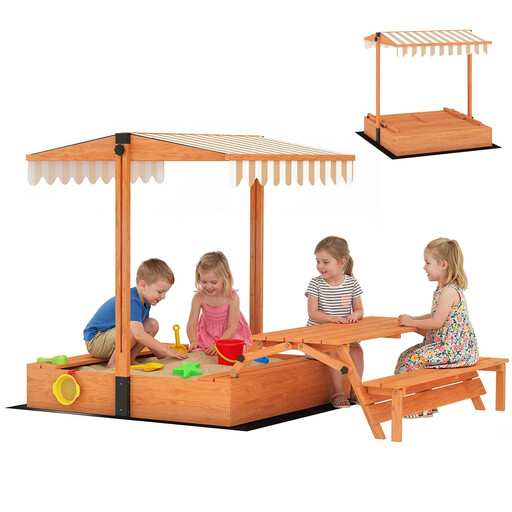
Why It Stands Out: This model is more than just a sandpit; it’s a complete outdoor activity centre. Its standout feature is the clever design that allows the bench seats to convert into a picnic table, creating a versatile space for play, snacks and art projects.
With room for up to six children, it’s an excellent choice for larger families or those who frequently host playdates. The large, adjustable canopy provides ample shade, and when playtime is over, the table folds down to become a protective cover for the sand.
Pros:
Who is it for?: Families seeking a multi-functional play station that encourages social play and can serve as garden furniture for children's gatherings.
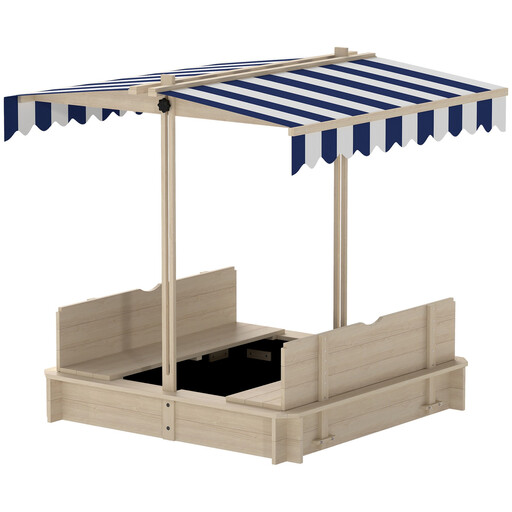
Why It Stands Out: This wooden sandbox offers a classic, compact design packed with essential features. The two high-back benches provide comfortable seating, and their backrests cleverly fold down to form a cover, protecting the sand when not in use.
The height-adjustable canopy ensures children stay shaded, while the solid fir wood frame provides a sturdy and reliable play structure. For those wanting more space to dig, the seats are also removable, expanding the internal play area.
Pros:
Who is it for?: Those with moderately sized gardens who want a traditional and sturdy wooden sandpit that includes the core features of seating, a cover and a sun canopy.
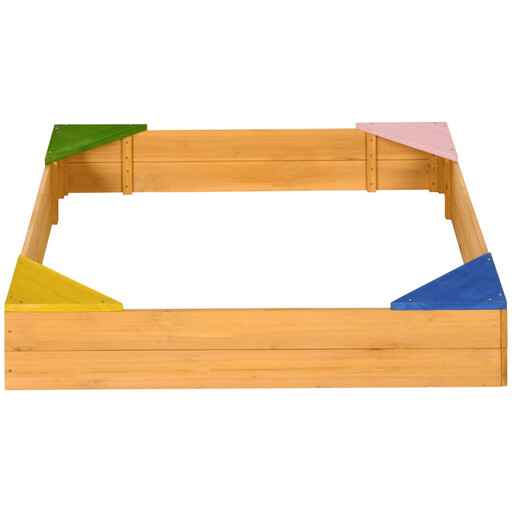
Why It Stands Out: This sandpit focuses on simplicity and social interaction. Its design features four built-in seats, one on each corner, making it ideal for multiple children to play together comfortably. The colourful seats add a vibrant touch that is appealing to young kids.
While it doesn't include a canopy, its sturdy fir wood construction and generous sand capacity make it a durable and straightforward choice. The bottomless design with an included fabric liner ensures the sand stays contained and the area remains tidy.
Pros:
Who is it for?: Buyers looking for a simple, durable and affordable sandpit that prioritises seating for multiple children, especially if the play area is already shaded.
These recommendations represent just a sample of the quality designs available. If you have different space requirements or are looking for other features, there are many more models to consider.
Explore our full collection of garden sandpits to find the perfect fit for your family and outdoor space.
1. How much sand do I need for a wooden sandpit? The amount of sand required depends entirely on the sandpit's dimensions. It is always advisable to check the manufacturer's specifications, which usually state the recommended sand capacity in kilograms or litres. For example, the models listed here have capacities ranging from 90 kg to 265 kg. It's generally a good idea to fill it about two-thirds full to prevent sand from spilling out during enthusiastic play.
2. How do I keep the sand in a sandpit clean? The most effective method is to use a kids sandbox with cover. A cover prevents rain, leaves, insects and animals from contaminating the sand. Many wooden sandpits come with integrated covers, such as foldable benches or separate lids. Regularly raking the sand to remove any debris and allowing it to air out on dry, sunny days can also help keep it fresh.
3. Is a bottom liner necessary for a wooden sandbox? While not strictly essential, a bottom liner is highly recommended. Most quality sandpit kits include a non-woven fabric liner for several reasons. It prevents the sand from mixing with the soil or grass underneath, stops weeds from growing into the play area and allows water to drain through, preventing the sand from becoming waterlogged and stagnant.