
24/7 Customer Support

Free returns

Same-day & Next-day Delivery

Quality Guaranteed

Unlock Your Welcome Offers: FREE Delivery | Up to 80% OFF | Free 30-day JoyPlus trial
Download the APP
Wooden toys are making a welcome return to playrooms across the UK, prized for their durability, timeless appeal and potential to foster creativity away from screens. However, the growing popularity has also led to a market filled with options that can be misleading. Many well-intentioned parents and gift-givers find themselves with a toy that is either unsafe, unengaging or simply not built to last.
Before you invest, it is crucial to understand the common pitfalls. Many products marketed as "wooden" are anything but, and a poor choice can lead to disappointment and wasted money. Here are the key issues to watch for.
To ensure you are buying a product that offers genuine play value, focus on a few core parameters. These non-negotiable factors separate high-quality educational wooden toys from the ones that will not last the season.
The term "wood" is broad. Understanding the distinctions is key to making a safe and durable choice.
Crucially, always check for safety certifications. In the UK and Europe, the EN71 standard is the benchmark for toy safety, covering mechanical properties, flammability and the migration of certain chemical elements. For finishes, look for explicit mentions of non-toxic, water-based paints to ensure they are safe for little hands and mouths. If sustainability is a priority, look for products made from FSC-certified wood, which guarantees it comes from responsibly managed forests.
Consider how a child will interact with the toy. Pretend play sets and eco-friendly building toys are examples of "open-ended" toys. They do not have a fixed outcome, allowing a child to use their imagination to create new scenarios each time they play. This adaptability means the toy can grow with the child, remaining relevant for years.
In contrast, single-purpose toys, like a simple peg puzzle, are designed to teach a specific skill. While valuable, their play life is inherently shorter. For long-term creative engagement, a balance is ideal, but prioritising open-ended designs often provides a better return on investment.
Based on these criteria, we have identified several products that align with different needs and user profiles, from young children just starting their creative journey to teens and adults seeking a complex, rewarding project.
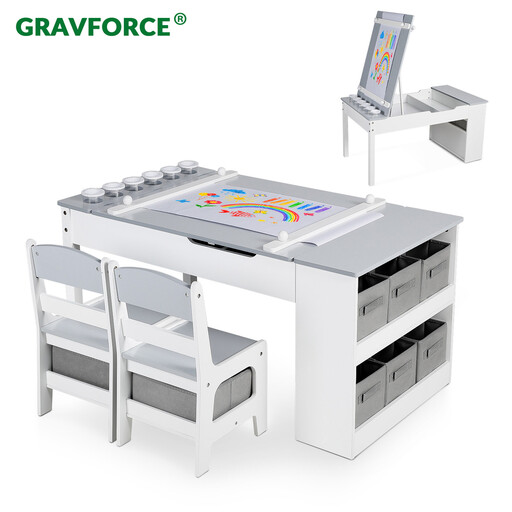
Why This Fits Their Persona: This set provides a dedicated, child-sized hub for a wide range of creative activities. It is perfect for UK homes where a multi-functional play space is needed for drawing, painting, puzzles or even snack time, keeping messes contained and organised.
It directly counters the "eco-veneer" trap by using a combination of engineered MDF for a smooth, easy-to-clean surface and solid wood legs for stability. All corners are rounded for safety, and the finishes are child-safe.
The integrated design, featuring a paper roll holder, shelves and storage bins, promotes organisation and independent play. Its versatility ensures it will be used for years, avoiding rapid obsolescence.
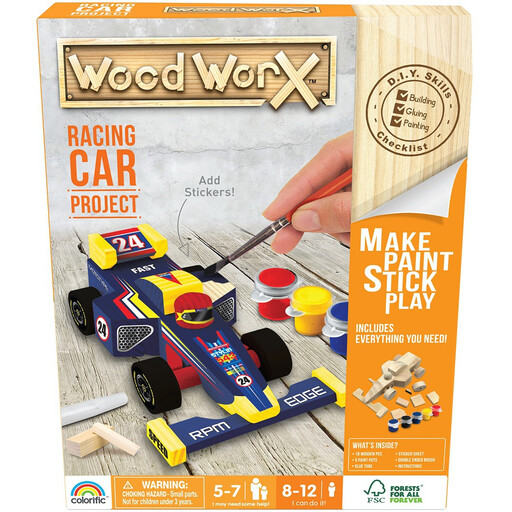
Why This Fits Their Persona: Ideal for a child ready for their first building project. This kit provides a structured yet creative activity with a clear, rewarding outcome—a personalised toy car they can be proud of. It is a perfect weekend or rainy-day activity.
This kit avoids the "frustrating craft kit" pitfall by providing everything needed—pre-cut wooden pieces, paints, glue and stickers. The simple construction ensures a successful build, fostering a sense of accomplishment.
Made from sustainable FSC-certified wood, it is an eco-conscious choice. The all-inclusive nature makes it a convenient and frustration-free gift that helps develop fine motor skills and the ability to follow instructions.
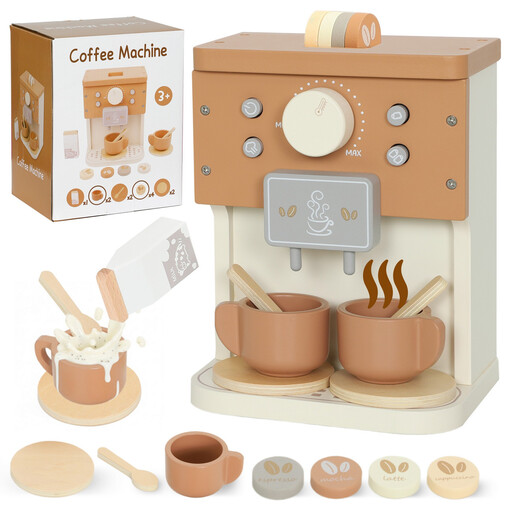
Why This Fits Their Persona: Perfect for toddlers and young children who love to mimic adults. This coffee machine set transforms playtime into a bustling café, encouraging social skills, communication and imaginative storytelling as they serve drinks to family and friends.
This is a classic open-ended toy, avoiding the "rapid obsolescence" flaw. Its purpose is to fuel imagination, so its play value evolves with the child. It is made from child-safe materials (MDF, plywood and solid wood) with smooth, splinter-free finishes.
The interactive features, like pressable buttons and a clicking knob, enhance the role-play experience. The set includes 11 accessories, providing a complete, ready-to-play experience that supports Montessori-inspired learning.
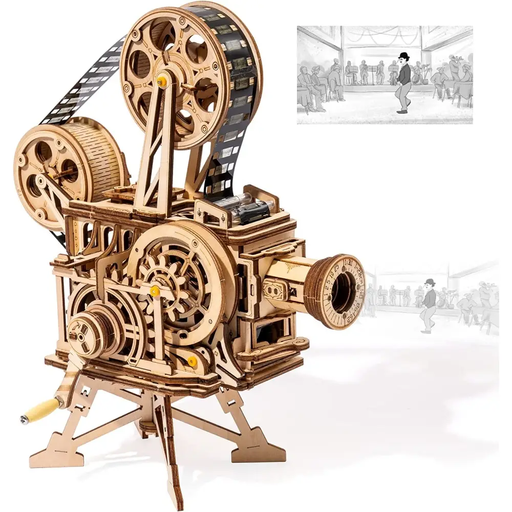
Why This Fits Their Persona: This is for the teen or adult who loves a challenge and appreciates mechanical design. It is a sophisticated, screen-free project that requires focus and precision, making it a highly engaging hobby for anyone interested in engineering or model building.
This complex 3D wooden puzzle avoids the "poorly made kit" trap with high-precision, laser-cut plywood pieces that fit together without glue. The detailed instructions guide the user through a complex but achievable assembly process.
Unlike a static model, the finished product is a working, hand-cranked film projector. This functional outcome provides an immense sense of accomplishment and results in a unique decorative piece that is a true conversation starter.
We have compiled a complete, real-time list of products that fully satisfy these strict selection criteria and UK safety regulations.
For most wooden toys, a simple wipe-down with a soft, slightly damp cloth is sufficient. Avoid soaking the toy in water, especially if it is made from MDF or plywood, as this can cause the material to swell and warp. For stubborn grime on solid wood, you can use a mild soap solution, but be sure to wipe it clean and dry the toy thoroughly immediately after. For larger items with hardware, periodically check that all screws are tight.
Not automatically. A toy's safety is determined by its quality of construction and materials, not just the material itself. High-quality wooden toys, made from solid wood and finished with non-toxic paints that are certified to EN71 standards, are an exceptionally safe choice. They are durable and do not contain chemicals like BPA or phthalates that can be a concern in some lower-quality plastics. Conversely, a poorly made wooden toy from composite board with a chipping finish could be less safe than a high-quality, certified plastic one. Always check the product specifications and safety certifications.
Always follow the manufacturer's age recommendation, as it is based on safety (small parts) and developmental appropriateness. Simple wooden craft kits involving basic assembly and painting are often suitable for children from 5 years old. More intricate 3D wooden puzzles, especially those with mechanical parts like the ROKR Vitascope, are typically designed for ages 14 and up. They require significant patience, advanced fine motor skills and the ability to follow complex diagrams, making them a rewarding challenge for teens and adults.