
24/7 Customer Support

Free returns

Same-day & Next-day Delivery

Quality Guaranteed

Unlock Your Welcome Offers: FREE Delivery | Up to 80% OFF | Free 30-day JoyPlus trial
Download the APP
As a parent or gift-giver, choosing the right toy can feel like navigating a minefield of marketing claims. The appeal of classic wooden toys for kids is undeniable—they evoke a sense of durability, natural simplicity and timeless play. Yet, not all wooden toys are created equal. Many shoppers in the UK find themselves with products that quickly chip, splinter or fail to hold a child's interest.
Before you buy, it is important to be aware of a few common pitfalls that can lead to disappointment and wasted money.
To ensure you are investing in a toy that is safe, durable and genuinely engaging, focus on these core parameters. They are the non-negotiable details that separate a quality toy from a short-lived disappointment.
The term "wood" can be misleading. It is crucial to understand the difference between materials:
A key indicator of responsible sourcing is the FSC (Forest Stewardship Council) certification, which confirms the wood comes from sustainably managed forests. Regardless of the material, always check that edges are rounded and surfaces are smooth to the touch to prevent splinters.
In the UK, toys must meet stringent safety standards. Look for these two key certifications on the product packaging or description:
These certifications are your assurance that the toy has been assessed for common hazards, making it a fundamental checkpoint for any toy, especially educational toys for toddlers.
A great toy matches the child's developmental stage. For younger children (1-2 years), look for items that support gross motor skills, such as a wooden baby walker or simple stacking blocks. For pre-schoolers (3-5 years), creative play sets, puzzles with more pieces and introductory garden games for children help develop fine motor skills, problem-solving and social interaction. For older children (5-7+), more complex building sets or strategy games like a tabletop balance game can provide a lasting challenge.
Here are a few options that align with our selection criteria, matched to different family needs and play styles.
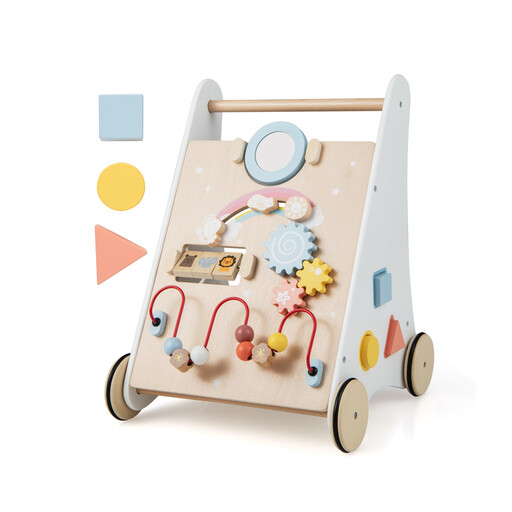
Why This Fits Their Persona: This is ideal for families supporting a child's first steps. It combines a stable push-along walker with a built-in activity centre, providing both physical support and cognitive stimulation in one unit.
It directly counters the "one-toy-fits-all" myth by being specifically designed for toddlers over 12 months. It is UKCA and EN-71 certified, ensuring the materials and finish are safe for this age group.
The 7-in-1 design offers high play value, combining a walker with a shape sorter, bead maze and gears. The wheels have non-slip rubber rings to protect floors and ensure stability.
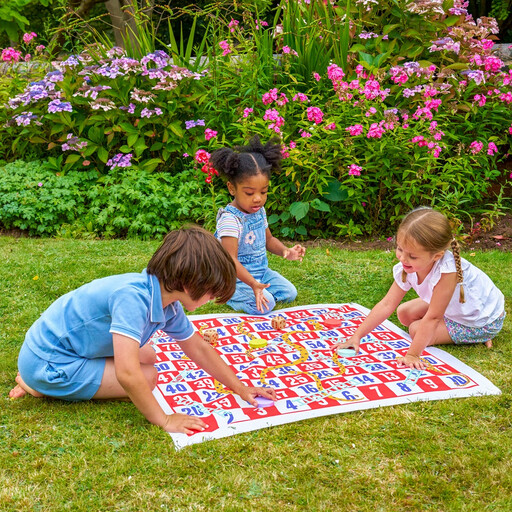
Why This Fits Their Persona: Perfect for encouraging screen-free, active play. This giant version of a classic board game turns any lawn or patio into a play area, making it one of the great outdoor family games for parties or sunny afternoons.
It avoids the material trap by using durable, FSC-certified wood for the counters and dice, ensuring sustainability and longevity for outdoor use. The large, chunky pieces are inherently safe for children aged 3+.
The colossal 1x1 metre game mat and oversized wooden pieces make the game more physical and engaging for young children. It includes a handy storage tube for easy clean-up and transport.
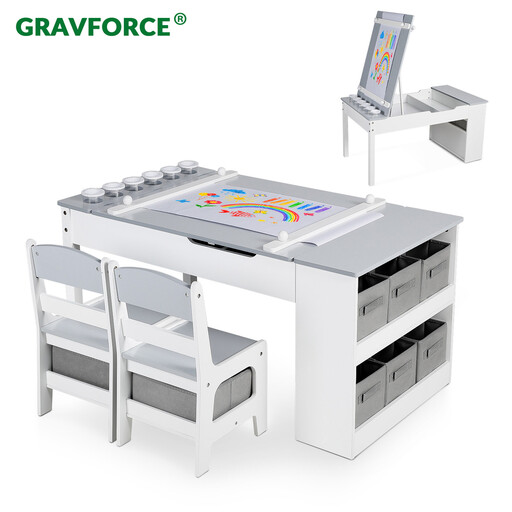
Why This Fits Their Persona: This set is for the family with a budding artist who needs a dedicated space for drawing, painting and crafting. It provides an organised and child-sized workstation that helps contain the creative mess.
This is a purpose-built creative play set, not a flimsy generic table. It uses a combination of solid wood legs for stability and engineered board for a smooth, easy-to-clean surface, with all corners rounded for safety.
The integrated design includes a paper roll holder, storage shelves and removable bins. This all-in-one functionality encourages organisation and independent play for children aged 3-7.
We have compiled a complete, real-time list of products that fully satisfy these strict selection criteria and UK safety regulations.
The best method is to wipe the surface with a soft, slightly damp cloth. Avoid using harsh chemical cleaners, abrasive sponges or soaking the toy in water, as this can cause the wood to swell and the paint to peel. After wiping, let the toy air dry completely. For unpainted solid wood toys, you can lightly sand any rough spots that may develop over time.
Neither material is inherently "better"; the developmental value lies in the toy's design. However, wooden toys often have simpler, more open-ended designs that can encourage greater imagination and problem-solving from a child. Their weight and natural texture also provide a different kind of sensory feedback compared to lightweight plastic. The key is to choose a toy that challenges a child appropriately, regardless of material.
EN-71 is a crucial European safety standard, adopted by the UK, that ensures a toy is safe for its intended age group. It involves a series of tests that check for multiple hazards. This includes ensuring that paints and coatings are non-toxic, that there are no sharp points or edges and that any small parts on toys for children under three will not detach and become a choking hazard. Seeing this certification provides a strong assurance of the product's safety.