
24/7 全天候客户支持

免费退货

当日/次日达

品质保障

开启新人专享福利: 全场免邮 | 低至 2 折 | 免费试用 30 天 JoyPlus 会员
下载 Joybuy
Wooden DIY craft kits can provide a rewarding screen-free activity, a display piece or a thoughtful birthday and Christmas present. However, product photographs often make every kit look equally straightforward. The real differences are usually found in the recommended age, number of parts, assembly time, required tools and finished dimensions.
Before choosing a kit, UK shoppers should look beyond attractive packaging and check whether the project suits the person, available space and expected level of involvement.
A product described as an educational building toy may still be intended for teenagers or adults. Mechanical wooden puzzles can contain small, sharp or fragile components, making them unsuitable for young children.
Always check:
For children aged 6 to 12, a simple paint-your-own wooden cars project may be more appropriate than a highly detailed model with hundreds of interlocking parts.
Some wooden model building kits use pre-cut plywood pieces and interlocking joints, so glue or additional tools may not be needed. This does not necessarily mean assembly is quick. A kit can still involve delicate parts, sanding, waxing joints and following detailed instructions.
Look for a stated assembly time and difficulty rating, rather than relying on phrases such as “easy build”. A four- to six-hour project may be enjoyable for a patient hobbyist but frustrating for someone looking for a short afternoon activity.
Online product images can make a model appear larger than it is. Check the assembled dimensions before buying, particularly if the finished piece will sit on a mantelpiece, bookshelf or desk.
Also consider:
For products sold as toys or children’s craft activities, check that the listing provides clear age guidance and safety information. In the UK, buyers should look for appropriate product safety information, including relevant marking and warnings where applicable. A marking alone does not make a complex kit suitable for every child; the instructions and age recommendation still matter.
For adult craft kits and 3D wooden puzzles, direct supervision may be recommended even when the recipient is over the stated minimum age. Keep small components away from infants and toddlers, and avoid allowing children to chew, force or dismantle completed models.
Pre-cut plywood is common in wooden DIY craft kits because it can be shaped into precise components. Check whether the listing specifies the principal material, finish and included accessories.
For children’s projects, look for clear information about child-friendly materials and included paints. For decorative models, protect the finished wood with a soft, dry cloth rather than water or abrasive cleaners. Wood can warp, crack or fade if exposed to damp conditions, strong sunlight or heat.
A mechanical wooden puzzle may use a hand crank, spring mechanism, music box, LED lights or a combination of these features. Confirm:
For example, a hand-powered model does not need mains electricity, while a model with LED lighting may require separate AAA batteries. Avoid over-winding mechanical components and follow the supplied instructions.
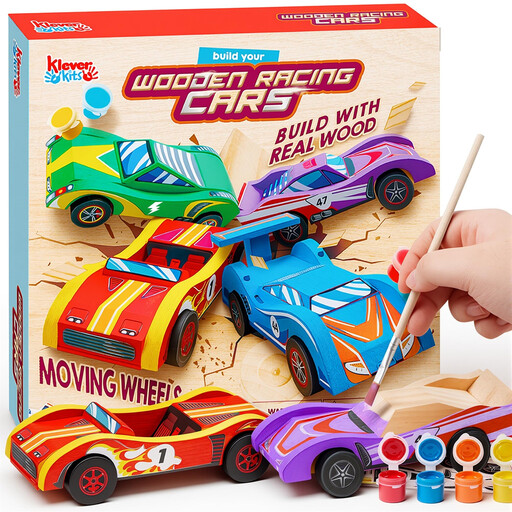
Why This Fits Their Persona: A practical starting point for creative children aged 6 to 12, birthday activities and family craft sessions. The kit is designed for children aged 8 and over and includes four cars to build and decorate.
The age guidance, pre-cut pieces and illustrated instructions make the scope clearer than a complex adult model. Adult supervision remains sensible when using glue and paints.
Includes 44 wooden pieces, 12 paint tubs, three brushes, stickers, a glue pen and instructions.
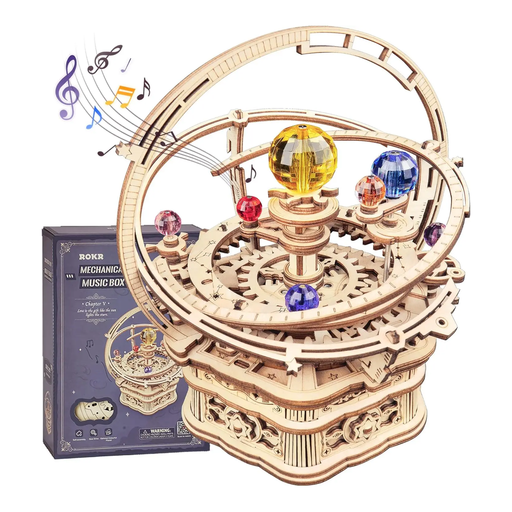
Why This Fits Their Persona: Suitable for adults and teens aged 14 and over who want a compact display model with a mechanical feature and music-box function.
The listing gives an 84-piece count, approximately three-hour assembly time, four-star difficulty and 14+ age recommendation.
Manual winding needs no batteries, and the assembled model measures 13.5 × 13.5 × 15.5cm.
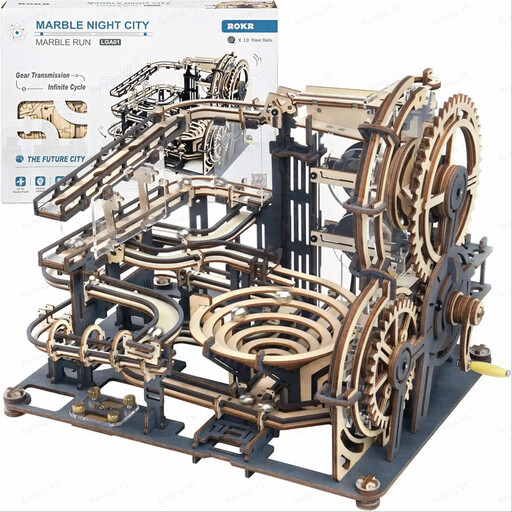
Why This Fits Their Persona: A substantial choice for dedicated builders, model collectors and families seeking a longer shared project for older participants.
The product information states its 14+ recommendation, five-star difficulty and four- to five-hour assembly time, helping buyers set realistic expectations.
The marble-run mechanism has 294 listed pieces and an assembled size of 32.5 × 21.4 × 22.8cm.
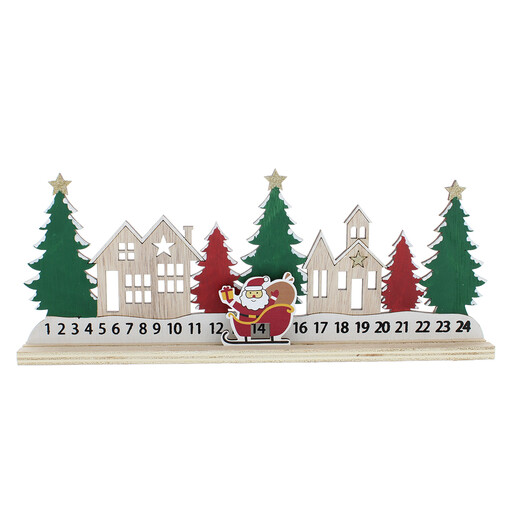
Why This Fits Their Persona: Designed for shoppers seeking a reusable seasonal display, Christmas craft gifts or a countdown feature for a mantelpiece, shelf or sideboard.
The stated 30cm height and included stand make its display format easier to assess before purchase. It is decorative rather than a children’s toy and contains small parts.
A wooden stand supports tabletop display, while the red and green Santa design suits traditional festive interiors.
We have compiled a complete, real-time list of products that fully satisfy these strict selection criteria and UK safety regulations.
Use the following quick comparison before ordering:
Other options include wooden music box kits, wooden model building kits and DIY wooden toys. Compare the contents carefully: similar-looking products may differ significantly in scale, mechanisms and included accessories.
Keep completed models indoors on a dry, stable surface. Dust them with a soft, dry cloth and avoid water, liquid cleaners and abrasive materials. Store unused kits in a cool, dry place away from direct sunlight. For models containing batteries, remove them during long periods of storage to reduce the risk of leakage.
If a project includes a crank or spring mechanism, operate it gently and avoid forcing parts that do not move freely. Seasonal items such as a wooden Christmas advent calendar should be wrapped carefully and stored away from heat and dampness after December.
Some are, but suitability depends on the specific product. Children’s craft kits with paints and larger pre-cut components may suit younger users, while detailed 3D wooden puzzles commonly carry a 14+ recommendation. Read the age guidance, warnings and supervision requirements before buying.
Not always. Several interlocking wooden models are designed for glue-free assembly, while children’s kits may include a glue pen. Check the product contents before ordering, as wax, sandpaper, paint and batteries may be included or sold separately.
Assembly time varies from a short painting session to around six hours for a detailed mechanical model. Part count and difficulty are useful indicators, but individual experience, working pace and whether the kit is built alone or as a family project will also affect the total time.