
24/7 Customer Support

Free returns

Same-day & Next-day Delivery

Quality Guaranteed

Unlock Your Welcome Offers: FREE Delivery | Up to 80% OFF | Free 30-day JoyPlus trial
Download the APP
A work bag needs to do more than look professional. It may need to protect a laptop on a crowded train, keep lunch separate from paperwork, carry tools across a building site or fit beneath an aeroplane seat. Choosing by appearance alone can lead to uncomfortable straps, damaged devices and pockets that are difficult to use.
The following guide highlights common buying traps and the practical specifications worth checking before choosing work bags for office, travel or trade use.
A product described as water-resistant, water-repellent or splashproof may cope with light rain or accidental spills, but this does not necessarily mean it is suitable for prolonged exposure to heavy rain. Seams, zips and exposed charging ports can still allow moisture inside.
For regular cycling or outdoor work, check whether the base is raised and protected, whether the zip design helps limit water entry and whether the manufacturer provides clear care instructions. A waterproof tool bag with a hard base is more suitable for wet or dusty environments than a slim office rucksack with water-repellent fabric.
An external USB charging port is usually only a pass-through connection. You still need a compatible power bank and charging cable, placed safely inside the bag. It does not automatically mean the bag includes a battery or charger.
Inspect the cable route and make sure it will not be pinched when the main compartment is closed. Avoid overloading the area around the port, particularly when carrying the bag through busy stations or placing it under a desk.
A “15.6-inch laptop backpack” may not accommodate every laptop with a 15.6-inch screen. Bezel size, casing thickness and the shape of the padded compartment can vary considerably.
Compare your laptop’s actual dimensions with the stated internal compartment measurements. A laptop sleeve or laptop shoulder bag should hold the device securely without forcing it into the zip opening. Extra space is useful for a charger, but too much movement can reduce protection.
For office workers, teachers, nurses and college students, look for a padded laptop compartment, ideally separated from heavier objects. A dedicated sleeve can reduce contact with keys, chargers and stationery.
Consider what else you carry:
An expandable travel backpack can offer useful flexibility, but check its expanded dimensions before using it on public transport or as cabin luggage. Expansion can also move the weight further away from your back.
Oxford fabric, nylon and polyester are common choices, but the fabric weight and construction matter. A 1680D polyester tool bag is designed for more demanding handling than a lightweight daypack, while 600D polyester may offer a balance between weight and durability for general tool storage.
Trade users should look for:
A hard base can help prevent sharp tools from piercing the bottom and can keep the bag raised above damp floors. However, it may also add weight, so compare the empty bag weight with the load you expect to carry.
For a commuter backpack, breathable back panels, adjustable shoulder straps and a luggage strap can make daily carrying more manageable. A sternum strap may help distribute weight on longer journeys.
Multi-pocket work bags are convenient when each compartment has a purpose, but excessive pockets can add bulk and make the interior harder to access. A wide-opening tool bag is often more practical for electricians, plumbers and mechanics who need to identify equipment quickly.
For UK travel, a luggage trolley strap, lockable compartment or reflective detail may be useful. These features improve convenience but do not replace sensible care in busy public spaces.
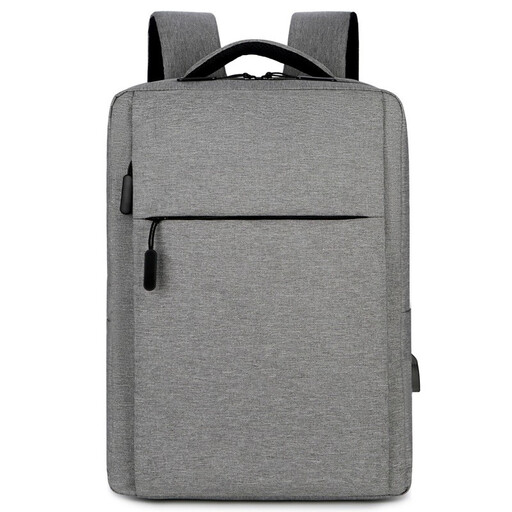
Why This Fits Their Persona: A practical starting point for office workers, students and commuters who need a lightweight business laptop rucksack for daily essentials.
Its description clearly distinguishes water-repellent fabric from complete waterproofing and states that the power bank is separate.
Fits a 15.6-inch laptop, includes multiple pockets, a luggage strap and an external USB port.

Why This Fits Their Persona: Suits frequent rail commuters and business travellers who value structured organisation and carrying comfort.
The listed 16 to 20-litre expandable capacity and separate laptop and tablet compartments make its storage limits clearer.
Features a padded back panel, sternum strap, trolley strap, reflective accents and a USB-C charging connector.
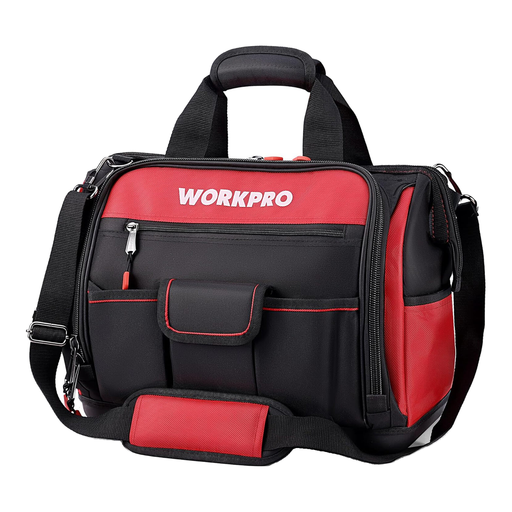
Why This Fits Their Persona: Designed for electricians, plumbers, carpenters, construction workers and mechanics carrying a substantial selection of equipment.
The 1680D polyester fabric, hard waterproof base and stated pocket layout provide more useful detail than a general “heavy-duty” label alone.
Measures 42 x 24.5 x 34 cm and provides 39 pockets with elastic and hook storage, plus an adjustable shoulder strap.
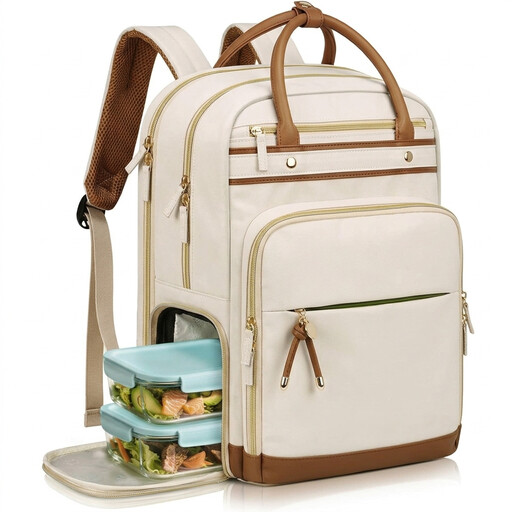
Why This Fits Their Persona: A practical match for nurses, teachers and office workers who carry meals, documents and a laptop in one backpack.
The removable lunch compartment separates food from work items, while the care guidance explains that the fabric should be wiped rather than machine washed.
Includes a padded 15.6-inch laptop sleeve, insulated detachable lunch bag, A4 organiser pocket and luggage strap.
We have compiled a complete, real-time list of products that fully satisfy these strict selection criteria and UK safety regulations.
Measure the laptop itself rather than relying only on the screen size. Check the bag’s internal sleeve dimensions, including depth and padding thickness. If you carry folders, a charger and lunch, allow additional capacity beyond the laptop compartment.
A USB charging port is generally a connection point for a separately purchased power bank. Use a suitable power bank, keep it secure and prevent cables from becoming trapped in the zip. Follow the product’s instructions and remove the power bank before washing or storing the bag.
Lifespan depends on load weight, frequency of use, weather exposure and handling. Reinforced stitching, durable fabric, strong zips and a protected base can support regular use. Avoid exceeding the stated capacity, carrying sharp objects without protection or leaving water-resistant bags exposed to prolonged rain.