Self-service canteen buyers
An 80-bag box gives lunch-break drinkers individual portions and gives the buyer a countable unit for replenishment. It avoids measuring loose tea at the drinks station.


Choose an 80-bag box if lunch service needs individually portioned tea that people can make without measuring leaves or using an infuser. Choose loose leaf if the canteen can provide brewing equipment, measure portions and clean up afterwards; buy it by weight rather than treating it as an 80-bag equivalent. If staff need a decaffeinated choice, provide a clearly labelled product alongside standard tea.
An 80-bag box gives lunch-break drinkers individual portions and gives the buyer a countable unit for replenishment. It avoids measuring loose tea at the drinks station.
A separately labelled decaffeinated box lets staff distinguish it from standard tea. An 80-bag format can be counted and stored alongside the standard option.
Loose leaf is an option where the canteen has teapots or infusers and someone can measure tea, clear used leaves and store the remainder appropriately.
Decide whether 80 individual portions or loose-leaf preparation is the firm requirement. Then check how the chosen format will work at the lunch counter.
Choose when: Each person should be able to take a pre-portioned bag for a cup of tea.
Trade-off: An 80-bag box meets the count requirement, but it is not loose leaf.
Choose when: The canteen can measure leaves and brew tea in a pot or infuser.
Trade-off: Portions depend on the measure used, and the equipment needs cleaning.
| Priority | What to check | Your needs |
|---|---|---|
| Self-service | Confirm the pack contains 80 individual bags if that is the required unit. Check the pack's brewing directions for cups served at the counter. | I want people to make a cup at lunch without measuring leaves or finding an infuser. |
| Decaffeinated choice | Check that the product is explicitly labelled decaffeinated, and keep its pack identity clear beside standard tea. | Some colleagues want to choose decaffeinated tea rather than a shorter brew of ordinary tea. |
| Loose-leaf service | Check the supplier's measure per cup, the equipment needed and storage instructions. Ringtons advises one teaspoon of loose tea per cup and a three-to-five-minute steep. | We can provide pots or infusers and make time to measure tea and clear up after service. |
| Product information | Keep the ingredient and allergen information accessible after opening, and follow the pack's storage directions. Food Standards Agency MyHACCP guidance addresses allergen control and cross-contamination in food businesses. | Staff need to answer ingredient questions and manage tea within the canteen's wider food-handling procedures. |
Loose tea must be measured; an 80-bag box already divides the tea into individual bags. Confusing the formats can leave a self-service counter without the equipment it needs.
If 80 pre-portioned servings are essential, choose bags. If loose leaf is essential, plan portions using the supplier's measure instead of the bag count.
Loose-leaf service also involves pots or infusers, portioning and equipment cleaning.
Brewing standard black tea for less time does not turn it into a product labelled decaffeinated.
Where a decaffeinated choice is needed, buy a separately labelled product and make the two options easy to distinguish at the drinks station.
Staff may still need the product's ingredients, allergen statement, storage instructions and best-before information once the outer pack has gone.
Retain the carton or record its product information in the canteen's usual food-handling records. Food Standards Agency MyHACCP guidance also addresses allergen control and protection from cross-contamination.
These brand examples help distinguish bag counts from loose-leaf pack weights; they are not a list of products in the Joybuy selection below.
Twinings lists English Breakfast as an 80-tea-bag, 200 g pack.
Bettys lists both standard Yorkshire Tea and Yorkshire Tea Decaffeinated in 80-bag packs.
Ringtons lists an 80-bag, 250 g boxed tea product and gives separate preparation guidance for loose leaf.
Whittard's tea range includes loose leaf, tea bags and brewing equipment.
Its tea range includes loose-leaf caddies and tea bags.
These are individually bagged options for a canteen choosing the 80-portion format, including standard and decaffeinated varieties. They are not loose-leaf alternatives.
 No image available
For a separately labelled decaffeinated choice at a self-service counter. The pack is identified as 80 tea bags weighing 250g; it is not loose leaf.
 No image available
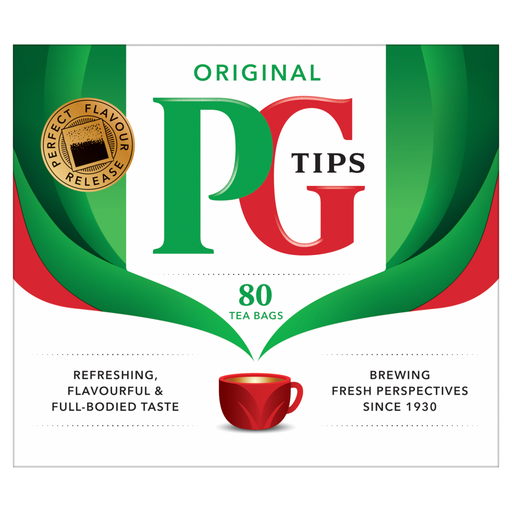
An individually bagged option for a lunch counter where the buyer needs a countable pack. The title identifies 80 Original tea bags weighing 232g, rather than loose leaf.
 No image available
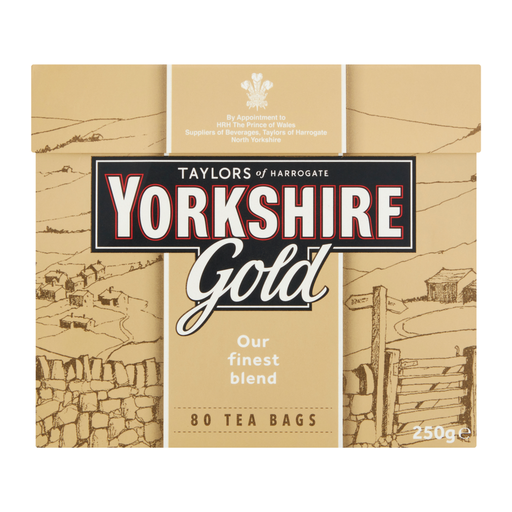
The 80-bag format suits a counter issuing individual tea bags and counting remaining stock. This Gold variant is listed at 250g and is not loose leaf.
 No image available
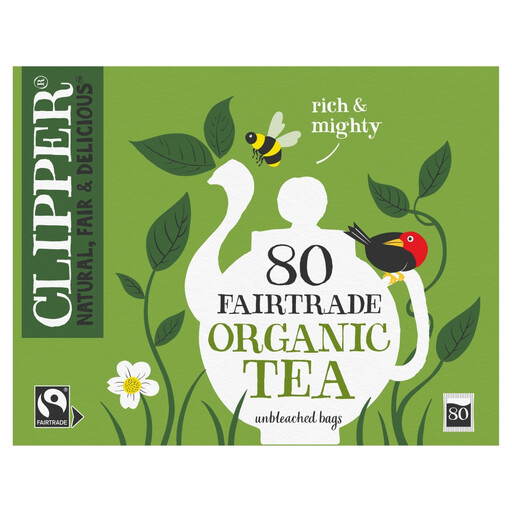
An 80-bag option where individual portions are more useful than loose-leaf preparation. The named pack weighs 232g; check its preparation instructions before setting up service.
 No image available
For a distinct decaffeinated option alongside standard tea bags. The named pack contains 80 bags and weighs 277g; check its preparation instructions before service.
No. An 80-bag box contains individual portions, while loose leaf must be measured. If 80 ready-portioned servings are essential for self-service, choose bags; if loose leaf is essential, buy by weight and use the supplier's portion guidance. Ringtons advises one teaspoon of loose tea per cup.
An 80-bag box provides up to 80 single-bag servings if one bag is used per cup, as Ringtons advises for its boxed tea. Using more than one bag for a drink reduces the number of servings.
Add a clearly labelled decaffeinated product when the drinks station is intended to serve people choosing to avoid caffeine. Keep it distinguishable from standard tea; a shorter brew of standard black tea is not a decaffeinated product.
Keep the ingredient and allergen information, storage directions and best-before details accessible after opening. Food Standards Agency MyHACCP guidance addresses allergen control and cross-contamination as part of a food business's wider procedures.
Follow the particular pack's directions. Ringtons recommends storing loose tea airtight and away from sunlight after opening.