
24/7 Customer Support

Free returns

Same-day & Next-day Delivery

Quality Guaranteed

Unlock Your Welcome Offers: FREE Delivery | Up to 80% OFF | Free 30-day JoyPlus trial
Download the APP
Choosing measuring and levelling equipment can seem straightforward until a square slips during marking, a spirit level will not sit securely on a pipe, or the graduations become difficult to read. For DIY enthusiasts, woodworkers, carpenters, engineers, builders, plumbers, electricians and installers, small design details can affect the quality of an entire project.
This guide to WORKPRO measuring tools focuses on practical selection rather than promotional claims. It explains which specifications matter, highlights common buying traps and matches three tools to different working styles.
A short level is convenient for cabinets, fittings and narrow spaces, but it cannot replace a longer level for checking large surfaces. Similarly, a 6-inch combination square is useful for detailed marking but has a limited measurement range compared with a longer rule.
Before buying, consider whether you need portability for installation work or a longer reference edge for construction and joinery.
A flat magnetic spirit level may attach to a steel panel, but it may rock or slide on conduit and plumbing. For curved surfaces, look for a V-groove spirit level or a magnetic level for pipes. The groove gives the tool a more stable contact point, while the magnet can help keep both hands available.
A scale that is difficult to read, poorly fixed or likely to wear can slow down marking. Check whether the graduations are engraved, the rule is securely held in its head and whether the stated accuracy is clearly provided.
For levels, accuracy is commonly expressed in millimetres per metre. A rating of 0.5 mm/m, for example, describes the stated measurement tolerance over a one-metre distance. It should not be interpreted as a guarantee that every result will be perfect in every working condition.
For woodworking and general DIY, metric and imperial graduations can be useful when working from different plans or existing components. An adjustable combination square with both 150 mm and 6-inch scales provides a familiar reference for marking dimensions, checking edges and setting out short cuts.
Laser-engraved markings are designed to remain more legible than surface printing, although dirt, scratches and rough handling can still affect readability.
A combination square should have a ruler that stays straight and a head that grips securely. Stainless steel is valued for rigidity and resistance to rust, while a zinc-alloy head can provide a solid, stable housing.
For a compact level, an aluminium frame offers low weight and practical durability. Acrylic vials should be protected from impact, as dropping a level may affect calibration even when the outer frame appears undamaged.
A basic horizontal and vertical vial arrangement covers many household tasks. A mini torpedo level with 45°, 90° and 180° vials adds angle checking for pipework, shelving, frames and electrical installation.
Top-read visibility is useful when the level is positioned overhead or in a confined location. A hanging hole can also make storage easier in a workshop, van or utility cupboard.
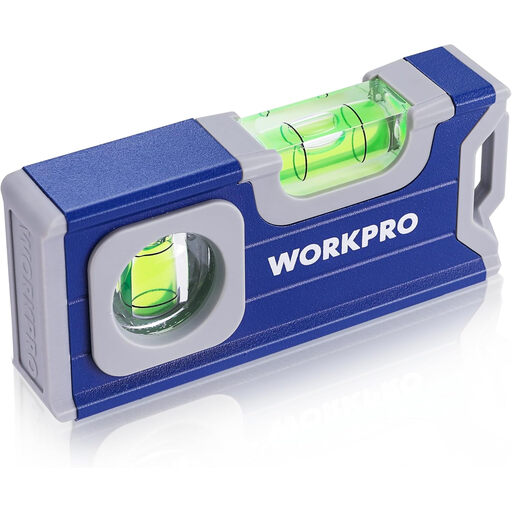
Why This Fits Their Persona: Its compact 115 mm format and 114 g weight suit first-time DIY users who need a portable level for shelves, fittings, frames and small repairs around a UK home.
The V-shaped magnetic base is intended for metallic and curved surfaces, rather than relying only on a flat contact point.
Two vials cover 90° and 180° checks; the stated accuracy is 0.5 mm/m. It also includes a hanging hole for storage.
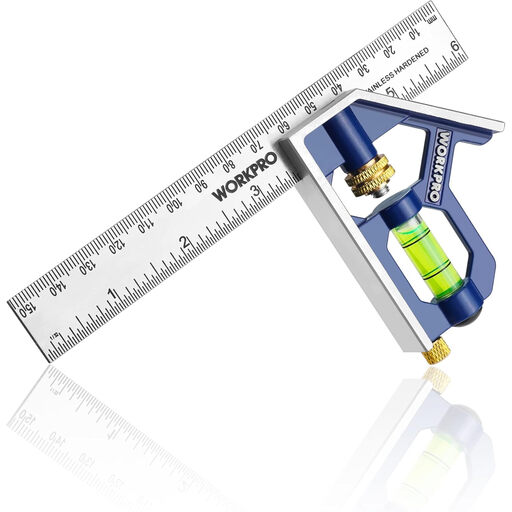
Why This Fits Their Persona: Woodworkers, carpenters and engineers who want one compact marking tool can use its adjustable head for repeated short measurements and layout work.
The stainless-steel ruler has laser-engraved metric and imperial scales, while the fixing head is designed to hold the rule in position.
It combines a 45/90-degree set square, bubble level and scriber, with stainless steel and zinc-alloy construction.
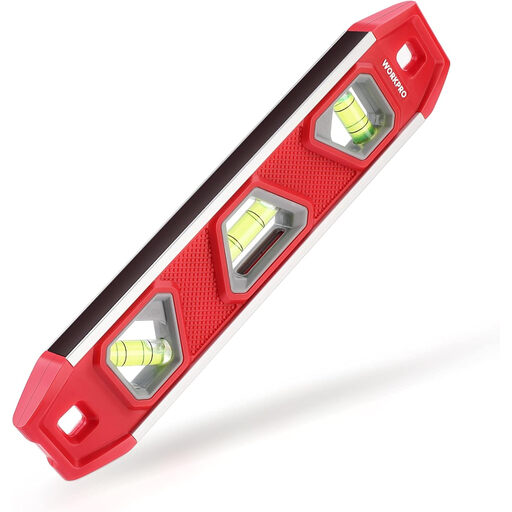
Why This Fits Their Persona: Builders, plumbers, electricians and installers working with metalwork, conduit or pipework may benefit from the longer 23 cm torpedo format and multiple viewing angles.
Its V-groove is intended for pipes and curved surfaces, while the integrated magnetic base helps keep the level attached to compatible metal surfaces.
Three vials check 45°, 90° and 180°; top-read visibility helps when viewing from above or in restricted spaces.
Keep measuring tools clean and dry after use. Wipe metal surfaces with a soft cloth and remove moisture before storage. Check that a combination-square ruler is firmly secured before marking, and keep fingers away from the scriber point and sharp edges.
For magnetic levels, clean the contact surface regularly to maintain adhesion. Strong magnets should be kept away from sensitive electronic devices. Avoid dropping any level, as impact can alter its calibration.
We have compiled a complete, real-time list of products that fully satisfy these strict selection criteria and UK safety regulations.
A 115 mm mini level is suitable for short surfaces, shelves, frames, fittings and confined spaces. It is less suitable for checking long worktops, floors or wide wall sections, where a longer level provides a more useful reference.
A magnetic spirit level can attach to compatible ferrous metal surfaces, allowing hands-free positioning. A standard level must usually be held or supported. Magnetic bases are particularly useful for steelwork, pipework and installations, but they do not attach to non-magnetic materials such as wood, plasterboard or many types of plastic.
If your projects involve repeated marking, checking 45° and 90° angles, or transferring short measurements, a combination square with bubble level and scriber can reduce the number of separate tools required. For simple straight-line measuring, a standard rule may be sufficient.