
24/7 Customer Support

Free returns

Same-day & Next-day Delivery

Quality Guaranteed

Unlock Your Welcome Offers: FREE Delivery | Up to 80% OFF | Free 30-day JoyPlus trial
Download the APP
A worktop ice maker can be useful when your freezer has limited space, your flat lacks an ice dispenser or you need chilled drinks at a barbecue, party or campsite. However, compact machines are not interchangeable. A low purchase price may hide inconvenient cleaning, limited storage or noise that becomes irritating in a small kitchen.
The practical approach is to look beyond phrases such as “rapid ice” and “high output”. Check how much ice the machine makes per cycle, how it handles leftover water and whether its dimensions suit your available worktop.
A specification such as “12kg in 24 hours” describes potential production under stated conditions. It does not mean the machine stores 12kg at once. Many compact models produce a small batch, then transfer it to a removable basket.
For everyday drinks, check:
A model producing around eight or nine bullet-shaped cubes in six to nine minutes may be more useful for immediate drinks than a larger appliance with a slower first cycle.
A self-cleaning ice maker can circulate water through the internal system, but it does not remove the need for routine care. Ice baskets, scoops, external surfaces and drain areas still need cleaning according to the instructions.
Look for a clearly defined cleaning cycle, an accessible drain hole and removable parts. A side drain is particularly practical because it helps empty residual water rather than leaving it inside the machine between uses.
A portable ice maker may fit on a kitchen worktop but still require ventilation clearance around its housing. Placing it tightly between cupboards can restrict airflow and affect operation. A machine advertised as quiet should provide a measurable noise figure rather than relying only on vague wording.
Also consider where melted ice and unused water will go. A machine without a convenient drain can become inconvenient in an office, motorhome or tented camping setup.
Most compact models use a cold metal evaporator to form bullet ice around chilled prongs. Bullet-shaped ice is practical for soft drinks, juices and casual entertaining, although it may melt differently from solid cubes used in some freezer trays.
For flexible use, choose a machine with two ice sizes. Smaller pieces can chill drinks quickly, while larger pieces may suit cocktails, beer or food presentation. Follow the product instructions and remove completed ice promptly, as ice stored in the basket can gradually melt and return water to the system.
A larger water tank reduces refilling, but it also adds to the appliance’s footprint and weight. For a flat, office or small kitchen, a tank around 1.3 to 1.5 litres can offer a useful balance between capacity and portability.
Do not assume water capacity equals ice storage. Check the stated basket capacity separately. A water shortage indicator and ice-full indicator are useful features because they reduce guesswork during a gathering.
Measure your worktop before ordering. Include room for the cable, ventilation and access to the drain. A compact ice maker measuring approximately 30–35cm wide may suit a kitchen island, office shelf or motorhome, but the final decision should account for the complete installation space.
For UK use, check that the listing includes an appropriate UK plug or clearly explains the required electrical arrangement. Look for the relevant conformity marking and read the supplied safety instructions. Keep the machine on a stable, dry surface, away from standing water, and never use it outdoors in rain or damp conditions.
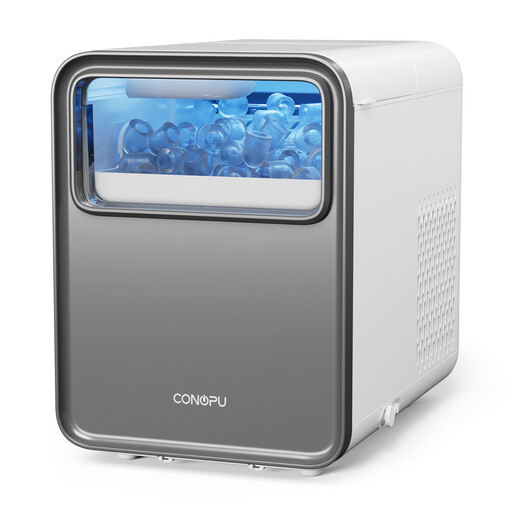
Why This Fits Their Persona: A practical starting point for UK households wanting fresh ice without installing a plumbed appliance. Its compact format suits a kitchen worktop, flat or home office.
The listing states a 30-minute automatic cleaning cycle, a side drain hole, water shortage indicator and ice-full indicator, addressing several common convenience gaps.
Produces nine cubes in approximately six to eight minutes, offers two ice sizes and includes a basket and scoop.
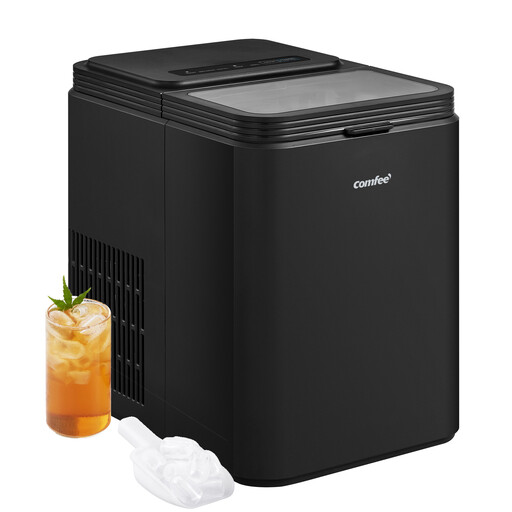
Why This Fits Their Persona: A suitable option for shoppers who want a clearly specified appliance for drinks, parties, office use or a motorhome, while keeping a compact footprint.
Its stated self-cleaning function reduces manual rinsing, while the defined 1.3-litre tank and 0.4kg removable ice container make capacity easier to assess.
Makes the first ice in about six minutes, produces up to 12kg per 24 hours and provides two ice sizes.
Why This Fits Their Persona: The lightweight 6.9kg body and stated dimensions of 35 × 23 × 30cm make it easier to move between a kitchen, caravan, barbecue area or camping setup.
A stated working noise level below 50dB helps set a clearer expectation for shared indoor spaces, while the water and ice indicators support repeated use.
Includes a scoop and basket, offers two bullet ice sizes and has a self-cleaning cycle for easier upkeep away from a full kitchen.
We have compiled a complete, real-time list of products that fully satisfy these strict selection criteria and UK safety regulations.
Place the appliance on a level, dry surface with the clearance recommended in its manual. Use clean drinking water and avoid exceeding the marked tank level. When the basket is full, remove the ice and transfer it to a freezer-safe container if you need longer storage.
Run the self-cleaning cycle as directed, then drain the machine fully. Wipe the basket and scoop regularly and leave the lid open briefly after emptying to help the interior dry. For an RV ice maker or camping setup, check the available power supply and keep the appliance protected from condensation, dust and rain.
Running cost depends on the appliance’s electrical input, electricity tariff, ambient temperature and frequency of use. A faster cycle may use more power during operation, while repeated small batches can also add up. Check the wattage on the product listing or rating label and use the machine only when needed.
Lifespan depends on cleaning, water quality, ventilation, storage and usage frequency. Regularly draining residual water, following the cleaning instructions and avoiding overfilling can help reduce avoidable wear. It is also sensible to check the warranty, spare-part availability and seller support before purchase.
It is safer to follow the manufacturer’s instructions rather than assume continuous or unattended operation is suitable. Remove unused water, keep the machine on a dry stable surface and avoid operating it in a confined or poorly ventilated area.