For ordinary washable workwear, start with the garment labels, the bulk of a typical load and the space available for installation; then compare stain-care options, capacity and the full energy label. If the clothing includes waterproof or technical fabrics, give its permitted wash programme and detergent equal attention. Workwear exposed to hazardous substances or body fluids needs a workplace-assessed laundering process, not an assumption that a domestic hygiene cycle will make it safe.
Who needs which features?
Frequent washers of muddy workwear
If durable trousers, shirts or uniforms regularly come home visibly dirty, compare realistic load capacity and the stain or prewash options on the exact machine. A larger rated drum is not a reason to pack bulky garments tightly.
Wearers of technical or waterproof clothing
Rainwear and other washable technical fabrics call for closer attention to garment labels, detergent instructions and suitable programme choices. A hot wash chosen for ordinary cotton may not be appropriate.
Buyers working around utility-room constraints
Check the machine’s installed depth, door clearance, hose route, drainage and socket access before comparing wash extras. Water-protection features do not replace secure connections and correct installation.
What matters when choosing?
Check that the clothing can be washed in a domestic machine and that the appliance will fit the room. Then compare programmes, capacity and energy-label figures for the loads you actually expect to wash.
| Concern |
What to check |
Who this matters to |
| Ordinary dirt and load size |
Compare rated capacity with the bulk of your usual load, then check the exact model for stain or prewash options. |
If muddy trousers and shirts fill the drum regularly, I need room for the real load rather than a capacity figure alone. Around 25% of consumers put ordinary stain and load handling first. |
| Technical-fabric care |
Check the garment label against the machine’s Outdoor, Delicates and rinse options, as well as its detergent guidance. |
When my workwear includes washable rainwear, preserving the fabric’s care requirements matters more than choosing the hottest cycle. Roughly 25% of consumers make technical-fabric care their primary concern. |
| Installation and water risk |
Measure installed depth and door clearance; plan socket access and secure inlet and drain connections. |
A machine must fit the utility room with its hoses connected and remain accessible for use. About 31% of consumers put installation and water-risk checks first. |
| Energy use and usable cycles |
Read the full A–G energy label and check that suitable programmes have practical load and fabric limits. |
If I wash workwear frequently, I want to compare energy information without giving up cycles my garments can use. Around 19% of consumers prioritise this balance. |
Mistakes to avoid
-
Assuming a hygiene cycle makes contaminated workwear safe to wash at home
A domestic programme does not replace controls for clothing exposed to hazardous substances, blood or body fluids. The Health and Safety Executive says laundering arrangements for potentially contaminated fabrics must address decontamination and handling that prevents cross-infection.
Keep ordinary dirt separate from potential hazardous contamination, and follow the employer’s risk assessment and laundering instructions before deciding where the clothing should be washed.
-
Measuring the machine’s width but not its installed space
Depth, hoses and door movement can prevent an otherwise suitable machine from fitting. Bosch UK also notes that incorrect levelling can cause substantial noise and vibration.
Measure the full space, check the exact model’s dimensions and hose route, and follow its instructions for transit-bolt removal, drainage and levelling.
-
Washing water-repellent garments like ordinary cotton
AEG’s waterproof-garment guidance specifies a washing and reproofing process and advises against powder detergent, fabric softener and bleach within that process.
Start with each garment’s care label. Where its instructions permit the process, choose a suitable programme and detergent rather than assuming every stain or hot-wash setting is appropriate.
Garment instructions may also call for a specialist detergent or reproofing product.
-
Choosing by energy class alone
Energy Saving Trust explains that the A–G label includes information beyond the headline class. That class cannot tell you whether a machine has the capacity or programmes your workwear needs.
Compare the complete labels of suitable machines, then check their programme and installation requirements.
Brands to consider for specific features
Bosch
Relevant when ordinary washable workwear makes load capacity and stain-care controls important.
- Bosch UK lists a 9 kg Eco-programme capacity, Anti Stain and i-DOS on the WGG244A9GB.
- Check the exact model and garment label; these features do not establish a suitable load size or cycle for every item.
AEG
Relevant when washable technical or water-repellent garments need particular programme choices.
- AEG UK lists Outdoor, Hygiene and Extra Rinse options on the LFSR72944B and provides separate care guidance for waterproof garments.
- Follow the garment’s instructions; neither the guidance nor this programme list applies automatically to every garment or AEG machine.
Samsung
Relevant to buyers comparing model-specific hygiene-cycle or connected-control features for ordinary washable clothing.
- Samsung UK describes a Hygiene Steam cycle on the WW90T504DAWCS1. Its WW90CGC04DABEU page states that AI Energy features require Wi-Fi and a Samsung account.
- Neither feature establishes that hazardously contaminated workwear can be laundered in a domestic machine.
Miele
Relevant when water-protection design is part of the utility-room decision.
- Miele UK describes water-control and hose-protection systems; check which system belongs to the exact machine.
- Miele also identifies incorrect drain-hose fitting as a flooding risk, so installation still needs care.
Joybuy product choices
These machines offer different installation formats for washing ordinary washable workwear: a freestanding Samsung model and an integrated Haier model. Check the garment-care options and the space requirements of the exact machine before choosing.
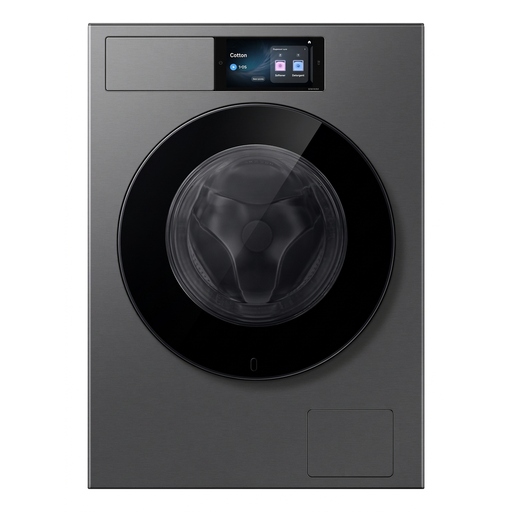 Image unavailable
Samsung WF90H09C4ST1 Series 9 AI Home 9 kg 1400 RPM Freestanding Washing Machine, Dark Steel
Consider this freestanding model for ordinary washable workwear if its programmes match your garment labels.
The product name specifies a 9 kg capacity, 1400 RPM spin and front-loading design. Check the full installed depth, door clearance, hose route and socket access in your utility room.
For technical garments, confirm the permitted cycle and detergent. Do not rely on a domestic programme for potentially hazardous contamination.
View on Joybuy
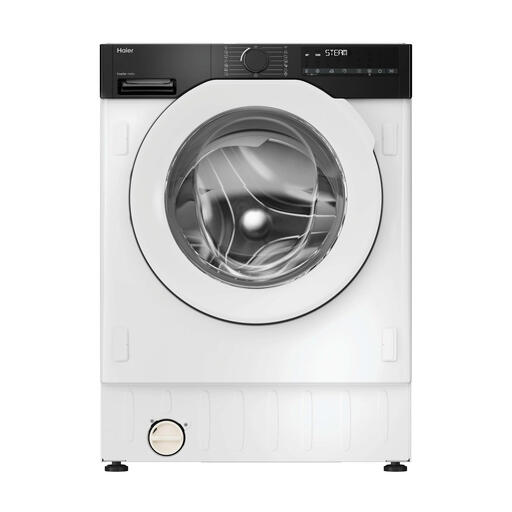 Image unavailable
Haier BHA6S69M6D9J-8 Series 6 Integrated 9 kg 1600 rpm Washing Machine
Consider this model for ordinary washable workwear if the utility room is set up for an integrated appliance.
The product name specifies a 9 kg capacity, 1600 rpm spin and an A rating. Confirm the cabinet-door arrangement, installed clearances and full energy-label details for the exact model.
If you wash technical or water-repellent garments, check the programme list against their care labels. Domestic washing is not a substitute for workplace controls on hazardous contamination.
View on Joybuy
Frequently asked questions
Can a domestic machine wash all workwear labelled washable?
No: a washable label does not settle how potentially contaminated clothing should be handled. For ordinary workwear, follow the garment instructions; for possible exposure to hazardous substances, blood or body fluids, follow the employer’s risk assessment and laundering process. The Health and Safety Executive says decontamination and prevention of cross-infection must be considered for potentially contaminated fabrics.
Is an Outdoor programme necessary for waterproof workwear?
Not always, but it is worth checking when the garment label permits machine washing. AEG’s waterproof-garment guidance uses an Outdoor programme and advises against powder detergent, fabric softener and bleach in its stated process; the garment’s own washing and reproofing instructions remain essential.
Can I use an extension lead in the utility room?
Do not plan the installation around an extension lead. Electrical Safety First warns that high-power appliances can overload an extension lead when used with other large appliances. Check for a suitable, accessible socket and follow the machine manufacturer’s installation instructions.


