
24/7 Customer Support

Free returns

Same-day & Next-day Delivery

Quality Guaranteed

Unlock Your Welcome Offers: FREE Delivery | Up to 80% OFF | Free 30-day JoyPlus trial
Download the APP
From signing important documents to sketching in a journal, the right writing tool can make all the difference. Yet, the market for pens, pencils and writing supplies is filled with options that often over-promise and under-deliver. Many of us have a drawer full of pens that have been abandoned after just a few uses—a testament to marketing claims that don't hold up in the real world.
As a Product Recommendation Officer at Joybuy, my role is to help you navigate this landscape. We will look past the flashy packaging and focus on the practical features that determine whether a writing instrument is a dependable tool or a frustrating waste of money. Here are the common traps to watch out for.
To avoid these issues, focus on a few key technical specifications. Understanding these will empower you to choose reliable school supplies and office stationery that perform as expected.
The choice between ballpoint pens and gel pens is the most fundamental decision.
The point size, measured in millimetres (mm), dictates the width of the line you write.
How the pen is built is just as important as the ink inside it.
Based on these practical considerations, here are a few writing tools suited to different needs and user profiles.
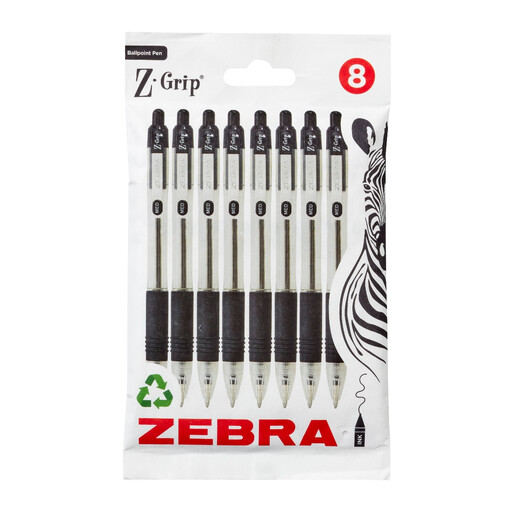
Why This Fits Their Persona: This bulk pack of reliable black ink pens is ideal for high-volume writing. It offers excellent value for students taking copious notes or office professionals who need a dependable pen at every workstation.
The soft, latex-free rubberised grip directly counters the "uncomfortable grip" pitfall, making it suitable for long exam sessions. Its low-viscosity ink is engineered to be smear-resistant, addressing the "smear-proof" myth.
A reliable retractable mechanism protects the tip and the value-oriented 8-pack ensures you always have a spare. The stainless steel clip adds durability for carrying on a notebook or pocket.
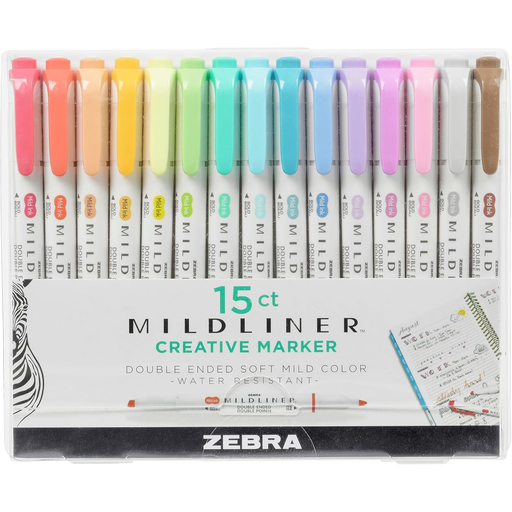
Why This Fits Their Persona: Perfect for bullet journaling, studying and creative planning. The unique, soft "mild" colours are easier on the eyes than harsh neons, and the dual-tip design offers versatility for both broad highlighting and fine underlining.
The water-based pigment ink is specifically formulated to resist bleeding through most paper types, avoiding the smudging and mess common with other markers. The secure caps prevent the tips from drying out prematurely.
The dual-tip (chisel and bullet) design combines two tools in one. The ink is acid-free and of archival quality, ensuring your journal entries or notes won't fade over time.
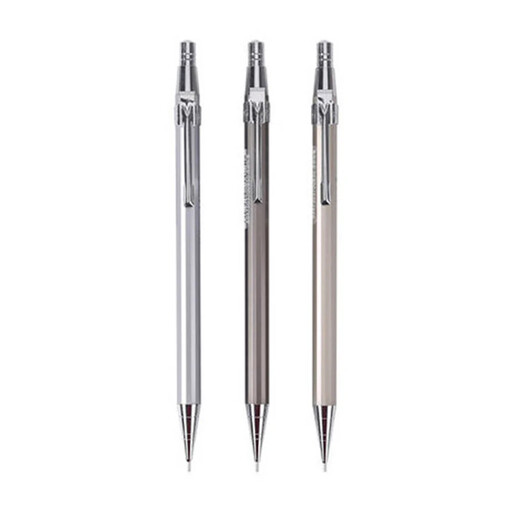
Why This Fits Their Persona: For architects, artists or professionals who require precision, a mechanical pencil is essential. The solid metal body of this model provides a satisfying weight and balance for enhanced control during technical drawing or detailed note-taking.
By using graphite lead, it completely sidesteps ink-related problems like smudging or drying out. The durable metal construction is a direct counterpoint to flimsy plastic pens that break easily, offering long-term reliability.
The precise 0.5mm lead delivers clean, sharp lines for technical work. The push-button mechanism provides consistent lead advancement for an uninterrupted workflow.
We have compiled a complete, real-time list of products that fully satisfy these strict selection criteria and UK safety regulations.
The key is to choose a pen with a quick-drying ink formula. Many modern gel pens, like the Pentel EnerGel, are specifically designed for this. Additionally, using a finer tip size (e.g., 0.5mm) deposits less ink on the page, which naturally reduces drying time. For all gel pens, it is wise to give the ink a few seconds to set before touching it or closing your notebook.
It is not recommended. The ink in most erasable pens is thermo-sensitive, meaning it becomes invisible when exposed to heat from friction. This also means it can disappear if the document is left in a hot car, laminated or exposed to another heat source. They are excellent tools for drafting, planning and personal note-taking, but for exams, legal forms or cheques, a standard ballpoint or archival gel pen is the safer choice.
The difference lies in the ink. Ballpoint pens use a thick, oil-based ink that is very stable, long-lasting and resistant to smudging. Gel pens use a water-based gel that is less viscous, resulting in a smoother, more vivid line that requires less writing pressure. The trade-off is that gel ink can take longer to dry and may be more likely to smudge or bleed on certain types of paper.