
24/7 Customer Support

Free returns

Same-day & Next-day Delivery

Quality Guaranteed

Unlock Your Welcome Offers: FREE Delivery | Up to 80% OFF | Free 30-day JoyPlus trial
Download the APP
Choosing a Xiaomi Electric Scooter 6 model involves more than comparing the largest battery or highest motor output. A lightweight scooter may be easier to carry into a flat, while a long-range electric scooter can add unnecessary weight if your usual journey is only a few kilometres.
UK buyers should also check where they can legally ride. Privately owned electric scooters are generally restricted to private land with the landowner’s permission. They cannot normally be used on public roads, pavements or cycle lanes, except within authorised rental e-scooter trial areas, where specific rules apply. Always check current GOV.UK guidance and local requirements before purchasing.
Maximum range figures are usually measured under controlled conditions. Rider weight, hills, wind, temperature, tyre pressure, riding mode and frequent acceleration can reduce the distance achieved. For example, the Xiaomi Electric Scooter 6 Max is listed with a range of up to 70 km, but its stated range at maximum speed is 45 km. The Ultra is listed at up to 75 km, reducing to 55 km at 25 km/h.
For regular travel, compare the range at your expected speed, not only the headline number. Keeping a charging margin is sensible, particularly during colder UK weather.
Suspension is useful, but its design and travel matter. A short front suspension may improve comfort over potholes and speed bumps without making a scooter suitable for trails. Pneumatic or all-terrain tyres, ground clearance and braking hardware are equally important.
An electric scooter with suspension may still feel harsh on gravel if it has narrow road tyres. Conversely, a large all-terrain electric scooter can be more stable away from smooth tarmac but heavier to carry and store.
A scooter that looks compact in product photographs may be difficult to lift onto stairs or manoeuvre through a narrow hallway. Weight also affects portability when a journey includes trains, buses or office storage.
Charging time is another practical consideration. Standard charging for the Xiaomi Electric Scooter 6 Lite is listed at approximately eight hours, while the Max and Ultra are listed at approximately nine and 10.5 hours respectively. Optional fast chargers can reduce this time, but check whether the accessory is included or sold separately.
Rated power describes continuous motor output; peak power indicates a higher short-term output under suitable conditions. The Xiaomi Electric Scooter 6 Lite has a 300W rated motor and 500W maximum motor power, with a stated maximum incline of 15%.
The Max provides 450W rated power, 1100W maximum power and an incline rating of approximately 24%. The Ultra has a 500W rated motor, 1200W maximum power and a stated maximum incline of 25%. These figures can help when comparing hills, but real performance depends on rider load, battery charge and surface conditions.
Battery capacity is shown in watt-hours, or Wh. A higher Wh figure generally indicates more stored energy, although motor efficiency, rider weight and riding mode also influence range.
A long-range electric scooter is useful for repeated journeys without daily charging, but the larger battery contributes to overall weight.
The Lite uses 10-inch pneumatic tyres, a front drum brake and rear E-ABS. The Max uses 12-inch tubeless tyres with front and rear disc brakes and rear E-ABS. The Ultra uses 12-inch all-terrain tyres, front and rear disc brakes and E-ABS.
The listed water-resistance ratings also differ: IPX4 for the Lite and IPX6 for the Max and Ultra. An IP rating is not a guarantee that a scooter can be submerged or used in all weather. Avoid deep puddles, heavy spray and storage while wet, and follow the manufacturer’s care instructions.
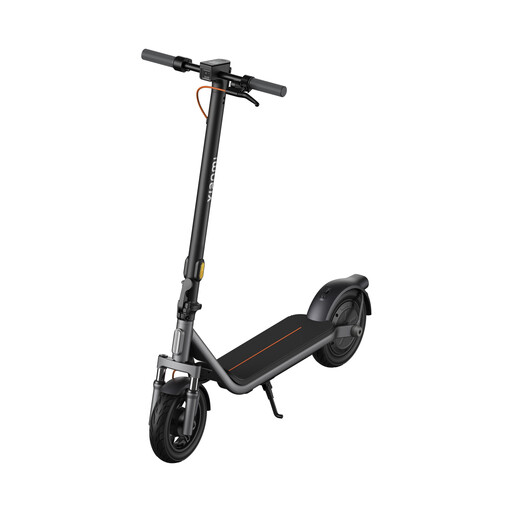
Why This Fits Their Persona: A practical entry point for shorter private-land rides, with a lighter listed weight of approximately 18.1 kg and a 25 km maximum range.
Its stated range is suited to shorter outings rather than promising an oversized battery for occasional use. The 10-inch pneumatic tyres and 25mm dual-spring front suspension address everyday bumps.
25 km listed range, 25 km/h top speed, front drum brake with rear E-ABS and a maximum load of 100 kg.
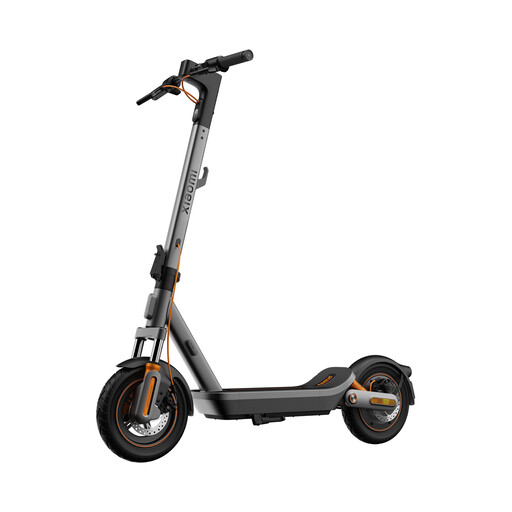
Why This Fits Their Persona: Designed for riders wanting additional comfort, hill capability and range for longer suburban journeys on suitable private routes.
The 70 km headline is accompanied by a 45 km figure at maximum speed. Its 12-inch tubeless tyres and 45mm front suspension with dual rear shock absorbers provide more relevant detail than range alone.
1100W maximum motor power, approximately 24% incline rating, 130 kg maximum load and IPX6 rating.
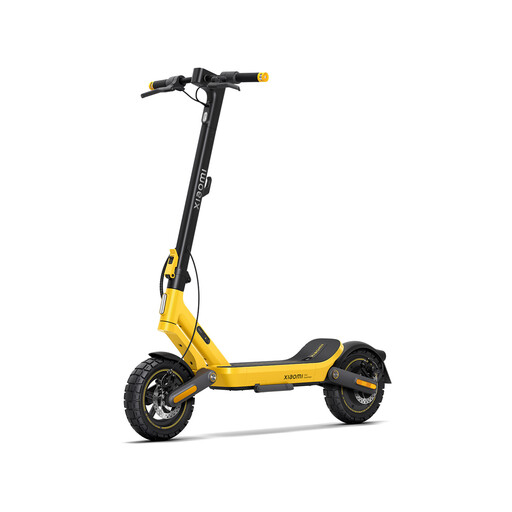
Why This Fits Their Persona: A performance-focused option for experienced users who prioritise wider all-terrain tyres, suspension travel, payload capacity and longer rides.
Its off-road positioning is supported by 12-inch, 3-inch-wide all-terrain tyres, dual-swing-arm suspension and increased ground clearance, rather than a marketing label alone.
1200W maximum motor power, 25% incline rating, 140 kg maximum load and up to 55 km listed range at 25 km/h.
For carrying upstairs or storing in a smaller home, the Lite is the most manageable of the three by listed weight. It is also the clearest match for shorter journeys and first-time ownership.
The Max sits between portability and performance. Its wider tyres, longer-travel suspension, dual disc brakes and 70 km maximum range suit riders who value comfort over a lightweight frame.
The Ultra is intended for users who specifically need an all-terrain electric scooter. At approximately 33.7 kg, it is substantially heavier than the Lite and Max, so check storage and lifting requirements before ordering. All three models list a 25 km/h top speed, but that does not override UK rules governing where privately owned scooters may be used.
Before riding, inspect tyre pressure, test the brakes at low speed, secure the folding mechanism and use suitable protective equipment. Maintain the battery according to the supplied instructions and store it in a cool, dry location away from combustible materials.
We have compiled a complete, real-time list of products that fully satisfy these strict selection criteria and UK safety regulations.
It can be suitable for private-land travel or authorised rental-trial areas, depending on the route and applicable rules. Privately owned electric scooters are generally not legal on UK public roads, pavements or cycle lanes. Check current GOV.UK guidance before using one for commuting.
Electricity use is generally lower than fuel use, but the exact cost depends on battery capacity, local electricity rates, charging losses and how often you ride. The Lite has a listed 216Wh battery, compared with 468Wh for the Max and 585Wh for the Ultra. Tyres, brakes and other wear items also contribute to ownership costs.
Lifespan depends on charging habits, storage, rider load, surface conditions and maintenance. Regularly check tyre pressure, braking response, fasteners, folding components and battery condition. Avoid charging a damaged or swollen battery, and follow the manufacturer’s servicing and disposal guidance.