
24/7 Customer Support

Free returns

Same-day & Next-day Delivery

Quality Guaranteed

Unlock Your Welcome Offers: FREE Delivery | Up to 80% OFF | Free 30-day JoyPlus trial
Download the APP
Finding the right yoga mat can feel like a bigger workout than the one you planned. The market is flooded with options, all promising perfect grip and ultimate comfort. Yet, many of us have ended up with a mat that’s slippery, starts crumbling after a few sessions or is so spongy it makes balancing impossible. As a Joybuy Product Recommendation Officer, my role is to help you see past the marketing jargon and choose a mat that truly supports your practice.
Before you add any old mat to your basket, let's look at the common pitfalls that lead to buyer's remorse.
To avoid these issues, focus on three core specifications. Understanding these will empower you to select a mat that fits your needs, whether it's for yoga, Pilates or general home fitness.
The material of your exercise mat dictates its grip, durability and feel.
The thickness of your mat directly impacts comfort and stability. There is no single 'correct' thickness; it depends on your primary activity.
Consider how you'll be using your mat. If you're travelling to a studio, a lighter mat or one that includes a yoga mat with strap is a significant convenience. Some mats also feature alignment lines, which can be a helpful guide for beginners looking to check their hand and foot placement.
Instead of a generic list, we've matched specific mats to different user needs to help you find your perfect fit.
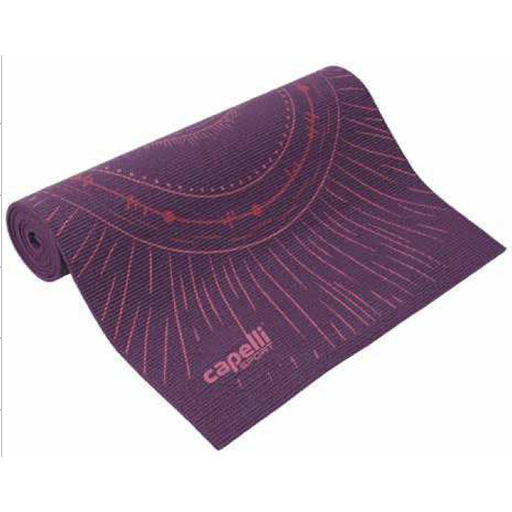
Why This Fits Their Persona: For those starting a home fitness routine, this mat provides a reliable and cost-effective foundation. It's suitable for a mix of activities, from yoga flows to bodyweight circuits, without a significant initial investment.
Its 6mm thickness avoids the "too thick to balance" trap, offering a stable surface for beginners learning new poses. The durable PVC material is designed to resist the flaking common in cheaper, unbranded mats.
A versatile all-rounder thickness suitable for yoga, Pilates and general floor workouts. The embossed surface aids stability.
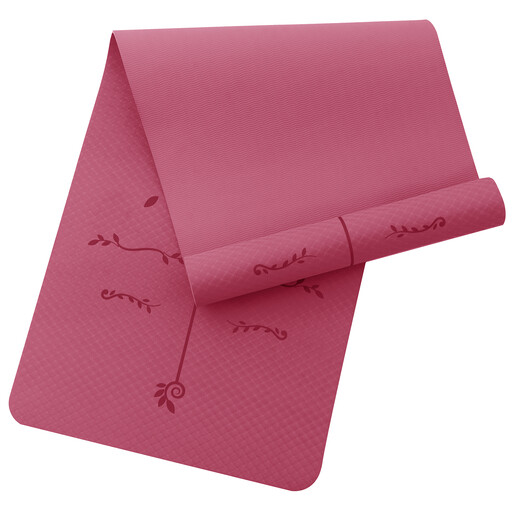
Why This Fits Their Persona: This user is committed to their yoga practice and needs a mat that offers superior grip and helpful features. They are willing to invest in a material that performs better under demanding conditions.
The TPE material directly counters the 'slippery when wet' trap of basic PVC, offering a more reliable non-slip surface. The alignment lines are a practical feature, not a gimmick, helping to refine form.
Features a double-sided anti-slip design and helpful alignment guides. Comes with a carrying strap for portability.
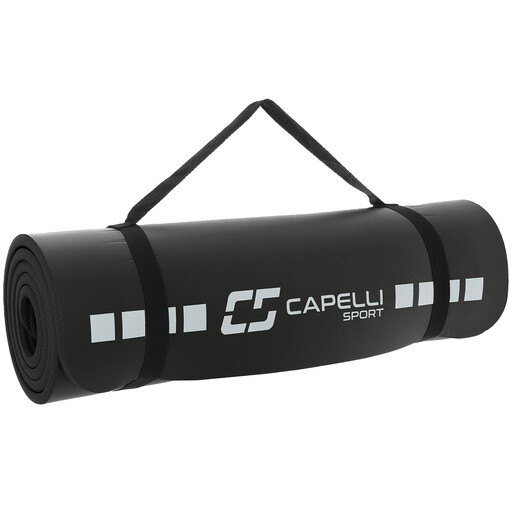
Why This Fits Their Persona: This user prioritises cushioning above all else. Their workouts involve significant floor work, such as Pilates or core conditioning, and they need a mat that protects their spine, hips and knees from hard surfaces.
This mat intentionally embraces thickness because its primary use case (Pilates, floor fitness) requires it. The dense NBR foam provides superior cushioning without being overly flimsy, offering a stable base for controlled movements.
Extra-thick 1.2cm NBR foam for maximum joint support and shock absorption. Includes an elastic carrying strap for easy transport and storage.
We have compiled a complete, real-time list of products that fully satisfy these strict selection criteria and UK safety regulations.
Many new PVC mats have a thin film left over from the manufacturing process. You can often improve the grip by gently cleaning the mat with a solution of water and a small amount of mild soap. Use a soft cloth, rinse thoroughly with clean water and let it air dry completely away from direct sunlight. Some practitioners also find that the grip improves naturally over the first few weeks of use.
The lifespan of a mat depends on the material, the frequency of use and how it's cared for. A high-quality PVC or TPE mat used a few times a week can last for several years. You'll know it's time for a replacement when you see signs of thinning, flaking or tearing, or if the mat has lost its cushioning and no longer lies flat.
Absolutely. While designed for yoga, most mats are versatile enough to be used as a general exercise mat. A standard 6mm mat is great for bodyweight exercises, stretching and core work. For high-impact activities like plyometrics, you might consider a thicker, more shock-absorbent gym mat or interlocking foam tiles to provide greater protection for your joints and floor.