
24/7 Customer Support

Free returns

Same-day & Next-day Delivery

Quality Guaranteed

Unlock Your Welcome Offers: FREE Delivery | Up to 80% OFF | Free 30-day JoyPlus trial
Download the APP
A good quality yoga mat can be the difference between a focused, rewarding practice and a session spent slipping and readjusting. Whether you're flowing through a vinyasa sequence at a studio or following a Pilates routine at home, the surface beneath you matters. But with so many options available, choosing the right one can feel overwhelming.
This guide is designed to cut through the clutter. As a Joybuy Product Recommendation Officer, my role is to provide clear, practical advice to help you find a mat that suits your needs. We will look at key features like material, thickness and grip to help you select a durable and reliable workout mat for your fitness journey.
Before looking at specific products, it's helpful to understand the main features that define a quality exercise mat. Considering these points will ensure you make a choice that supports your activities, from gentle stretching to more dynamic workouts.
The material of your mat influences its grip, weight, durability and environmental impact. Many modern mats are made from Thermoplastic Elastomers (TPE), a popular choice for several reasons. A TPE yoga mat is generally lightweight, offers good traction and is often more recyclable than traditional PVC mats, making it a more eco friendly yoga mat option. TPE provides a comfortable, cushioned feel without containing the latex, rubber or PVC that can affect some users.
Mat thickness is measured in millimetres (mm) and directly impacts comfort and stability.
A non-slip yoga mat is essential for safe and effective practice. Look for mats with textured surfaces, as these are designed to provide grip for your hands and feet, and also to prevent the mat from sliding on the floor. For those who practise at a studio or gym, portability is key. Many mats come with a yoga mat with carry strap, making them easy to roll up, transport and store.
Based on features that cater to beginner and intermediate users, here are some practical options to consider for your home or studio practice.
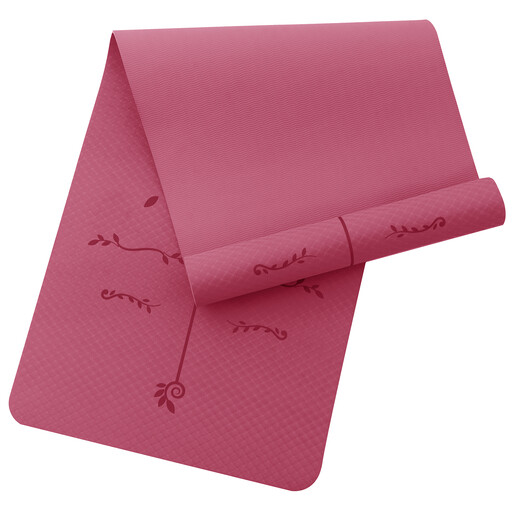
This mat is particularly useful for those new to yoga or looking to refine their form. The integrated alignment lines offer visual cues to help guide hand and foot placement, promoting correct posture during various poses.
This mat is a strong candidate for beginners or individuals who want to improve their alignment during home practice. It's a versatile fitness mat suitable for both yoga and Pilates.
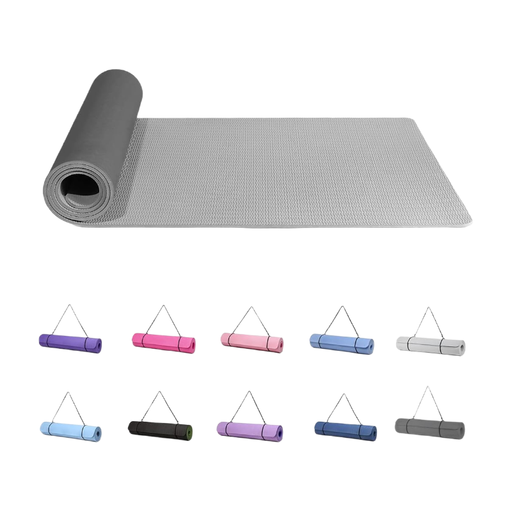
The main feature of this mat is its dual-textured surface. One side features fine lines for hand and foot grip, while the other has a wave pattern designed to firmly grip the floor, offering enhanced security during dynamic movements.
Users who prioritise grip and stability for a varied fitness routine will find this mat to be a reliable choice. It's well-suited for both men and women who need a dependable workout mat that stays put.
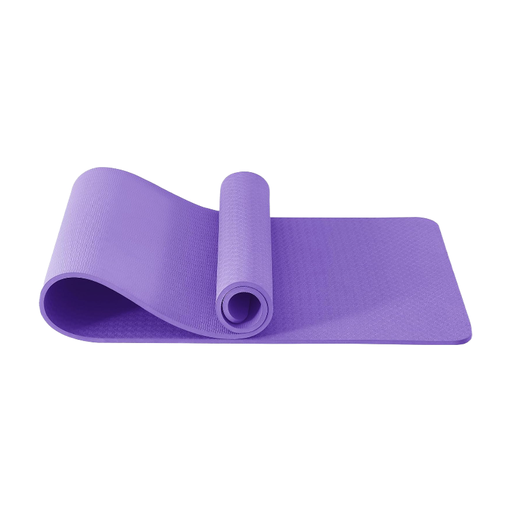
With a generous 10mm thickness, this mat provides significant cushioning. It's constructed from high-density TPE that resists compression, offering excellent support for joints during floor-based exercises.
This thick yoga mat is an excellent choice for individuals who need extra joint support, practise Pilates or engage in extensive stretching and floor conditioning. Its cushioning also makes it a comfortable option for a general gymnastics mat.
The recommendations above cover some of the most common needs for yoga and fitness enthusiasts. However, every practice is unique. If you are looking for a different thickness, material or a mat specialised for other activities, there are many more options to explore.
For a wider selection of fitness surfaces, including specialised mats and other accessories, feel free to browse our full Gymnastic equipment category.
1. What is the difference between a yoga mat and a general exercise mat? While the terms are often used interchangeably, there can be differences. A dedicated yoga mat typically prioritises grip and a firm connection to the floor for balance. A general exercise mat or fitness mat may be thicker and softer, focusing more on cushioning for high-impact movements or abdominal work, sometimes at the expense of grip.
2. How do I stop my yoga mat from slipping? First, ensure you have a mat with a good non-slip texture, like the TPE options mentioned. Keeping the mat and your hands and feet clean and dry can also significantly improve grip. If you sweat a lot, you might consider placing a yoga towel over your mat.
3. How thick should my yoga mat be? This depends on your priorities. A standard 6mm mat offers a great all-around experience for most yoga and Pilates practices. If you have sensitive joints or do a lot of floor work, a thick yoga mat of 8mm to 10mm will provide more comfort. If you travel frequently or prefer to feel the floor for advanced balance poses, a thinner mat (3-4mm) might be more suitable.