
24/7 Customer Support

Free returns

Same-day & Next-day Delivery

Quality Guaranteed

Unlock Your Welcome Offers: FREE Delivery | Up to 80% OFF | Free 30-day JoyPlus trial
Download the APP
Buying yoga mats can seem straightforward until a surface slips during a balance pose, a thin mat makes floor exercises uncomfortable or a large pack of tiles takes up more space than expected. Marketing language can also make basic features sound more advanced than they are.
For UK shoppers, the sensible approach is to match the mat to the activity, available floor space and cleaning routine. Whether you need a non-slip yoga mat, a cushioned Pilates mat, a home workout mat or protective gym flooring, the details below can help you avoid an unsuitable purchase.
A textured or embossed surface can improve grip on a dry floor, but it does not make a mat slip-proof. Sweat, condensation and cleaning residue may reduce traction. One PVC yoga mat specification specifically warns that its surface may become slippery when wet, so hot yoga users should keep a towel nearby and wipe away moisture during a session.
Always place a mat on a clean, dry and level surface. A mat that works well for stretching may not provide the same feel during fast transitions or sweaty workouts.
A thick yoga mat can feel more comfortable for kneeling, seated stretches and floor-based fitness. However, extra cushioning may feel less stable during standing balances. A 3mm mat is easier to store and offers a firmer connection with the floor, while 6mm or 7mm options provide more padding.
Thickness is only one part of comfort. Foam density, surface texture and the condition of the floor underneath also affect how the mat feels.
PVC yoga mats are commonly wipe-clean and suitable for regular home use, but they should be dried fully before rolling and kept away from open flames and extreme heat. Cork yoga mats have a different surface feel and may respond to moisture during practice. EVA or PE foam tiles are useful for playrooms and gym areas, but they are not designed as a replacement for impact-rated flooring under heavy equipment.
Be cautious with environmental wording. A product should only be described as having a particular environmental certification when the relevant certification is clearly provided.
The standard mat dimensions in this selection are approximately 24 inches wide and 68–72 inches long, equivalent to around 61cm by 173–183cm. This is suitable for many adults, but taller users may prefer a 72-inch length for stretching.
Consider the following practical guide:
Measure the area where the mat will be used. A Pilates mat may fit neatly in a bedroom, while interlocking foam floor mats can cover a larger playroom or home gym.
Look for an embossed, textured or dry-grip surface, but remember that no surface removes the need for safe setup. For hot yoga, ventilation and sweat management matter as much as the material. A cork yoga mat with a TPE underside may offer a distinct natural-feel surface, while PVC mats provide a familiar cushioned texture.
After use, wipe the mat with a damp cloth and mild soap where the instructions allow. Let it air dry completely before storage. Avoid prolonged direct sunlight, radiators and other heat sources unless the product specifically permits them.
For a portable exercise mat, PVC is used across several options in this selection. For larger spaces, PE or EVA foam tiles interlock without complex installation. The 1.2cm gym flooring tiles listed below cover 24 square feet per six-tile pack, with each tile measuring 60 × 60cm.
These tiles can help separate exercise equipment from a hard floor, but check the warnings before placing sharp objects or heavy equipment on them. For a children’s playroom, select a size and layout that leaves the edges securely connected and inspect the tiles regularly for damage.
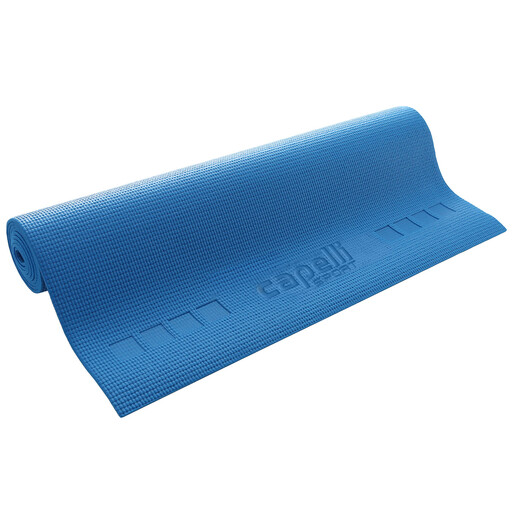
Why This Fits Their Persona: A practical size and moderate thickness for beginners using a bedroom, living room or compact home workout area.
Its stated 4mm thickness avoids paying for unnecessary bulk, while the instructions clearly specify unrolling on a clean, flat surface and wiping clean.
PVC construction, embossed surface, 68-inch length and stated wipe-clean care.
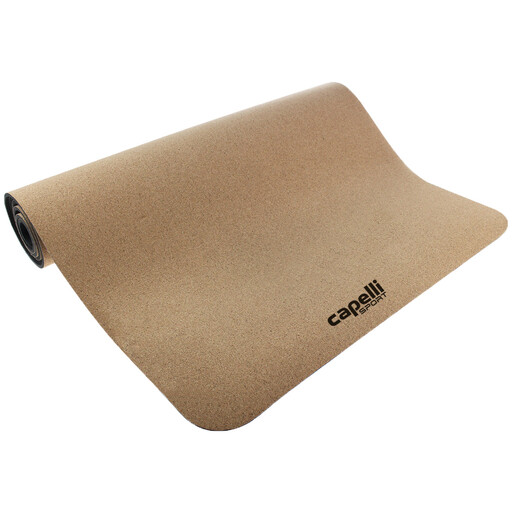
Why This Fits Their Persona: Designed for shoppers who prefer a cork surface and want one mat for yoga, Pilates, stretching and workouts.
The material description identifies a natural cork top and TPE bottom, so buyers can assess the construction rather than relying on vague sustainability wording.
5mm thickness, 61 × 183cm dimensions and a two-material cork/TPE construction.
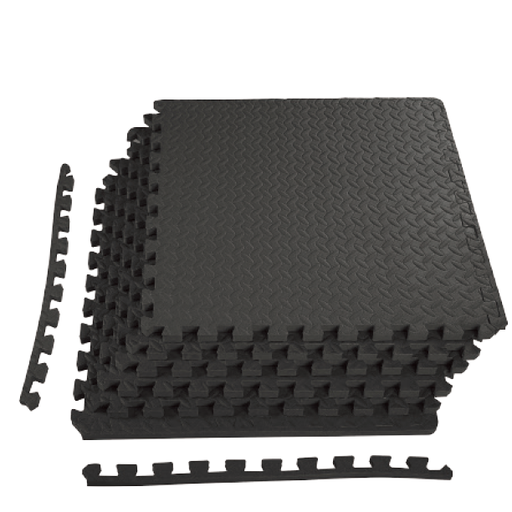
Why This Fits Their Persona: A modular option for a home gym, workout corner or space needing coverage beyond a single portable fitness mat.
The listing states the coverage, tile dimensions and 1.2cm thickness, helping you calculate how many packs are needed instead of judging coverage from photographs.
Interlocking PE foam tiles, 24 square feet of stated coverage per pack and wipe-clean maintenance.
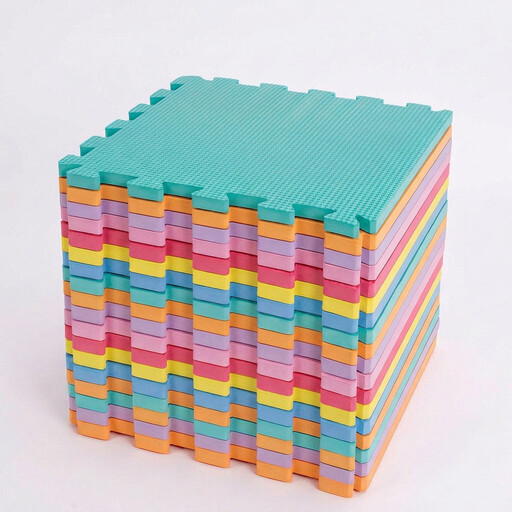
Why This Fits Their Persona: The colourful modular layout suits children’s playrooms, classrooms or flexible areas also used for light yoga and fitness.
The 18-piece quantity and included edges are stated clearly, while the interlocking format can be assembled and separated as the room’s needs change.
Non-toxic EVA foam is specified, with 12 × 12-inch tiles, 27 edges and wipe-clean care.
We have compiled a complete, real-time list of products that fully satisfy these strict selection criteria and UK safety regulations.
A 6mm print yoga mat can suit people who want cushioning for Pilates, core exercises and stretching while keeping a portable roll-up design. A 7mm memory foam-style mat provides additional padding for floor routines, although thicker mats can feel softer under standing poses.
For a compact, firmer option, a 3mm yoga mat may be easier to carry between home and a gym or studio. If your main interest is indoor golf practice rather than exercise, a dedicated golf putting mat with an automatic ball return is more appropriate than using a yoga mat, as it is designed around putting alignment and ball movement.
For general yoga, Pilates and floor exercises, 4–6mm is a practical starting range. Choose around 7mm if extra cushioning is important and consider 3mm if portability and a firmer feel matter more. For equipment areas, use purpose-designed interlocking flooring rather than relying on a portable mat.
Use it on a clean, dry, level floor and remove dust or product residue before the first session. Allow sweat to dry or wipe it away during hot yoga. If the mat continues to move, check whether the floor surface is suitable and whether the mat shows signs of wear or curling.
Lifespan depends on frequency of use, body weight, storage and cleaning. Replace a mat when the surface becomes noticeably smooth, the cushioning has compressed, edges curl persistently or cracks and tears appear. Store it dry, rolled as directed and away from direct sunlight and heat.