
24/7 Customer Support

Free returns

Same-day & Next-day Delivery

Quality Guaranteed

Unlock Your Welcome Offers: FREE Delivery | Up to 80% OFF | Free 30-day JoyPlus trial
Download the APP
Yoghurt-coated fruit snacks can be convenient for school bags, car journeys and afternoon treats, but attractive packaging does not always tell you what you need to know. A small pouch may contain more added sugar than expected, while a product described as “fruit-based” may contain a relatively modest proportion of fruit ingredients.
The useful approach is to look beyond phrases such as “natural”, “wholesome” or “guilt-free”. Check the serving size, ingredient order, allergens, packaging and storage instructions before adding a product to your basket.
Many yoghurt-covered fruit products use fruit purée, concentrated juice, fruit flakes or fruit preparations rather than pieces of fresh or dried fruit. This is not necessarily a problem, but it affects texture, sweetness and nutritional value.
For example, the Fruit Bowl snack options listed below contain a yoghurt-flavoured coating and a fruit-flake centre. The coating makes up 60% of the stated ingredients, while the fruit-flake component makes up 40%. Reading this balance is more informative than relying on front-of-pack fruit imagery.
Individually wrapped fruit snacks are useful for portion control and reducing mess, but parents should still check whether the wrapper is easy for a child to open and whether the snack needs special storage. These products are generally intended to be kept in a cool, dry place, rather than placed in a warm school bag for extended periods.
For younger children, supervise eating and follow the age guidance, serving advice and safety information shown on the packaging.
A product can be described as gluten-free in one part of its listing while still requiring careful label checking. Ingredient information may identify milk, wheat, nuts or peanuts as allergens or possible cross-contact risks.
In the UK, always check the latest packaging for the legally required allergen emphasis, ingredient changes and best-before information. Do not rely solely on a retailer description, especially when buying for children with allergies or specific dietary requirements.
Compare nutrition information per serving as well as per 100g. A listed 18g serving of the Fruit Bowl Strawberry and Raspberry Yoghurt Flakes provides 82 kcal, 12.4g carbohydrate, including 11.2g sugars, and 3.4g fat, including 2.0g saturates.
This makes the product more suitable for treating as a portioned sweet snack than assuming it replaces fresh fruit. If you are packing children’s lunchbox snacks, consider how it fits alongside the rest of the meal rather than treating “fruit” in the name as a nutritional guarantee.
Look for clear details about:
This information helps distinguish strawberry yoghurt flakes, raspberry yoghurt flakes and other fruit yoghurt snacks according to taste and texture rather than marketing language alone.
For on-the-go fruit snacks, individual 18g portions can be convenient for school bags, travel and after-school occasions. Check that the outer pack and individual wrappers remain intact and store the product according to the label.
A dry snack is less likely to leak than a yoghurt pot, but it can still soften or harden when exposed to heat and humidity. If the product texture changes, follow the manufacturer’s safety guidance and inspect the packaging before serving.
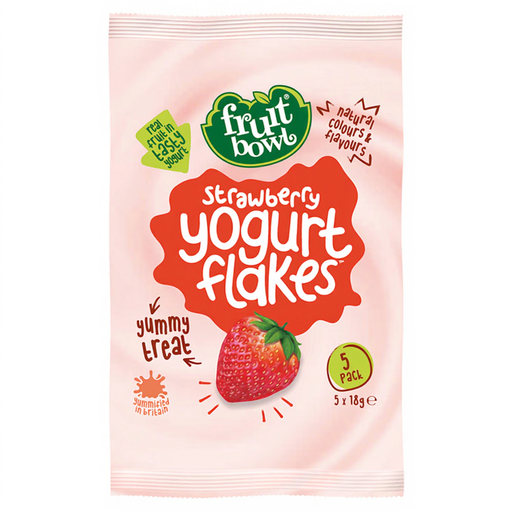
Why This Fits Their Persona: Five individually portioned strawberry snacks offer a straightforward format for trying fruit yoghurt snacks without committing to a large multipack.
The listing provides an 18g serving size and ingredient breakdown, making it easier to judge portion and sugar content.
Strawberry flavour; five 18g portions; stated storage guidance for a cool, dry place.
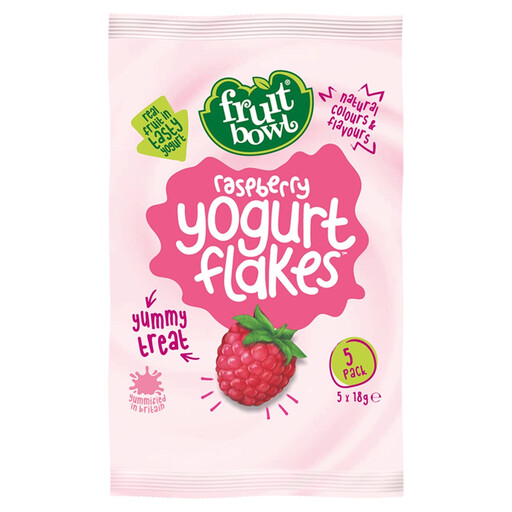
Why This Fits Their Persona: Shoppers who prefer a sharper berry flavour can choose the raspberry version for lunchboxes, desk drawers or planned travel snacks.
The listing identifies the raspberry and elderberry components and clearly states milk, wheat and possible nut or peanut considerations.
Raspberry flavour; individually packed 18g servings; listed fibre of 0.7g per serving.
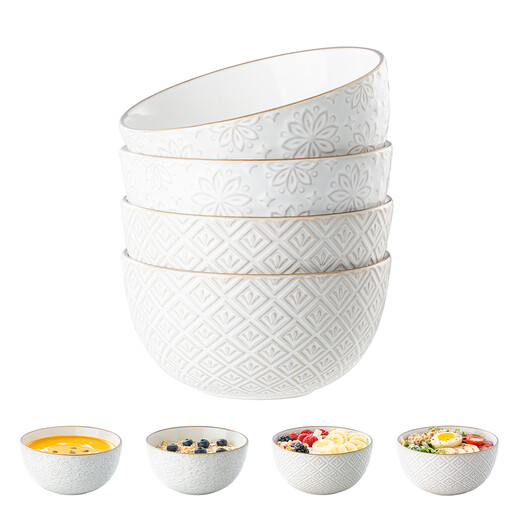
Why This Fits Their Persona: This is a home-serving companion rather than a packaged snack, suited to households that also want a practical bowl for fruit, cereal or yoghurt at the kitchen table.
The listed 26-fluid-ounce capacity and stackable design help address the practical issue of undersized or awkward kitchenware.
Set of four; stackable; listed as microwave-, oven-, freezer- and dishwasher-safe.
We have compiled a complete, real-time list of products that fully satisfy these strict selection criteria and UK safety regulations.
They can be convenient lunchbox snacks when the school permits them and the ingredients suit the child’s dietary needs. Check allergens, portion size, packaging condition and the product’s best-before date. They should be treated as a sweet fruit-based snack, not automatically as a substitute for fresh fruit.
Follow the pack instructions. The products listed here specify storage in a cool, dry place, away from direct sunlight where stated. Humidity and heat may affect the coating and texture, so keep individual packs sealed until they are ready to eat.
Individual packaging can increase the price per portion compared with a larger open pack, but it may reduce waste and make portions easier to plan. Compare the total number of servings, grams per pack and delivery costs before deciding which option offers suitable value for your household.