What matters when ordering yoghurt online?
Start with how much yoghurt you will use, then check the delivery details that could change whether the product suits you.
| Priority |
What to check |
Your needs |
| Pack size and date |
Check the delivered date, refrigeration instructions and time allowed after opening. Tesco’s Yeo Valley 950g listing says to eat it within three days of opening; GOV.UK distinguishes safety-related use-by dates from quality-related best-before dates. |
I want enough usable servings after delivery without opening a pot I cannot finish in time. |
| Substitutions |
Set your acceptable alternatives or decline substitutions when the type matters. Tesco allows notes for its personal shoppers; compare any delivered replacement with the product you ordered. |
For a recipe or a particular flavour, a different yoghurt might not do the same job. |
| Ingredients and allergens |
Read the ingredients and allergen information on the delivered pack, including any substitute. The Food Standards Agency identifies milk as a common yoghurt ingredient; check a product explicitly sold as dairy-free if milk must be avoided. |
I need the item that arrives to meet the ingredient requirements I am shopping for. |
| Format and formulation |
Compare natural or Greek-style pots with flavoured portions by pack size, ingredients and nutrition information. Check the exact product rather than assuming an organic or lower-fat option has the same formulation as another item in the range. |
A pot for cooking has a different purpose from a separate snack portion. |
| Live-culture positioning |
Check what the particular yoghurt or kefir product says it contains, without treating its marketing as a promised health effect. The NHS notes limited evidence for many probiotic health claims. |
If I want a live-culture product, I still need to choose its flavour, format and ingredients. |
Brand ranges to compare
These ranges illustrate different yoghurt formats; check the particular product rather than treating every item from a brand alike.
Müller
Individual yoghurt pots, including flavoured Müller Corner and Müller Light options.
- Müller’s UK range includes pots with fruit or crunch and a separate low-fat line.
- Toppings, flavours and nutrition vary; compare the exact pot or multipack.
Onken
Natural and fruited yoghurts, including a Greek-style natural set option.
- Onken presents its Greek-style natural set yoghurt as an option for cooking and baking.
- Check whether the chosen item is natural, fruited, 0% fat or wholegrain; those are different formulations.
Yeo Valley Organic
Organic dairy yoghurt with natural and fruited options.
- Tesco lists the 950g natural yoghurt as made with organic whole milk and live cultures.
- That 950g pot is labelled for refrigeration and consumption within three days of opening.
Rachel’s Organic
Organic dairy yoghurt, including a Greek-style natural set product.
- Ocado describes the Greek-style natural set yoghurt as suitable for cereal, baking and marinades.
- Its milk-and-cream formulation is a different choice from a product specifically labelled lower-fat.
Activia
Yoghurt and kefir in fruit, 0%-fat, fibre, pot and drink formats.
- The Activia UK range gives shoppers several formats to compare when live-culture positioning matters to them.
- Check the selected product’s ingredients and label; positioning alone does not establish a health outcome.
Tesco
An online-grocery retailer with yoghurt categories covering natural, Greek-style, multipack, big-pot and dairy-free alternatives.
- Tesco lets online shoppers leave substitution preferences for personal shoppers.
- Compare any substitute with the intended product and check the label on delivery.
Joybuy fruit-and-yoghurt snacks
These Joybuy options are portioned fruit-and-yoghurt snacks for babies aged 6+ months, not family-size natural yoghurt pots. Check each delivered pack’s date and instructions before use.
 No image available
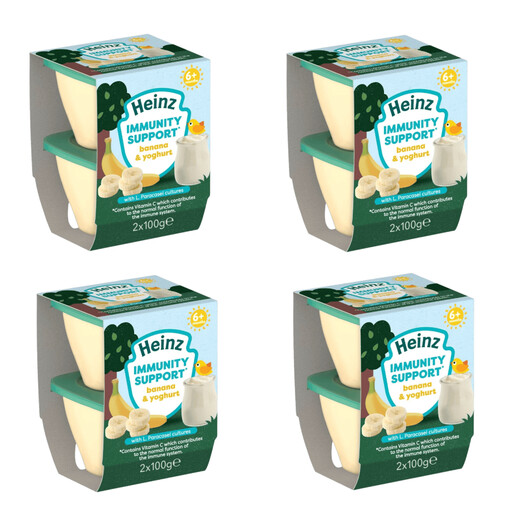
Heinz Banana & Yoghurt Pot, 6+ months, 2 × 100g, bundle of 4
Eight individual 100g pots are intended as an infant snack for babies aged 6+ months, rather than yoghurt for general household cooking.
Contains milk. The product instructions say to refrigerate unheated leftovers after opening and use them within 24 hours; check the delivered pack for its date and current label.
View on Joybuy
 No image available
Ella’s Kitchen Organic Mango Greek Style Yoghurt Pouch, 6+ months, 90g
This 90g fruit-and-yoghurt pouch is intended as a weaning snack for babies aged 6+ months, not as a multi-use yoghurt pot.
Contains milk. The product instructions say to spoon-feed rather than let a child drink directly from the pouch, warn that the cap is a choking hazard for children under 36 months, and allow a resealed pouch to be refrigerated for up to 24 hours after opening. Check the delivered pack’s date and label.
View on Joybuy
Questions about yoghurt delivery
What does “mature yoghurt” mean when shopping online?
Choose by attributes stated on the product instead of relying on “mature” to identify a particular type. Check whether the yoghurt is natural or Greek-style, its pack size, ingredients and any formulation that matters to you.
What should I check when a yoghurt delivery arrives?
Check the pack date and storage instructions, then refrigerate it promptly. GOV.UK explains that use-by dates concern safety while best-before dates concern quality, and advises setting a fridge to 5°C or below.
Can I accept a similar yoghurt as a substitute?
Accept it only if its ingredients, format and intended use still suit you. Tesco allows online shoppers to leave substitution preferences, but check the delivered replacement’s label, particularly when an allergen or specific recipe ingredient matters.
What if milk needs to be avoided?
Check the exact delivered product’s ingredients and allergen information, including for a substitute. The Food Standards Agency identifies milk as a common yoghurt ingredient; choose an item explicitly sold as a dairy-free alternative when shopping for a milk-free product.
Do live cultures guarantee a gut-health benefit?
No. The NHS says probiotics may be helpful in some circumstances but that evidence for many health claims is limited. Treat live cultures as a product characteristic, not a guaranteed treatment effect.


