Families looking for a mild flavour
Plain natural yoghurt is a starting point when a child dislikes strongly flavoured or mixed-texture foods. Compare the exact recipe rather than assuming every natural or fruit yoghurt tastes alike.


Start with a plain natural yoghurt if the child accepts its flavour. A child-sized natural pouch saves portioning, while a larger pot needs a separate container and spoon; if fruit yoghurt is more likely to be eaten, check its ingredients rather than assuming its total sugars come only from milk. For any format, check the milk allergen information and follow the pack’s storage instructions.
The useful distinction is not simply pot versus pouch: flavour, ingredients and the way lunch will be packed all affect the choice.
Plain natural yoghurt is a starting point when a child dislikes strongly flavoured or mixed-texture foods. Compare the exact recipe rather than assuming every natural or fruit yoghurt tastes alike.
A small pouch avoids portioning from a larger pot. A pot can also work when there is time to prepare a separate container and spoon; either way, follow the chosen product’s storage instructions.
The Onken and Rachel’s natural yoghurt examples contain milk. Check the current label of any product being considered when an allergy, intolerance or ingredient restriction matters.
Choose a flavour the child will accept, then check what the ingredients, portion format and storage directions mean for that particular lunch.
| Priority | What to check | Your needs |
|---|---|---|
| Ingredients and sugars | Read the ingredients alongside sugars per 100g. The NHS distinguishes naturally occurring milk sugar from free sugars; a total-sugars figure alone does not identify how much, if any, is free sugar. | I want to know what gives this yoghurt its sweetness, especially if it contains fruit or says “no added sugar”. |
| Flavour and texture | Look for a description of the exact recipe. Onken describes its Natural yoghurt as mild and smooth, and Rachel’s Organic describes its Natural Low Fat yoghurt as mild tasting; do not assume a fruit recipe has the same flavour. | A plain, smooth option may work for a child who dislikes strongly flavoured yoghurt. If plain yoghurt is unlikely to be eaten, I would compare the ingredients of a fruit option. |
| Portion and packaging | Check the pack size, whether a separate container and spoon are needed, and any age or cap warning. The Yeo Valley Little Yeos natural pouch is 85g; larger natural pots need portioning for a packed lunch. | For a lunch packed in a hurry, a single portion is useful. When I can prepare lunch at home, a larger pot gives me a way to portion the amount needed. |
| Allergens and storage | Read the current milk declaration and storage directions on the pack. The Onken and Rachel’s natural examples contain milk, while the checked Onken and Little Yeos listings call for refrigeration. | If milk ingredients matter in my household, I need to check this particular pack. I also need a lunch arrangement that follows its storage directions. |
Total sugars include naturally occurring milk sugar. The NHS explains that sugar naturally present in milk does not count as free sugar, so the nutrition figure alone cannot settle the question.
Read the ingredients as well as sugars per 100g, particularly when comparing plain yoghurt with fruit or flavoured recipes.
A pouch design or child-friendly illustration does not describe the recipe inside. Action on Sugar’s 2021 survey of child-focused yoghurts found that packaging was not a dependable shortcut to a low-sugar product; that historical sample does not describe every current yoghurt.
Compare the current ingredients, nutrition panel and serving size of the products you are considering.
A larger pot needs portioning, and the checked Onken and Little Yeos products have refrigeration instructions. A ready-portioned pack does not remove the need to follow its own storage directions.
If using a pot, prepare a suitable clean container and spoon, and plan how to follow the product’s chilled-storage instructions.
Portioning also means carrying the separate container and spoon.
Ingredients and allergen information can change when a recipe changes, as Tesco cautions on its Onken listing. This matters particularly when a child must avoid an ingredient.
Check the physical pack you are buying for its current ingredients, allergen declaration and storage directions.
These examples show which specific ranges are worth comparing; a brand name alone does not establish the flavour or ingredients of every product it sells.
Onken describes its Natural yoghurt as mild and creamy. The Tesco listing for a 450g pot identifies milk as the ingredient.
Rachel’s Organic describes its Natural Low Fat Bio-Live yoghurt as mild tasting and made from organic semi-skimmed milk.
Yeo Valley has natural and Greek-style yoghurt options. The Little Yeos Natural Greek Style 85g pouch is an example of a ready-portioned natural format.
Activia’s UK range includes Natural Yogurt alongside fruit and other yoghurt formats.
Müller’s UK range includes fruit yoghurts, small pots and mix-in formats.
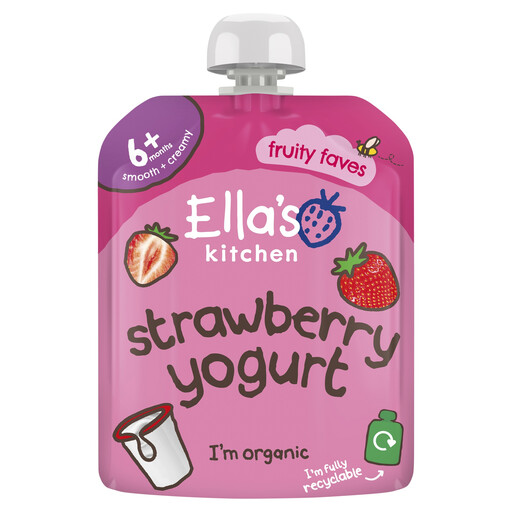
These fruit-and-yoghurt pouches are options for a child who may prefer fruit flavour to plain yoghurt. Neither product name establishes a mild taste, so check whether the particular flavour suits the child.
 No image available
This 90g fruit-and-yoghurt pouch is an option when plain yoghurt is unlikely to be eaten, but its strawberry flavour should not be assumed mild. It contains milk. Check the current ingredients and nutrition panel rather than treating total sugars as milk sugar alone; the product directions say to refrigerate after opening and use within 24 hours. Check the cap warning for children under 36 months.
 No image available
This 90g pouch contains a mango, other fruit and yoghurt blend, rather than a plain natural yoghurt; check whether the child accepts its flavour. It contains milk. The product directions say to serve it on a spoon or in a bowl, not to let the child drink directly from the pouch, and to refrigerate it after opening. Check the current pack for its ingredients, nutrition information and cap warning.
No. The total-sugars figure can include naturally occurring milk sugar even when no sugar has been added. The NHS distinguishes sugar naturally present in milk from free sugars; read the ingredients alongside the nutrition panel, especially for fruit recipes.
Not automatically. A fruit yoghurt may be a practical choice when plain yoghurt is unlikely to be eaten, but recipes differ. Compare the current ingredients and nutrition panel rather than assuming that fruit flavour, child-focused packaging or a “no added sugar” statement tells you everything about its sugars.
Follow the storage instructions on the exact product. The checked Onken and Little Yeos listings instruct shoppers to keep those yoghurts refrigerated; a small pouch is not, by itself, an exception to its pack directions.
Check the current ingredients and allergen declaration before choosing a yoghurt. The Onken and Rachel’s natural examples contain milk, as do the Joybuy fruit-and-yoghurt pouches shown here; a mild flavour or child-sized pack does not indicate that a product is milk-free.