Households packing regular lunchboxes
Individually sealed pots make it straightforward to set aside one portion for each lunch day. Check the pot size, flavours and use-by date before buying several packs.


Choose individually sealed yoghurt pots when quick packing and predictable lunchbox portions matter most; a larger pot offers more flexibility for shared breakfasts or cooking but needs decanting for lunchboxes. For a weekly shop, check the number and size of pots, the exact ingredients and allergen information, and whether you can store and use every portion by its use-by date.
Individually sealed pots make it straightforward to set aside one portion for each lunch day. Check the pot size, flavours and use-by date before buying several packs.
Standard fruit yoghurt, no-added-sugar variants and plain yoghurt can have different ingredients. Compare the exact flavour’s ingredient list and nutrition panel rather than assuming the range shares one recipe.
A larger natural pot can be served with breakfast or used in cooking. Sealed multipack pots avoid decanting when individual lunchbox portions are the main use.
For a weekly shop, start with the portions you will use, then check the recipe and how long the pack can be kept.
| Priority | What to check | Your needs |
|---|---|---|
| Portions and format | Count the pots and check grams per pot. Decide whether sealed portions or a larger pot suit the planned uses. | I need a separate pot for each lunch day, or I would rather serve yoghurt from one pot at home. |
| Sugar and sweeteners | Read the ingredients and the ‘of which sugars’ figure per 100g; compare per-pot figures where shown. Check separately for added sugar and sweeteners. | I want to know what is in this particular flavour, not assume ‘no added sugar’ means it contains no sugars. |
| Use-by date and storage | Check the date and follow the exact pack’s storage instructions. The Food Standards Agency says those instructions must be followed for a use-by date to remain a valid guide. | Several packs need to fit in my fridge and be used within their stated life. |
| Allergens and toppings | Read the label for the exact variant, including any separate cereal or chocolate topping. The Food Standards Agency identifies milk as a common yoghurt ingredient. | Someone eating these pots needs me to check every ingredient and allergen declaration. |
Packs differ in both pot count and grams per pot, so one pack may not cover the planned lunch days.
Count the portions needed for the week and compare them with the configuration printed on each pack.
Yoghurt can contain naturally occurring sugars, while some no-added-sugar variants contain sweeteners. Standard fruit recipes may contain added sugar.
Check the exact flavour’s ingredients and ‘of which sugars’ figure rather than relying on the range name.
Extra pots still need to be stored as instructed and used by their use-by dates.
Check the dates on the packs you receive and plan them around the household’s lunch days.
A cereal or chocolate addition can change the ingredients and allergens of a yoghurt pot.
Check the complete label for the exact flavour and topping combination each time you buy it.
These ranges illustrate different portion formats and recipes; check the specific pack rather than treating a brand name as a nutrition guide.
Müller Corner and Müller Light cover different styles of portioned yoghurt. Tesco Groceries lists Müller Light Greek Style Strawberry in a 4 × 115g format.
Tesco Groceries lists a 4 × 115g strawberry multipack with live cultures, alongside a separate fat-free, no-added-sugar strawberry variant.
Rachel's Organic lists a Luscious Fruits Bio-Live 4 × 110g multipack and a separate 450g Greek-style natural pot.
Yeo Valley describes its yoghurt range as organic; Tesco Groceries lists its honey Greek-style yoghurt in a 4 × 100g pack.
Onken’s range includes natural, fruit and wholegrain yoghurts, including a 1kg Natural Set pot.
Tesco Groceries lists own-label and branded multipacks with different pot counts and weights.
The Joybuy option here is an eight-pot banana-and-yoghurt weaning food for babies aged 6 months and over. It is not a general yoghurt multipack for school lunchboxes.
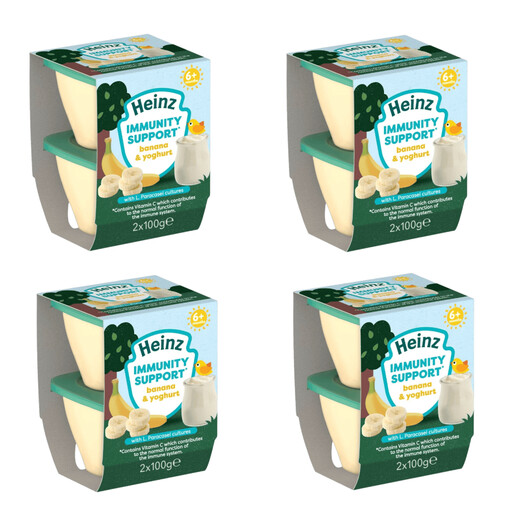 No image available
Eight 100g pots in four two-pot packs for baby weaning, rather than general household lunchboxes. Listed as containing milk; check the current pack for its full ingredients, date and storage instructions.
Individual pots suit lunchboxes when sealed, ready-portioned servings matter. A larger tub can also be used for breakfast or cooking, but a lunchbox serving needs decanting into a suitable container; follow the tub’s storage instructions after opening.
No. Sugars can occur naturally in milk and fruit, and some no-added-sugar yoghurts contain sweeteners. Check both the ingredients and the ‘of which sugars’ figure on the exact pack.
Follow each pack’s storage instructions and use-by date when deciding how many pots to buy. The Food Standards Agency says that if a label instructs you to refrigerate food after opening, it should be kept at 5°C or below.
Check the full allergen declaration on the exact product before it is eaten. The Food Standards Agency identifies milk as a common ingredient in yoghurt; separate toppings and different flavours also need checking.
Use the listing to plan the shop, then read the physical pack before use. Tesco Groceries advises this because a product’s ingredients, nutrition and allergen information can change.