Choose individual yoghurt pots for lunchboxes according to the number of portions, pot size and flavours you need. If the roast dinner also calls for a savoury marinade or dressing, buy a separate plain yoghurt: Yeo Valley recommends its natural yoghurt for those uses, while fruity and crunchy snack pots serve a different purpose.
Who are multipacks for?
The useful format depends on who will eat the pots, not on what else is in the roast-dinner shopping basket.
Households packing lunchboxes
Separate pots let you set aside chilled snacks without opening a shared tub. Tesco lists a six-pot Müller Corner pack and a four-pot Activia pack; Sainsbury’s lists a four-pot Rachel’s Organic pack. Check how many snack occasions each pack needs to cover.
Parents choosing small pots for younger children
Pot size and the age guidance on the exact product matter. Yeo Valley presents Little Yeos six-packs and four-packs within its children’s range; check the particular pack before choosing it for a child.
Shoppers choosing organic fruit yoghurt
Rachel’s Organic offers a four-pot fruit-yoghurt format, listed by Sainsbury’s as 4 x 110g. It suits a preference for separately portioned fruit yoghurt, but it is not a plain base for a savoury recipe.
What should you check?
Decide whether the yoghurt is for packed snacks, cooking or both. Then compare the exact packs rather than assuming every pot in a multipack serves the same purpose.
| Priority | What to check | Your needs |
|---|
| Portions |
Count the pots and check their size against planned snack occasions. Keep the pack’s storage and date instructions in mind. |
I want individual pots I can allocate to lunchboxes without opening a large tub, and I need a pack size I can use within its labelled period. |
| Cooking use |
Read the recipe and choose an appropriate plain product. Yeo Valley recommends its natural yoghurt for marinades and salad dressings; check the guidance for the exact yoghurt you buy. |
If I’m making a savoury dressing or marinade for the roast dinner, I need a plain yoghurt as well as any fruity snack pots. |
| Ingredients and nutrition |
Compare ingredients and the nutrition panel per 100g for the exact flavour. Check low-fat or live-culture wording on that pack without assuming a general health effect. |
Flavour matters for a lunchbox, but I also want to know what is in each variant rather than judging the whole range by one pot. |
| Age and allergens |
Check age guidance where relevant and read the ingredient and allergen statements for every flavour in a mixed pack. The Food Standards Agency identifies milk as an ingredient in yoghurt. |
For a younger child or someone avoiding an allergen, I need the exact pack to meet their requirements; a familiar brand name is not enough. |
| Chilled storage |
Follow the pack’s refrigeration and date instructions. The Food Standards Agency says a use-by date depends on following the stated storage instructions. |
I need to plan when the pots will be eaten and how they will be kept chilled, not just how many will fit in a lunchbox. |
Mistakes to avoid
-
Using a sweet snack pot in a savoury recipe
Fruit or crunchy additions can change the flavour and texture of a marinade or dressing. Müller describes its Corner range as yoghurt with fruit or a crunchy side, while Yeo Valley recommends its natural yoghurt for marinades and salad dressings.
If you need both lunchbox snacks and a savoury cooking ingredient, choose separate products and check the recipe’s requirements.
-
Reading a broad outcome into live-culture wording
A live-culture description does not establish that every person will experience a digestive benefit. The Activia listing’s lactose-digestion wording applies to individuals who have difficulty digesting lactose.
Compare the exact pack’s ingredients and nutrition panel for the attributes you want, rather than treating its branding as a guaranteed result.
-
Assuming every flavour has the same allergens
Mixed packs can contain different fruit, cereal or chocolate additions. The Food Standards Agency identifies milk as an ingredient in yoghurt, and other ingredients require a check on the particular pack.
Read the ingredient and allergen declaration for each variant you intend to serve.
-
Buying more pots than you can use as labelled
A larger pack means more portions to store and use. The Food Standards Agency says use-by dates depend on following storage instructions.
Count the planned snacks, then follow the date and storage directions on the pack you buy.
Brand references
These ranges illustrate different yoghurt uses and formats; a brand’s wider range should not be treated as the specification for every one of its packs.
Müller
Müller Corner combines yoghurt with fruit or a crunchy side, according to Müller UK & Ireland.
- Tesco lists the Corner Favourites pack as six pots totalling 840g, a format for separate snacks.
- Check each flavour’s ingredients; this is not a plain yoghurt for savoury cooking.
Activia
Tesco lists an Activia strawberry multipack of 4 x 115g and describes it as low in fat and containing live cultures.
- The four separate pots offer a smaller pack count than the listed Müller six-pack.
- Check the exact variant’s label; live-culture wording is not a promise of a general health outcome.
Rachel’s Organic
Rachel’s Organic and Sainsbury’s identify Luscious Fruits as an organic fruit-yoghurt multipack of 4 x 110g.
- It offers individually portioned fruit yoghurt for shoppers seeking an organic option.
- Check the exact flavour and nutrition panel; organic fruit yoghurt is not a plain cooking ingredient.
Yeo Valley
Yeo Valley presents Little Yeos multipacks for children and separately recommends its natural yoghurt for marinades and salad dressings.
- Its range distinguishes small snack formats from a plain yoghurt intended for other uses.
- Apply the brand’s cooking guidance to the product it describes, not automatically to every Little Yeos pot.
Onken
Onken describes its natural set yoghurt as a cooking and baking option.
- Its plain-yoghurt guidance is relevant when the roast-dinner recipe calls for a cooking ingredient.
- Check the exact product and format if you also need individually portioned lunchbox pots.
Tesco
Tesco Groceries organises its multipack-yoghurt category into formats including children’s, Greek-style and low-fat options.
- The category is a starting point for comparing pot formats and intended uses.
- Check each product page and pack for its own ingredients, nutrition and storage directions.
Joybuy product option
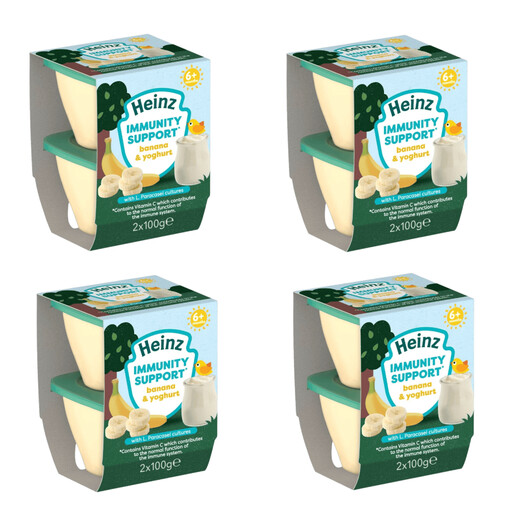
This Heinz option is a banana-and-yoghurt baby-food multipack labelled for ages 6+ months. It is a choice for small individual servings, not a plain yoghurt for roast-dinner cooking or a general lunchbox-yoghurt comparison.
 No image available
Heinz Banana & Yoghurt Pots 6+ Months, 2 x 100g × 4
The bundle contains four twin-packs: eight individual 100g pots for the labelled 6+ months age group. These banana-and-yoghurt baby-food pots are not plain yoghurt for a savoury marinade or dressing. Check the exact pack’s ingredients, storage directions and date before use.
View on Joybuy
Frequently asked questions
Can lunchbox yoghurt pots replace plain yoghurt in a roast-dinner recipe?
Choose a separate plain yoghurt when a savoury recipe calls for one. Yeo Valley recommends its natural yoghurt for marinades and salad dressings; fruity or crunchy snack pots have different ingredients, so check the recipe and the exact product.
Should I choose a live-culture multipack for a guaranteed digestive benefit?
No. A live-culture description does not guarantee a general digestive outcome. The lactose-digestion wording on the Activia listing concerns individuals who have difficulty digesting lactose; read the conditions on the exact pack rather than broadening the claim.
How should I plan storage for a yoghurt multipack?
Follow the storage instructions and date label on the pack you buy, and choose a pot count that fits your planned snack occasions. The Food Standards Agency says a use-by date depends on the stated storage instructions being followed.
What should I check if someone needs to avoid milk?
Check the exact product’s ingredient and allergen declaration rather than assuming a yoghurt multipack is suitable. The Food Standards Agency identifies milk as an ingredient in yoghurt; mixed-flavour packs may also contain other ingredients relevant to the person eating them.
Does an organic fruit-yoghurt label tell me its sugar content?
No. Organic describes how the product is produced, not the sugar value of every pot. Compare the nutrition information per 100g on the exact fruit-yoghurt packs you are considering.


