For an everyday snack at home, plain unsweetened yoghurt with sliced fruit is a practical starting point; the NHS lists plain yoghurt with banana as a snack idea for young children. A child-sized, no-added-sugar product may be easier to portion for outings, but check its ingredients, sugars, milk allergen and chilled-storage instructions rather than choosing by the packaging alone.
Who is choosing these snacks?
The useful format depends on where the yoghurt will be eaten and whether the child has dietary requirements.
Families making snacks at home
Plain unsweetened yoghurt is easy to portion into a bowl and serve with fruit. The NHS suggests plain yoghurt with sliced banana as one snack idea for young children; choose a portion and texture appropriate for the child.
Families packing snacks for outings
Individual pots and pouches can avoid serving from a large tub while away from home. They still need the storage arrangements stated on the pack, so consider how the yoghurt will stay chilled before it is eaten.
Families checking dietary suitability
Read the ingredients and allergen information on the exact flavour and pack. A lactose-free dairy yoghurt can still contain milk, making the distinction particularly important when choosing for a child with a milk allergy.
What should you check before buying?
Start with the child’s dietary needs and where the snack will be served. Then compare labels on products with portions that make sense for that occasion.
| Priority |
What to check |
Your needs |
| Sugars and ingredients |
Check whether the yoghurt is plain, flavoured or labelled no added sugar. Read the ingredients and compare sugars per 100g as well as per serving; no added sugar does not mean sugar-free. |
For regular snacks at home, I could serve plain yoghurt with fruit. If I choose a flavoured portion, I want to understand what is in that particular product. |
| Portion and format |
Compare the stated serving size with the amount the child will eat. Decide whether a spoon and bowl, a single pot or a pouch will work where the snack is planned. |
A pouch may be simpler to pack for a day out; at home, I can portion a larger tub myself. A familiar flavour or smooth texture may also matter to my child. |
| Chilled storage |
Read the use-by date and the pack’s instructions for storage before and after opening. Plan how to keep yoghurt chilled when travelling or spending time outdoors. |
Will the snack stay chilled until it is served? For an outing without a fridge, I need to plan how to carry it safely, not just choose a portable pack. |
| Dietary suitability |
Check the exact ingredients and highlighted allergens for each variant. Do not treat a lactose-free label as a milk-free claim. |
If my child has a milk allergy or another dietary requirement, the individual product label matters more than the brand or the picture on the front. |
Common mistakes to avoid
-
Assuming a fruit flavour means less sugar
Child-oriented packaging and fruit flavour do not establish a yoghurt’s sugar profile. Flavoured products can list sugar among their ingredients, while plain yoghurt also contains naturally occurring milk sugars.
Compare the ingredients and the sugars figures per 100g and per serving. If you want to add fruit yourself, consider plain unsweetened yoghurt instead.
-
Confusing lactose-free with milk-free
Rachel’s Organic describes its lactose-free natural yoghurt as made with whole milk. Removing lactose does not make a dairy yoghurt suitable for someone with a milk allergy.
For a child with a milk allergy, check the exact product’s allergen information and follow their clinician-led allergy plan rather than relying on a lactose-free claim.
-
Choosing a portable pack without planning storage
A pouch or individual pot is convenient to carry, but its format does not replace chilled storage. The NHS notes that babies and young children are particularly vulnerable to bacteria that cause food poisoning.
Follow the pack’s storage and use-by instructions. For an outing without refrigeration, plan how to carry the yoghurt chilled, such as in an insulated bag with cold packs.
-
Choosing an adult-positioned yoghurt by its front label
Low-fat or no-added-sugar wording does not establish whether a product suits a particular child’s portion or dietary needs. For example, Müller Light Cherry lists milk and the sweetener aspartame among its ingredients.
Read the complete label and choose the portion and ingredients for the child and the snack occasion, rather than treating one front-of-pack claim as the whole decision.
Brand ranges worth comparing
These ranges illustrate different pack formats and ingredients; check the particular product rather than assuming every yoghurt from a brand is alike.
Yeo Valley Organic
The Little Yeos range includes children’s yoghurts and no-added-sugar pouches, according to Yeo Valley Organic.
- Ready portions may suit snacks prepared for an outing.
- Check the exact pack’s ingredients, milk allergen, portion and storage instructions.
Onken
Onken Kids Raspberry & Banana is sold as four 90g yoghurt portions.
- Individual pots provide a stated portion size for a fruit-flavoured option.
- The product’s listed ingredients include milk and sugar; compare its label with plain or no-added-sugar alternatives if those differences matter to you.
Tesco
Tesco’s children’s yoghurt selection includes pouches and pots, including its own strawberry-and-raspberry fromage frais pouches in 80g portions.
- Different pack formats allow a choice between serving at home and packing individual portions.
- The Tesco fromage frais pouch ingredients include milk and sugar; inspect each product rather than judging by the pouch format.
Rachel’s Organic
Rachel’s Organic offers natural yoghurt, including a 450g lactose-free dairy variant that can be portioned at home.
- A larger tub can be served in separate bowls when several people want yoghurt at home.
- Its lactose-free natural yoghurt is made with milk, and an opened tub needs handling according to its storage instructions.
Müller
Müller’s yoghurt range includes fruity products and Müller Light pots; the individual variants have different ingredients.
- Single pots provide a defined pack format to compare with family tubs and children’s multipacks.
- Müller Light Cherry contains milk and aspartame. Check the specific variant and portion rather than assuming an adult-positioned product fits a child’s snack.
Joybuy yoghurt options
These fruit-and-yoghurt pouches and pots offer individual portions for children’s snacks. All four carry a 6+ months age label, which is not a reason to give snacks to an infant: the NHS says children under one year should not be given snacks.
 No image available
Ella’s Kitchen Organic Mango Greek Style Yoghurt Pouch, 6+ Months, 90g
A 90g fruit-and-yoghurt pouch for a portion that can be packed for an outing; the product description states no added sugar. It contains milk. The serving directions say to squeeze it onto a spoon or into a bowl, not to let a child slurp from the pouch. Refrigerate unused contents after opening and use within 24 hours; the cap is identified as a choking hazard for children under 36 months. The 6+ months label does not override NHS advice that children under one should not be given snacks.
View on Joybuy
 No image available
Ella’s Kitchen Greek Yoghurt with Strawberry Pouch, 6+ Months, 90g
This 90g strawberry-and-yoghurt pouch provides an individual portion, and its description states no added sugar. It contains milk. The serving directions allow serving from the pouch or into a bowl under adult supervision; follow the pack’s temperature instructions. Refrigerate after opening and use within 24 hours. Keep the cap away from children under 36 months because of the stated choking hazard. Despite the 6+ months label, NHS guidance says children under one should not be given snacks.
View on Joybuy
 No image available
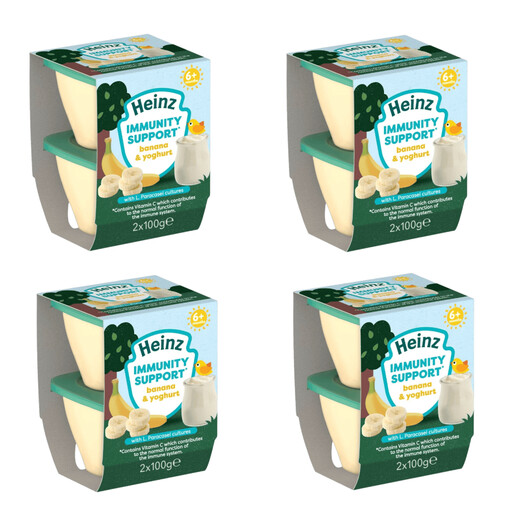
Heinz Banana & Yoghurt Pots, 6+ Months, 8 × 100g Bundle
This bundle contains eight individual 100g banana-and-yoghurt pots for portioning across separate occasions. The listed ingredients include banana, yoghurt and apple, and the product contains milk. Use a clean spoon and supervise eating as directed. Refrigerate any unheated food left in an opened pot and use within 24 hours. Check the current nutrition panel when comparing sugars; do not infer a no-added-sugar claim from the ingredients list. The NHS says children under one should not be given snacks, regardless of the 6+ months label.
View on Joybuy
 No image available
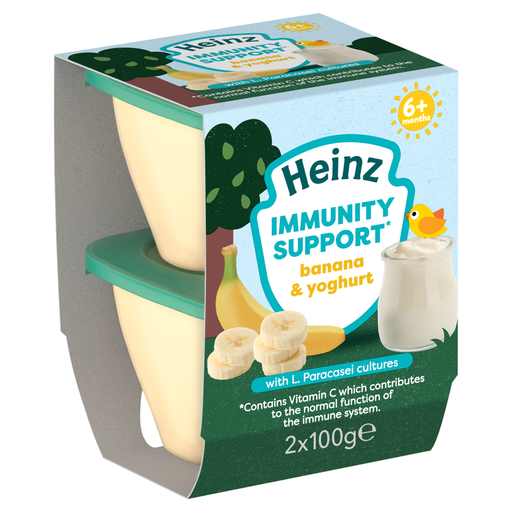
Heinz Banana & Yoghurt Pots, 6+ Months, 2 × 100g
The twin pack offers two separate 100g banana-and-yoghurt pots rather than the eight-pot bundle above. Its listed ingredients include banana, yoghurt and apple; it contains milk. Use a clean spoon and supervise eating as directed. Refrigerate any unheated food left in an opened pot and use within 24 hours. Compare sugars using the current pack’s nutrition panel without assuming a no-added-sugar claim. Although labelled 6+ months, it should not be treated as a snack for a child under one: the NHS says infants of that age should not be given snacks.
View on Joybuy
Questions about children’s yoghurt snacks
Is plain yoghurt an option for a regular school holiday snack?
Yes, for young children who are old enough to have snacks, the NHS lists plain unsweetened yoghurt with sliced banana as an idea. Choose a texture and portion appropriate for the child; the NHS also says the naturally occurring sugars in plain yoghurt do not need to be cut down.
Does no added sugar mean a yoghurt contains no sugar?
No. Yoghurt can contain naturally occurring milk sugars even when labelled no added sugar. Read the ingredients and compare the nutrition panel per 100g and per serving to understand the particular product.
Is lactose-free yoghurt suitable for a child with a milk allergy?
Not on the basis of a lactose-free label alone: lactose-free dairy yoghurt can still contain milk. Check the exact ingredients and allergen information, and follow the child’s clinician-led allergy plan.
How should I carry yoghurt on a day out?
Follow its chilled-storage and use-by instructions, and plan how to keep it chilled until serving if no fridge is available. An insulated bag with cold packs can help with the journey; a pouch or unopened pot does not remove the need to follow the product’s storage directions.
Does a 6+ months label mean a yoghurt is suitable as an infant snack?
No. The NHS says children under one year should not be given snacks. A product age label should not be used to override that guidance; feeding an infant calls for age-appropriate weaning decisions rather than a school holiday snack choice.


