
24/7 Customer Support

Free returns

Same-day & Next-day Delivery

Quality Guaranteed

Unlock Your Welcome Offers: FREE Delivery | Up to 80% OFF | Free 30-day JoyPlus trial
Download the APP
Yoghurt snacks cover a wide range of products, from yoghurt-coated fruit snacks and yoghurt-flavoured snack bars to fermented yoghurt drinks, baby food pouches and cat treats. That variety is useful, but it can also make shopping confusing. A creamy texture does not necessarily mean a product is made mainly from yoghurt, while words such as “probiotic”, “natural” or “immunity support” need to be considered alongside the full ingredient list.
The following guide helps UK shoppers compare formats, ingredients, portions and age suitability before adding yoghurt treats to their basket.
Many yoghurt-coated products contain a coating made primarily from sugar and vegetable fat, with a smaller quantity of yoghurt powder or whey powder. For example, yoghurt-coated fruit snacks can offer a crisp coating and chewy fruit centre, but their nutrition panel may show a relatively high sugar content.
Check the quantitative ingredient declaration where available. This tells you whether yoghurt is a main ingredient or simply part of the flavouring or coating.
A product may contain a named bacterial culture, but this does not automatically make it equivalent to a yoghurt or supplement selected for a particular health purpose. Look for the exact microorganism, serving size and storage instructions, and avoid assuming that a probiotic yoghurt candy provides the same nutritional profile as plain yoghurt.
The Liuh Der probiotic candy, for instance, lists Bacillus coagulans among its ingredients, but also contains 47.14% sugar and 55g of sugars per 100g. It is more appropriately considered a confectionery-style treat than a replacement for a balanced snack.
Baby yoghurt snacks and adult treats are not interchangeable. Products for babies aged 6+ months should be checked for the stated age guidance, texture, storage instructions and supervision requirements. Similarly, milk, wheat, soya, nuts and peanuts appear in different products across this category.
For pets, human yoghurt snacks should not be substituted for cat yoghurt treats. Cat products are labelled as complementary pet food and include feeding guidance designed for cats.
Ingredients are listed by weight, from highest to lowest. A product with yoghurt listed after sugar or vegetable fat may be a sweet treat with yoghurt flavour rather than a yoghurt-based food.
Useful details to compare include:
A standard nutrition panel allows comparisons, but serving size shows how much is actually consumed. Fruit Bowl Strawberry and Raspberry Yoghurt Flakes provide 82 kcal and 11.2g of sugars per 18g serving. The individual packs can make portions easier to manage, but the product remains a sweet snack rather than a low-sugar food.
For drinks, compare the bottle size and per-100ml information. LIGHT UP Fermented Yoghurt Drink with Dried Plums is supplied in a 220ml format and lists 45 kcal per 100ml. Its label also warns that excessive consumption may have a laxative effect.
Choose the format around the occasion:
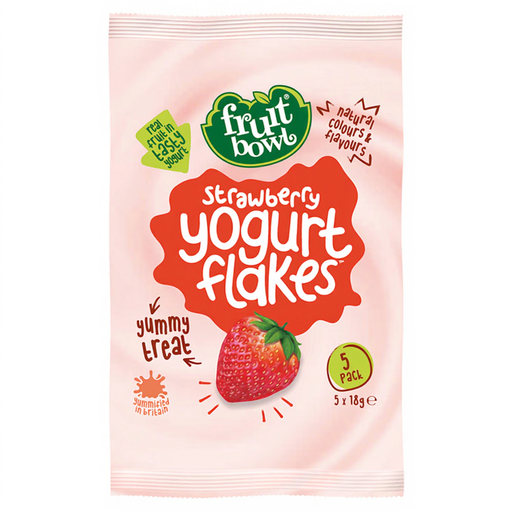
Why This Fits Their Persona: Individual 18g portions are practical for lunchboxes, after-school snacks and occasional treats without opening a large bag.
The 18g serving nutrition information makes the sugar and calorie content easier to assess before serving.
Five individually packed pieces; strawberry fruit flakes with a yoghurt-flavoured coating; 82 kcal per serving.

Why This Fits Their Persona: Parents seeking an organic, fruit-based option for weaning can use this pouch at home or while travelling.
The pack states 37% Greek-style yoghurt and no added sugar or salt, allowing a clearer comparison with sweeter yoghurt treats.
Suitable from 6+ months; organic mango, apple and banana; resealable 90g pouch.
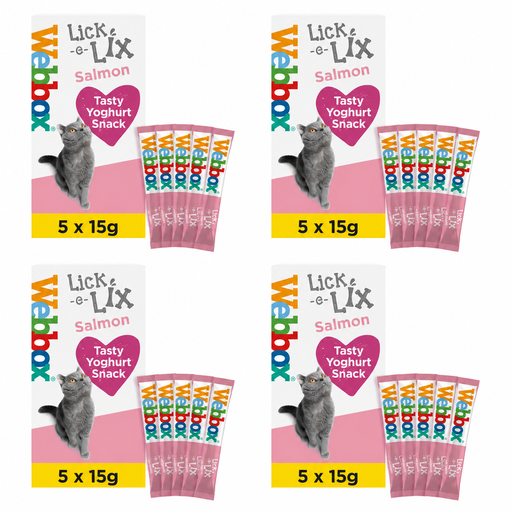
Why This Fits Their Persona: Cat owners buying regularly can choose a four-pack bundle for portioned rewards or meal toppers.
It is clearly labelled as complementary pet food, not a complete meal, with individual sachets to help control serving size.
Twenty 15g sachets in total; salmon flavour; 8.5 kcal per sachet according to the product information.
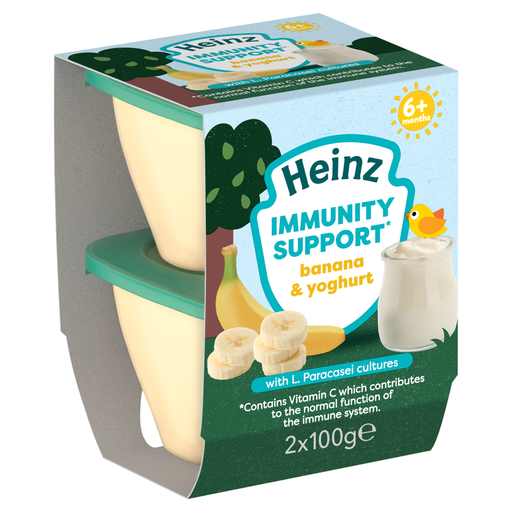
Why This Fits Their Persona: A twin pack gives families two ready-portioned pots for home use, nursery bags or supervised snacks.
The pack states the age guidance, milk allergen and storage requirement after opening, helping parents avoid unsuitable or poorly stored products.
Smooth banana, yoghurt and apple blend; 100g pots; suitable from 6+ months when used as directed.
We have compiled a complete, real-time list of products that fully satisfy these strict selection criteria and UK safety regulations.
For a savoury option, yoghurt pretzels may be confused with yoghurt-coated sweets. Penn State Sour Cream & Chive Pretzels are a wheat-based snack containing milk and barley, with 2.5g of salt per 100g in the supplied product information. They are not yoghurt snacks in the same sense as a fermented drink or baby yoghurt pot.
Yoghurt-flavoured snack bars, such as an almond and apricot bar, can be convenient for work bags but may contain palm-based fats, honey, milk and nuts. Always check the allergen statement before sharing them with children.
Only products specifically labelled for that age group should be considered. Check texture, ingredients and serving instructions, supervise your child while eating, and follow the product label. Baby pouches should generally be squeezed onto a spoon or into a bowl rather than used for unsupervised slurping.
Do not assume so. A fruit-based ingredient does not automatically mean that a packaged snack counts as a portion of fruit. Check the product label and treat yoghurt-coated fruit snacks as occasional sweet snacks unless advised otherwise.