Households sharing yoghurt across meals
A large plain tub can serve breakfasts, shared snacks or cooking when the household expects to finish it within the exact pack’s date and post-opening guidance.


Choose a shared 950g–1kg tub if several people will use it within the pack’s date and post-opening instructions. A smaller fruit pot suits a household wanting a shared flavoured yoghurt without buying as much, while individual pots make separate servings easier. Before buying several packs, check each product’s storage instructions, ingredients and allergen declaration.
How the household serves yoghurt matters as much as the amount in the pack.
A large plain tub can serve breakfasts, shared snacks or cooking when the household expects to finish it within the exact pack’s date and post-opening guidance.
Individual pots can be easier to distribute or pack when family members want separate servings. Check the pot size and flavour mix rather than assuming every multipack is assorted.
Anyone buying for a household with an allergy, intolerance or particular ingredient preference needs to read the precise product’s ingredients, allergen declaration and nutrition information. A brand name alone does not describe every variant.
Start with the quantity your household will use, then decide whether shared or separate servings fit the way you eat yoghurt.
| Priority | What to check | Your needs |
|---|---|---|
| Usable quantity | Compare the total weight, such as a 950g–1kg tub or several smaller pots. Check whether that amount fits the pack’s date and opening instructions. | We use yoghurt at several meals, so a shared tub makes sense only if we can finish it as directed. |
| Separate servings | Check the number and size of pots, the exact flavour mix and whether portions need to be packed separately. | Individual pots would make snacks easier to hand out or pack, especially if a shared tub would be inconvenient. |
| Dates and storage | Read the date mark, refrigeration instructions and any time limit after opening. GOV.UK distinguishes use-by dates, which concern safety, from best-before dates, which concern quality. | I want to buy only what we can use under each pack’s instructions, rather than relying on the same opening period for every yoghurt. |
| Ingredients and nutrition | Read the exact pack’s ingredients and allergen declaration; the Food Standards Agency identifies milk as a common ingredient in yoghurt. Compare nutrition figures per 100g on the variants you are considering. | If someone in our household has a milk allergy or particular ingredient requirements, I need to check the specific yoghurt, including any toppings or mix-ins. |
A large shared pack may be difficult to finish within its stated period after opening. The Onken Raspberry Yogurt 450g label cited by Tesco, for example, says to enjoy it within three days of opening; that limit should not be applied to other products.
Check the instructions on the tub you plan to buy and match its size to how often your household will use it.
Yoghurt left unused beyond the pack’s instructions may have to be discarded.
Plain, fruit and topped products can have different ingredient and nutrition information. The Food Standards Agency identifies milk as a common ingredient in yoghurt, so a product name is not a substitute for its allergen declaration.
Read the current label for each variant, including its toppings or mix-ins, and compare nutrition information on the same per-100g basis.
These examples illustrate different pack formats; the exact variant and label still determine what you are buying.
Tesco Groceries lists own-brand Greek-style natural yoghurt in a 1kg shared tub, as well as smaller portioned formats.
Yeo Valley describes its range as organic dairy; Tesco Groceries lists a Yeo Valley Greek-style natural yoghurt in a 950g tub.
Tesco Groceries lists Müller Light Red Fruit Assorted in six 140g pots, a portioned alternative to a shared tub.
The referenced Activia range includes individually portioned multipacks, including an eight-pot fruit variant.
Onken Raspberry Yogurt 450g is a flavoured shared pot rather than a multipack of individual servings.
Tesco Groceries describes Rachel's Organic Honey Greek Style Yogurt 450g as an organic, honey-flavoured shared pot.
This infant-targeted bundle provides separate banana-and-yoghurt pots for parents considering portioned food for a baby aged 6 months or over. It is not a plain family tub or a general-purpose yoghurt multipack.
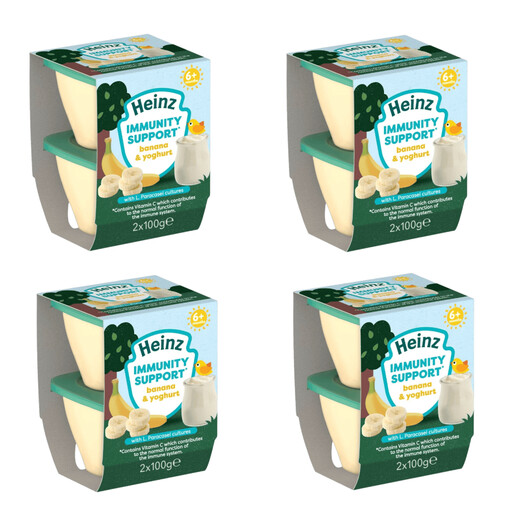 Image unavailable
The bundle contains eight separate 100g pots for parents considering portions for a baby aged 6 months or over; it is not a plain or Greek-style family yoghurt. Check the pack date, ingredients and milk allergen declaration. The supplied product guidance says to refrigerate any unheated remainder from an opened pot and use it within 24 hours.
No. A 1kg tub suits a household that will use shared yoghurt within the exact pack’s date and post-opening instructions. If servings need to stay separate, or a large opened tub is unlikely to be finished, smaller pots may fit your routine better.
Check each pack’s date mark and storage instructions, then consider when you will open and finish it. GOV.UK distinguishes use-by dates, which concern food safety, from best-before dates, which concern quality; follow the product’s own instructions after opening too.
Follow the instruction on that particular tub. Tesco Groceries quotes a three-day period after opening for Onken Raspberry Yogurt 450g, but that is not a rule for other yoghurts.
No. The Food Standards Agency identifies milk as a common ingredient in yoghurt. Check the current ingredients and allergen declaration for the exact product, including any toppings or mix-ins; do not rely on its brand or flavour name.
No. Read each variant’s ingredients and nutrition panel, comparing figures per 100g if that matters to your choice. Different flavours and product lines should not be treated as though they have the same recipe.