
24/7 Customer Support

Free returns

Same-day & Next-day Delivery

Quality Guaranteed

Unlock Your Welcome Offers: FREE Delivery | Up to 80% OFF | Free 30-day JoyPlus trial
Download the APP
A pest problem rarely needs the same solution from room to room. Fleas may be hiding in rugs and pet bedding, while moth larvae can damage fabrics in wardrobes. Ants often follow narrow routes around skirting boards, and silverfish prefer dark cracks and damp areas. Choosing a product based only on a bold “fast action” claim can leave you with the wrong format, insufficient coverage or unnecessary repeat purchases.
As the Joybuy Product Recommendation Officer, I filter the practical details that matter before you buy. This guide explains the main pitfalls, the specifications worth checking and which Zero In pest killer format may suit different UK households.
A broad insecticide spray for home use may cover several crawling insects, but that does not automatically make it suitable for every infestation. Fleas have a life cycle involving adults, eggs and larvae, while carpet beetles and moths may be associated with carpets, upholstery or stored clothing. Check that the product label names the pest and the intended treatment surface.
“Kills on contact” describes what may happen when the product reaches an exposed insect. It does not necessarily mean that hidden insects, eggs or larvae will be controlled. Where residual protection is stated, check the stated duration, surface limitations and whether repeat treatment is required.
Powders can be useful in cracks and crevices, but loose dust should not be left where children, pets or food can come into contact with it. Aerosols require careful ventilation and should never be sprayed directly onto animals. Always check the UK label, follow the directions and use biocides safely. Products containing ingredients such as permethrin, cyphenothrin, prallethrin or pyrethrins require particular care around pets and aquatic life.
Look for a named pest match rather than relying on a generic household pest killer powder. Relevant product types include:
Some products state that they affect adult and juvenile stages, while others focus on contact treatment. This distinction can influence how you plan follow-up cleaning and applications.
Choose the format according to the location:
A positive-flow dip tube or puffer nozzle may help distribute powder more evenly, but it does not replace careful measuring or label instructions.
Compare the area and duration rather than simply choosing the largest container. For example, the Zero In Ant and Crawling Insect Powder states coverage of up to 30m² for up to six weeks, while the Silverfish and Crawling Insect Killer Powder is listed for 15m², with effectiveness dependent on the surface. Spray products may state different periods for treated areas. These figures are product-specific, so check the current packaging before application.
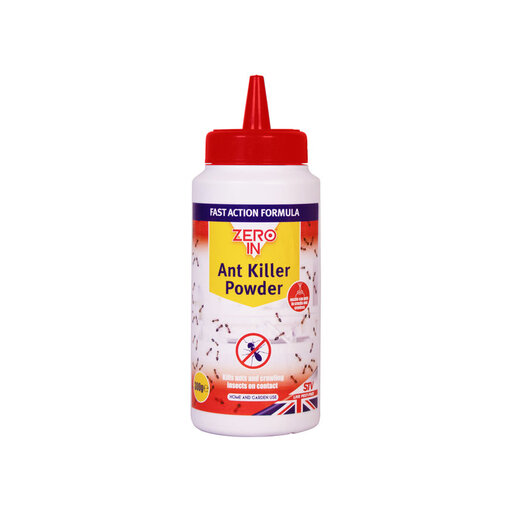
Why This Fits Their Persona: A practical option for tenants and homeowners dealing with ants, woodlice, earwigs or other crawling insects across defined indoor or outdoor areas.
Its stated treatment area and duration make it easier to estimate whether one 300g pack is suitable before buying.
Puffer-pack application; listed coverage of up to 30m² and control lasting up to six weeks.
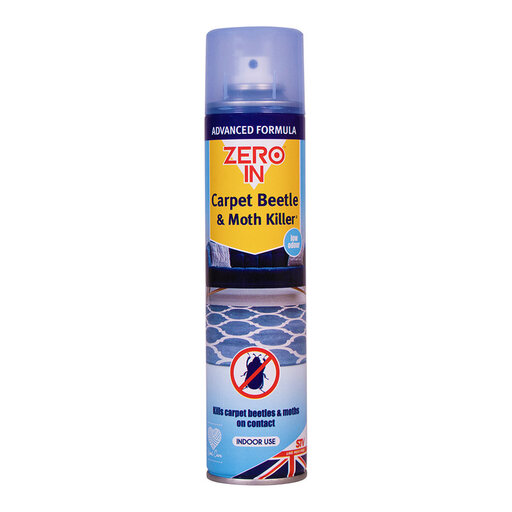
Why This Fits Their Persona: Suits households wanting a targeted treatment for carpets, upholstery and surfaces where carpet beetles, moths or larvae are visible.
It is labelled for a defined pest group and surfaces, avoiding the assumption that one general spray suits every fabric or insect.
300ml spray format; stated protection of up to three months on treated household surfaces.

Why This Fits Their Persona: Designed for larger or mixed household pest problems involving fleas, bed bugs, clothes moths and other crawling insects.
Its listed pest range and targeted trigger application help separate broad coverage from an unspecified general-purpose claim.
600ml trigger aerosol; stated residual action for up to 12 weeks against emerging eggs and larvae.
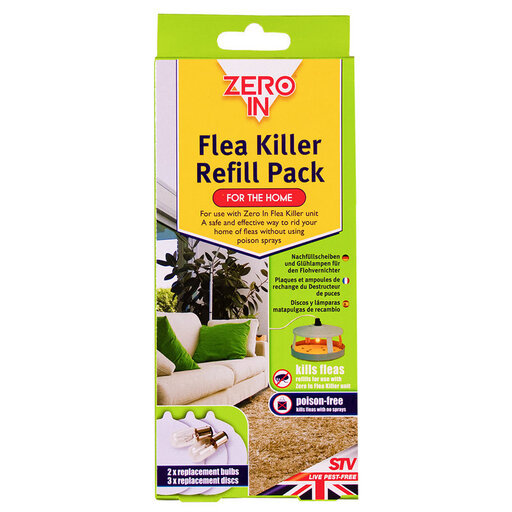
Why This Fits Their Persona: A convenient choice for existing Zero In Flea Killer unit owners who prefer a poison-free monitoring and control approach in the home.
It clearly states compatibility and replacement intervals, reducing the risk of buying a refill for the wrong device.
Includes two replacement bulbs and three sticky discs; discs are recommended for replacement every two to four weeks.
We have compiled a complete, real-time list of products that fully satisfy these strict selection criteria and UK safety regulations.
Before using any Zero In household pest control product:
For extensive bed bug activity, repeated sightings after correct treatment or infestations affecting multiple rooms, consider contacting a qualified pest-control service.
The Home Flea Killer Spray states protection of treated areas for up to four weeks, subject to the product label and approval details. The Ultra Power Household Pest Killer Spray lists residual action for up to 12 weeks. Actual performance depends on the surface, application and follow-up treatment.
No. The refill is intended exclusively for use with the compatible Zero In Flea Killer unit. It contains replacement bulbs and sticky discs rather than a standalone spray or powder.
Powder can be useful for dry cracks, crevices and targeted areas, while a trigger spray may suit visible trails and precise surface application. Choose according to the pest, location, permitted surface and the label’s safety instructions rather than format alone.