No-added-sugar cola is a taste choice, not carbohydrate fuel for a 5k: Coca-Cola GB and Pepsi UK list 0 g carbohydrate per 100 ml for Coca-Cola Zero Sugar and Pepsi Max, while the UK Sports Institute points to carbohydrate-containing food or drink when pre-run energy is needed. If you want cola around a run, choose an explicitly caffeine-free version when avoiding caffeine; otherwise compare the label and pack size for the flavour you prefer.
Who is this for?
The useful distinction is whether you want cola flavour around a 5k or carbohydrate before running.
5k runners who want cola without sugar
A zero-sugar cola may fit a flavour preference before or after a run. Coca-Cola GB and Pepsi UK list 0 g carbohydrate per 100 ml for their standard zero-sugar colas, so those drinks do not serve as carbohydrate fuel.
Cola drinkers avoiding caffeine
If caffeine is a deciding factor, look for an explicitly caffeine-free variant rather than assuming that a zero-sugar label also means caffeine free. Coca-Cola GB and Pepsi UK list separate caffeine-free versions.
Shoppers comparing bottles and cans
Choose a pack that suits where you will drink it, then check the exact product’s nutrition panel and ingredients. Own-label and branded colas need not have the same recipe.
What should you check?
Decide whether you need pre-run food or simply want cola flavour, then check caffeine, the nutrition panel and serving format on the exact pack.
| Priority | What to check | Your needs |
|---|
| Pre-run fuel |
Read carbohydrate per 100 ml, not just sugars. Coca-Cola GB and Pepsi UK list 0 g carbohydrate per 100 ml for Coca-Cola Zero Sugar and Pepsi Max; the UK Sports Institute suggests carbohydrate-containing food or drink when extra pre-run energy is needed. |
If I have missed a meal and need something before running, I want a familiar carbohydrate-containing option rather than zero-sugar cola. |
| Caffeine |
Check the ingredients and whether the exact variant is labelled caffeine free. Standard Coca-Cola Zero Sugar and Pepsi Max list caffeine; their separately named caffeine-free variants do not. |
For a later run, or when I am avoiding caffeine, I want the caffeine-free version rather than relying on a zero-sugar claim. |
| Nutrition and ingredients |
Compare carbohydrate and sugars using the same stated quantity, and read the sweetener list. Check for a phenylalanine statement if it matters to you. |
I want to know what is in this particular cola, not assume that every drink labelled diet or zero has the same formulation. |
| Pack format |
Check the number and size of servings, whether you want a can to take with you or a bottle for home, and the pack’s storage directions. |
A single serving suits what I plan to carry; a larger bottle makes more sense if I will use it at home. |
Common buying mistakes
-
Treating zero-sugar cola as running fuel
Coca-Cola Zero Sugar and Pepsi Max each list 0 g carbohydrate per 100 ml, so they do not replace carbohydrate food or drink when extra pre-run energy is needed.
Choose cola for flavour. If you need food before running, the UK Sports Institute suggests options such as porridge or a banana; try a familiar routine rather than changing it on the day of a run.
-
Assuming zero sugar also means no caffeine
Standard zero-sugar and diet colas can contain caffeine even when a separate caffeine-free variant exists.
Read the ingredients and select an explicitly caffeine-free product if avoiding caffeine is important to you.
-
Choosing a large bottle for one run
A bottle intended for several servings may be awkward to carry when you only want one drink around a 5k.
Choose the serving format first, and check the pack’s directions for storing any opened bottle.
-
Assuming diet, zero and no added sugar mean identical recipes
Those names alone do not tell you the exact carbohydrate, caffeine or sweetener content of a particular product.
Check its nutrition table and ingredients, including any phenylalanine statement relevant to you.
Cola ranges to compare
These ranges illustrate different sugar and caffeine choices; the nutrition and ingredients of the exact variant remain the deciding details.
Coca-Cola
Coca-Cola GB lists standard Coca-Cola Zero Sugar and a separate Coca-Cola Zero Sugar Zero Caffeine variant.
- Coca-Cola Zero Sugar lists 0 g carbohydrate and 0 g sugars per 100 ml.
- The standard version lists caffeine, and the listed ingredients include sweeteners and a source of phenylalanine.
Pepsi
Pepsi UK lists standard Pepsi Max and a separate Pepsi Max Caffeine Free variant.
- Standard Pepsi Max lists 0 g carbohydrate and 0 g sugars per 100 ml.
- The standard version contains caffeine; the caffeine-free version still is not a carbohydrate-fuelling drink.
Tesco
Tesco lists own-label diet and zero-style colas, including Tesco Diet Cola.
- Tesco Diet Cola is described as a no-added-sugar drink with sweeteners.
- Its listed ingredients include caffeine; check the exact variant rather than treating the range as caffeine free.
Sainsbury's
Sainsbury's lists an own-label Cola Zero in a 2 L bottle.
- The listing gives less than 0.5 g carbohydrate and less than 0.5 g sugars per 100 ml.
- Its ingredients list caffeine-containing flavourings; it is not a carbohydrate-fuelling choice.
Asda
Asda lists an own-label Cola Zero in a 2 L bottle.
- The listing gives less than 0.5 g carbohydrate and less than 0.5 g sugars per 100 ml.
- Its ingredients list caffeine-containing flavourings. Do not assume its recipe matches another own-label cola.
No-added-sugar cola options on Joybuy
These can multipacks cover caffeine-free and standard no-sugar cola choices for drinking around a 5k. They are cola options, not substitutes for carbohydrate-containing food or drink when pre-run energy is needed.
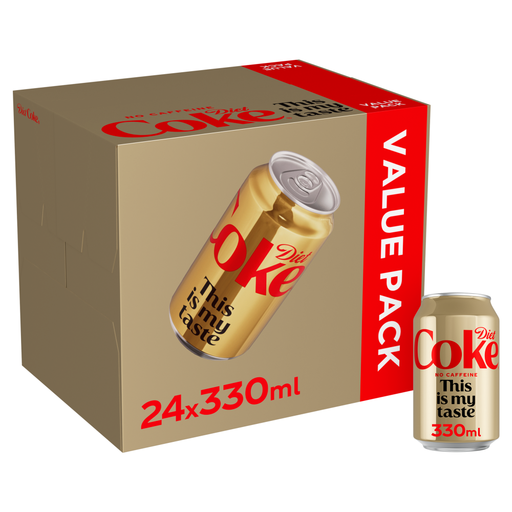 Image unavailable
Diet Coke No Caffeine, 24 × 330 ml
A caffeine-free cola choice in individual cans. The listed nutrition gives 0 g carbohydrate and 0 g sugars per 100 ml, so it is not carbohydrate fuel; the ingredient information also states that it contains a source of phenylalanine.
 Image unavailable
Pepsi Max Caffeine Free, 24 × 330 ml
Choose this variant if you want Pepsi Max without caffeine in individual cans. The listed nutrition gives 0 g sugars and 0.2 g carbohydrate per 330 ml can, not a meaningful amount of carbohydrate for fuelling; it also states that the drink contains a source of phenylalanine.
 Image unavailable
Pepsi Max, 24 × 330 ml
This standard Pepsi Max multipack suits a preference for its flavour when caffeine is acceptable. The listed nutrition gives 0 g carbohydrate and 0 g sugars per 330 ml can; the ingredients list caffeine and state that the drink contains a source of phenylalanine.
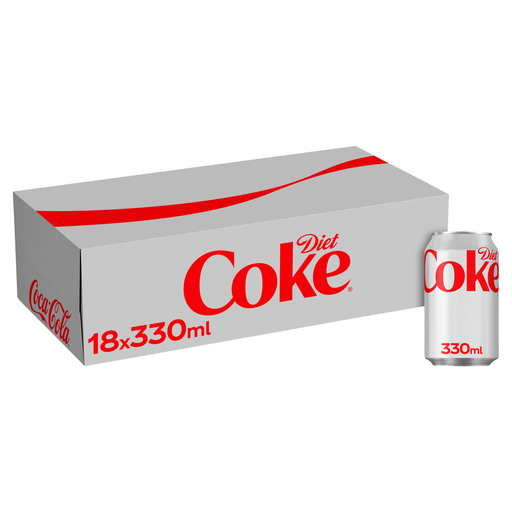 Image unavailable
Diet Coke, 18 × 330 ml
This 18-can pack is a standard Diet Coke choice for cola flavour, not pre-run carbohydrate. The listed nutrition gives 0 g carbohydrate and 0 g sugars per 100 ml; its ingredients include caffeine-containing flavourings and state that it contains a source of phenylalanine.
 Image unavailable
Coca-Cola Zero Sugar, 24 × 330 ml
Choose this standard variant if you want Coca-Cola Zero Sugar flavour and are not avoiding caffeine. The listed nutrition gives 0 g carbohydrate and 0 g sugars per 100 ml; the ingredients include caffeine and state that it contains a source of phenylalanine.
Questions about cola and a 5k
Can no-added-sugar cola fuel a 5k?
Not as a meaningful source of carbohydrate. Coca-Cola GB and Pepsi UK list 0 g carbohydrate per 100 ml for Coca-Cola Zero Sugar and Pepsi Max; the UK Sports Institute instead points to carbohydrate-containing food or drink when extra pre-run energy is needed.
What could I have before a run if I need food?
Choose a familiar carbohydrate-containing option rather than zero-sugar cola. The UK Sports Institute suggests porridge when there is time before running or a banana as a quicker option; try your routine before the day of a planned event.
Does no added sugar mean caffeine free?
No. Standard Coca-Cola Zero Sugar and Pepsi Max list caffeine, as do the cited Tesco Diet Cola, Sainsbury's Cola Zero and Asda Cola Zero listings. If you avoid caffeine, choose a variant explicitly labelled caffeine free and check its current ingredients.
Why check the label if the cola says diet or zero?
The name alone does not establish the exact carbohydrate, caffeine or sweetener content. Compare the nutrition panel and ingredients on the product you are buying, particularly if you need a caffeine-free variant or need to check for a phenylalanine statement.


