What should you check first?
Decide whether you need to replace fluid lost through sweating or simply want a drink alongside food. Then check the exact fizzy drink’s sugars, caffeine and ingredient warning.
Water
Choose it when: Replacing fluid lost through sweating is the main aim; the NHS recommends water for this.
Trade-off: It is not a sweet, cola-flavoured accompaniment to a snack.
Zero-sugar cola with caffeine
Choose it when: You want cola alongside food, want to avoid sugar in the drink and are comfortable choosing a caffeinated variant.
Trade-off: Pepsi UK and Coca-Cola Great Britain list caffeine in Pepsi Max and Coca-Cola Zero Sugar respectively; check the ingredients if caffeine matters to you.
Caffeine-free zero-sugar cola
Choose it when: You want a cola-style drink without sugar or caffeine, such as after an evening workout.
Trade-off: The cited Coca-Cola and Pepsi caffeine-free variants are still sweetened fizzy drinks and carry a phenylalanine warning.
| Priority | What to check | Your needs |
|---|
| Replacing fluids |
Consider whether you have been sweating. The NHS advises extra fluids after sweating from physical activity and recommends water to replace lost fluids. |
After a sweaty session, I want a drink for replacing fluid before deciding whether to have something fizzy with my snack. |
| Sugars per serving |
Read sugars for the exact variant and serving size. Pepsi UK lists 0g per 330ml for Pepsi Max and 15g per 330ml for Pepsi Classic. |
I want to know how much sugar is in the can I will actually drink, rather than judging by the brand name. |
| Caffeine |
Check for an explicit caffeine-free designation and read the ingredients. A zero-sugar label alone does not establish that a cola is caffeine free. |
For a late workout, I would rather choose a drink explicitly labelled caffeine free. |
| Sweeteners and warnings |
Read the ingredients and phenylalanine statement on the exact pack. The cited aspartame-containing zero-sugar products carry this warning. |
If I need to avoid phenylalanine, the warning on the particular drink matters more than whether its front label says “diet” or “zero sugar”. |
Brand and product-range references
These examples distinguish formulations; a brand name alone does not tell you a drink’s sugar or caffeine content.
Coca-Cola
Coca-Cola Great Britain describes both Coca-Cola Zero Sugar and a separately named caffeine-free variant.
- Its caffeine-free Zero Sugar product page lists 0g sugars per 100ml.
- The standard Zero Sugar variant lists caffeine. The cited caffeine-free formulation lists aspartame, so check the phenylalanine warning on the pack.
Pepsi
Pepsi UK lists Pepsi Max and the separately named Pepsi Max No Caffeine for different caffeine preferences.
- Pepsi UK lists 0g sugars per 330ml for both cited variants.
- Pepsi Max lists caffeine; the cited products also carry a source-of-phenylalanine warning.
Sprite
Sprite Zero is a lemon-and-lime option rather than a cola.
- Coca-Cola Great Britain lists 0g sugars per 100ml for Sprite Zero, compared with 4.4g for standard Sprite.
- Sprite Zero contains sweeteners and carries a phenylalanine warning; check the exact variant’s label.
Tesco
Tesco Xero Cola 8 × 330ml appears as an own-label example in Tesco Groceries’ diet-cola listing.
- Its multipack gives shoppers another named cola variant to compare with branded packs.
- Check the current label of the exact Tesco drink for sugars, caffeine and ingredients; a category listing does not establish those details.
Joybuy fizzy drink options
These multipacks offer zero-sugar cola or lemon-and-lime drinks to have alongside a post-gym snack. Some are labelled caffeine free; none changes the NHS advice to use water to replace fluid lost through sweating.
 No image available
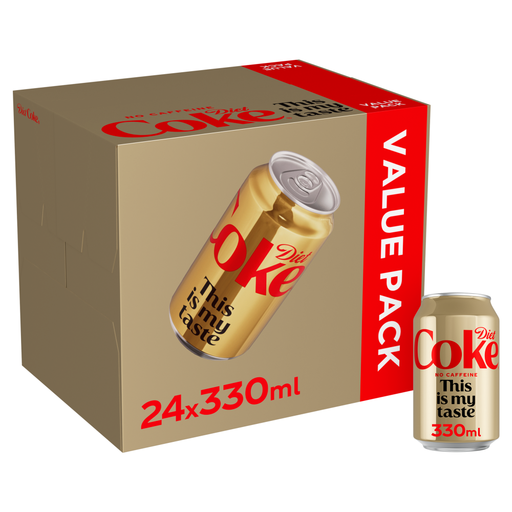
Diet Coke No Caffeine 24 × 330ml
Consider this cola alongside a snack if you want a caffeine-free drink with 0g sugars per 330ml can.
The 24-can pack’s product information lists aspartame, a source of phenylalanine and 0g protein per can. Check the warning on the pack if you need to avoid phenylalanine.
View on Joybuy
 No image available
Pepsi Max Caffeine Free 24 × 330ml
This caffeine-free cola is an option with food after an evening workout if you also want to avoid sugar in the drink.
The product information lists 0g sugars and 0g protein per 330ml can, as well as sweeteners and a source-of-phenylalanine warning. Check the exact pack if that warning matters to you.
View on Joybuy
 No image available
Pepsi Max 24 × 330ml
Choose this cola alongside a snack if you want a zero-sugar drink and are not looking for a caffeine-free variant.
The product information lists 0g sugars and 0g protein per 330ml can. Its ingredients include caffeine and sweeteners, and the pack carries a source-of-phenylalanine warning.
View on Joybuy
 No image available
Coca-Cola Zero Sugar 24 × 330ml
This is a zero-sugar cola option to have with food if you are comfortable choosing a drink that contains caffeine.
The product information lists 0g sugars per 330ml can and 0g protein. Its ingredients include caffeine and aspartame, and it carries a source-of-phenylalanine warning.
View on Joybuy
 No image available
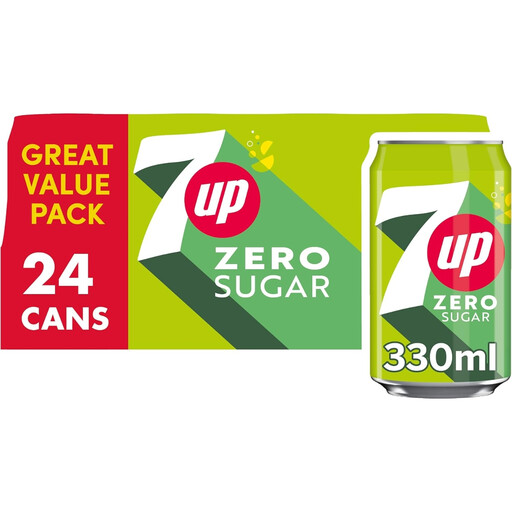
7UP Zero 24 × 330ml
If you prefer lemon and lime to cola, this is a fizzy option alongside a snack that the product information describes as having zero sugar and zero caffeine.
The 24-can pack lists 0g sugars and 0g protein per 330ml can. It contains aspartame and carries a source-of-phenylalanine warning.
View on Joybuy
Questions about post-gym fizzy drinks
Can a diet fizzy drink replace water after the gym?
It can contribute fluid, but the NHS advises drinking extra fluids after sweating and recommends water to replace fluid lost through physical activity. A diet fizzy drink is an optional accompaniment to food, not a reason to overlook rehydration.
What should I compare with a regular fizzy drink?
Compare sugars on the exact nutrition panel using the same serving size. Pepsi UK lists 0g sugars and 1 kcal per 330ml for Pepsi Max, against 15g sugars and 61 kcal per 330ml for Pepsi Classic; other variants need their own label checks.
Does zero sugar mean caffeine free?
No. Coca-Cola Great Britain and Pepsi UK list caffeine in their standard Zero Sugar and Max colas respectively, while separately named Coca-Cola Zero Sugar Caffeine Free and Pepsi Max No Caffeine provide caffeine-free options. Check the full name and ingredients of the pack you choose.
Why does a zero-sugar drink mention phenylalanine?
The cited aspartame-containing zero-sugar products carry a source-of-phenylalanine statement. If you need to avoid phenylalanine, check the ingredients and warning on the exact pack rather than relying on its sugar claim.
Does an HFSS label settle whether a drink can be provided at school?
No. For state-funded schools in England, the Department for Education says food and drink provided to pupils on school premises must meet the School Food Standards. The Department of Health and Social Care’s nutrient profiling model addresses product-specific “less healthy” classification separately; neither a category label nor this England-specific rule settles requirements for every product and UK nation.


