Gym-goers who want cola flavour without sugar
A diet or zero-sugar cola can be a flavour choice alongside water and food. Check the exact drink’s sugar declaration rather than assuming that every cola variant has the same ingredients.


Choose diet or zero-sugar cola for flavour alongside your post-gym fluid and food, not as the recovery snack itself. If you want to avoid caffeine after an evening session, check for a specifically labelled caffeine-free variant. After longer or demanding exercise, prioritise replacing lost fluid and consider a snack or meal containing carbohydrate and protein.
A diet or zero-sugar cola can be a flavour choice alongside water and food. Check the exact drink’s sugar declaration rather than assuming that every cola variant has the same ingredients.
If you prefer not to have caffeine close to bedtime, choose a variant explicitly labelled caffeine-free. Diet and zero-sugar describe different characteristics from caffeine content.
After a longer or demanding session, think about fluid and food separately from your choice of fizzy drink. The listed standard Diet Coke and Pepsi Max nutrition panels show 0g carbohydrate and 0g protein per 330ml.
Decide what you need from the drink first, then check whether your post-gym food and fluid choices cover anything the cola does not provide.
| Priority | What to check | Your needs |
|---|---|---|
| Sugar | Read the sugar value on the exact pack. Listed Diet Coke and Pepsi Max examples declare 0g sugar per 330ml; their names alone do not establish the values for other variants. | I want cola flavour without choosing a drink with declared sugar. |
| Fluid and food | The NHS recommends water to replace lost fluid. The British Nutrition Foundation identifies carbohydrate as an exercise fuel and protein as relevant to muscle repair; check your snack or meal if you need those nutrients. | After a demanding session, I need to think about what I drink and eat, rather than treating cola as the snack. |
| Caffeine | Check the exact variant name and current ingredient information. NHS Borders notes that caffeinated drinks can make people more alert and disrupt sleep. | When I train late, I may prefer a cola specifically labelled caffeine-free. |
| Ingredients | Read the sweetener list and any phenylalanine warning on the current pack. Check the serving size when comparing nutrition panels. | Ingredient-specific information matters to me more than whether the front of the pack says diet or zero sugar. |
The listed standard Diet Coke and Pepsi Max panels declare 0g carbohydrate and 0g protein per 330ml. They therefore do not provide those nutrients discussed in the British Nutrition Foundation’s exercise guidance.
Choose cola for flavour if you want it, and plan fluid and an appropriate food-based snack or meal separately when your activity calls for one.
Standard Diet Coke and Pepsi Max listings identify caffeine, while no-caffeine variants are named separately. NHS Borders advises that caffeinated drinks can interfere with sleep.
If you want to avoid caffeine after late training, check the exact variant and its current pack information.
Some listed diet and zero-sugar colas carry a statement that they contain a source of phenylalanine. Sweetener information can also differ between variants.
Read the current ingredient list and warning on the exact pack when making an ingredient-specific choice.
Diet Coke and Diet Coke No Caffeine are distinct options when caffeine matters to your post-gym drink choice.
Pepsi Max and Pepsi Max No Caffeine offer a choice between standard and explicitly caffeine-free zero-sugar variants.
Tesco’s own-label sugar-free cola is another pack-label comparison for grocery shoppers.
These diet and zero-sugar cola multipacks cover both standard and no-caffeine variants. Compare the pack size and caffeine information for the drink you want alongside your post-gym food and fluids.
 No image available
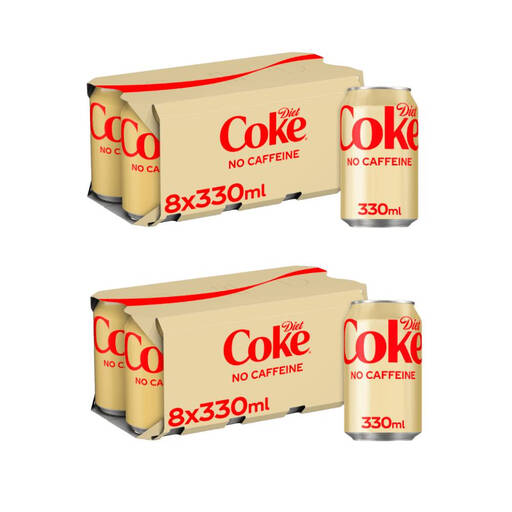
The title identifies two packs of eight 330ml cans, and the description calls this a zero-sugar cola. Check the current pack’s caffeine information before choosing it specifically for caffeine avoidance. Its listed nutrition shows 0g carbohydrate and 0g protein per 100ml, and the listing carries a phenylalanine warning.
 No image available
This 24-can variant is identified as caffeine-free for shoppers avoiding caffeine after a late session. Its listed panel declares 0g sugar, 0g carbohydrate and 0g protein per 330ml, so plan food separately if you need a snack. The listing also carries a phenylalanine warning.
 No image available
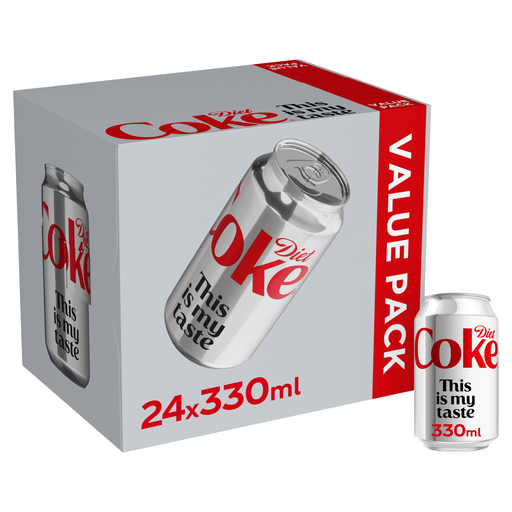
This standard Diet Coke multipack lists caffeine, so check whether that suits the time of your workout. Its panel declares 0g sugar, 0g carbohydrate and 0g protein per 330ml, with 1 kcal per can. Check the current pack if its sweeteners or phenylalanine warning matter to you.
 No image available
This 24-can pack is identified as caffeine-free and zero sugar. Its listed values per 330ml are 2 kcal, 0g sugar, 0.2g carbohydrate and 0.2g protein; it is a drink choice rather than a substitute for a snack. The listing also carries a phenylalanine warning.
 No image available
This standard Pepsi Max multipack lists caffeine. Its panel declares 0g sugar, 0g carbohydrate and 0g protein per 330ml, with 1 kcal per can. If you train late or make ingredient-specific choices, check the current pack for caffeine, sweeteners and its phenylalanine warning.
Not when you need food that provides carbohydrate and protein. The listed standard Diet Coke and Pepsi Max panels declare 0g of each per 330ml; the British Nutrition Foundation identifies carbohydrate as an exercise fuel and protein as relevant to muscle repair. Treat the cola as an optional drink alongside appropriate food.
Choose a specifically labelled caffeine-free variant if you want to avoid caffeine late in the day. NHS Borders notes that caffeinated drinks can make people more alert and disrupt sleep; diet or zero-sugar wording alone does not tell you whether a cola contains caffeine.
The NHS recommends water to replace lost fluid. A zero-sugar cola can be an additional flavour choice, but consider the duration and demands of your activity when deciding what food and drink you need afterwards.
Some listed variants carry a statement that they contain a source of phenylalanine. UK food-labelling guidance specifies warning wording for products containing aspartame; read the current pack’s ingredient list and warning if this affects your choice.